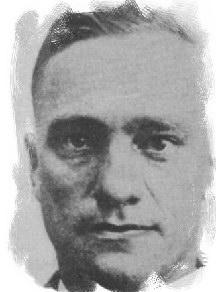
Fred Samuel Goetz, a 37-year-old Caucasian male, was a notorious figure in the criminal underworld, known by the alias "Shotgun" George Ziegler. Born on February 14, 1897, in Chicago, Illinois, Goetz was deeply entrenched in organized crime, particularly with the Chicago Outfit. His criminal activities included participation in the infamous Saint Valentine's Day Massacre in 1929, where seven men were brutally murdered in a gangland execution.
On March 21, 1934, Fred Goetz met a violent end in Cicero, Illinois, a suburb of Chicago known for its mob activity. Goetz was shot in the face at close range by a shotgun as he exited The Minerva Cafe, a location frequented by mobsters. Despite being rushed to the Frances E. Willard National Temperance Hospital, Goetz succumbed to his injuries. His body was so disfigured that it had to be identified through fingerprints.
The murder of Fred Goetz was widely believed to be a mob hit, though the exact perpetrators remain unknown. Several theories have been proposed regarding who ordered the hit. One theory suggests that the Barker-Karpis gang, with whom Goetz had been associated, might have killed him to prevent him from revealing their activities. Another theory posits that Al Capone's gunmen were responsible, fearing that Goetz might disclose details about the Saint Valentine's Day Massacre. Additionally, it was speculated that the Bugs Moran gang sought revenge for the massacre, targeting Goetz as retribution.
Goetz's criminal career was marked by numerous arrests and legal troubles. In 1925, he was charged with sexually assaulting a seven-year-old girl, Jean Lanbert, but he jumped bail and evaded capture. His parents, Samuel and Ottillie Goetz, faced legal repercussions as their property was used as collateral for his bail. Goetz was also implicated in a failed robbery in which a family chauffeur was killed, further entangling him in legal issues.
Despite his criminal activities, Goetz managed to evade significant prison time, often due to his connections and the chaotic nature of the criminal underworld during the Prohibition era. His involvement with the Barker-Karpis gang included several high-profile bank robberies and the kidnapping of millionaire Edward G. Bremer in 1933, for which a ransom of $200,000 was demanded and received.
Fred Samuel Goetz's death remains an unsolved murder, emblematic of the violent and treacherous world of organized crime in early 20th-century America. His life and death highlight the brutal realities faced by those involved in the criminal underworld, where alliances were fragile, and betrayal often led to a violent end.