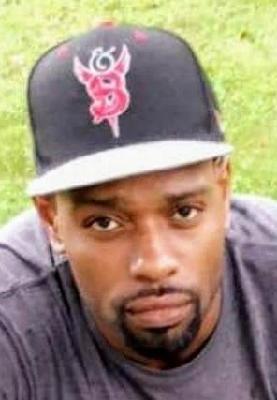
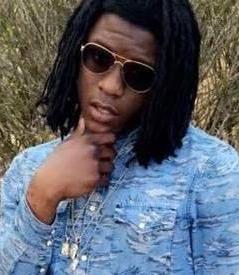
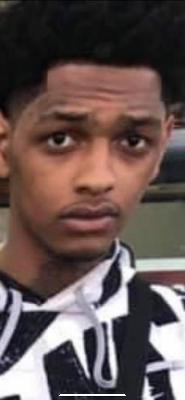
Shaquon “Young Pappy” Thomas was a 20-year-old African American man and rising Chicago drill rapper whose life unfolded along the North Side streets of Rogers Park and Uptown, where he turned neighborhood tension and personal turmoil into raw, urgent music. Performing under the name Young Pappy, he built a following on YouTube with tracks like “Killa” and “Shooters,” his breathless delivery and taunting lyrics drawing both devoted fans and dangerous attention from rivals.
Police and reporters later described how his online persona, sharpened by diss tracks and videos, existed in constant dialogue with the conflicts playing out in his neighborhood.
Before the night he was killed, there had already been grim warnings of how exposed he was. In February 2014, he was the intended target of a shooting outside a McDonald's in Rogers Park; he was hit in the arm, but a 17-year-old friend, Markeyo Carr, was killed and several others were wounded. Months later, in July 2014, gunmen again tried to reach him on West Devon Avenue. He survived that ambush, too, but this time a 28-year-old photographer, Wil Lewis, was struck and killed while waiting at a bus stop. These attempts, both aimed at him yet fatal to bystanders, became part of the public story around his name: a young rapper whose growing fame was intertwined with an escalating cycle of neighborhood violence that sometimes claimed everyone but its intended target.
In the early morning darkness of May 29, 2015, that pattern ended. Around 1:35 a.m., Thomas was on the 4800 block of North Kenmore Avenue in the Uptown neighborhood, near the stretch of street where he sometimes stayed with his father. Witnesses later described hearing multiple shots and seeing a black four-door car nearby, its rear door open as if waiting for someone to dive back inside. A thin figure in a gray hoodie was seen fleeing toward that vehicle as the echoes of gunfire faded. Thomas had been shot twice in the back. He was rushed to Advocate Illinois Masonic Medical Center, where he was pronounced dead a short time later, the official record placing his death just after 2 a.m. on that Friday morning.
The scene of the killing carried an eerie symmetry. Earlier that same day, across the street at St. Thomas of Canterbury Catholic Church, a memorial service had been held for Markeyo Carr, the friend who died in the 2014 McDonald's shooting that had targeted Thomas. Now, almost within sight of that church, the person who had walked away from previous attempts on his life lay mortally wounded. Reports noted how ordinary the block could feel in daylight—close to schools, churches, and concert venues—making the killing seem even more jarring to neighbors who woke to sirens and crime-scene tape.
Detectives quickly concluded that Thomas was again the intended target and that the shooting was likely gang-related, another strike in a feud that had already produced multiple deaths. At the time of his killing, Chicago police had him flagged on their “Strategic Subject List,” a predictive-policing roster of people considered at high risk of being involved in gun violence, whether as victim or offender. His name had been high on that list, and officials had discussed making a direct visit to warn him that he was in danger, but the visit never happened before the shots on Kenmore Avenue. After his death, police increased patrols on the North Side in an effort to head off retaliatory attacks, aware that his music and online presence had turned him into a symbol in ongoing rivalries.
Despite the quick focus on motive, the investigation into who actually pulled the trigger stalled in public view. Witnesses had seen the hooded figure and the waiting black car, and there were reports of surveillance cameras in the area, but authorities did not publicly name a suspect or announce any charges directly related to the Kenmore Avenue shooting. Later accounts, looking back on the case, noted that police believed they knew broadly which rival network the gunman might have come from, but no one was arrested or brought to trial for Thomas's killing. Years on, local discussions about the case still return to that absence of resolution: a well-known victim, a busy city street, hints of video evidence and eyewitness stories, but no official answer about who fired the shots that night.
The violence did not end with his death. Four days later, on June 1, 2015, 22-year-old Clifton Frye was walking along the 7600 block of North Ashland Avenue in Rogers Park when he was gunned down. Prosecutors later said the shooting was sparked by disparaging Facebook comments Frye had made about the slain rapper. A 17-year-old, Germel Dossie, was arrested after detectives linked him to surveillance footage and a getaway car; he was first charged with attempted murder and aggravated battery, and after Frye died of his wounds in mid-June, those charges were upgraded to first-degree murder. Though this case did not solve Thomas's own killing, it showed how quickly his name and image could be folded into new acts of violence, as arguments that began on social media spilled into the streets.
In the years since, Thomas's story has lingered as both a cautionary tale and a symbol of unrealized potential. Journalists, law-enforcement officials, and scholars have pointed to the way his videos and online taunts seemed to function like “technological kerosene,” intensifying conflicts that were already there, even as his talent and charisma drew listeners who saw only the music. His mixtape “2 Cups: Part 2 of Everything” and tracks like “Killa” are still cited as landmarks of North Side drill, proof of how far he had come in a short time. At the same time, his unsolved death—coming after years of near misses and bystander funerals—embodies the stubborn persistence of gun violence in Chicago: a young artist whose life and career were inseparable from his surroundings, and whose final chapter ends not with a courtroom conclusion, but with a question that has yet to be answered.