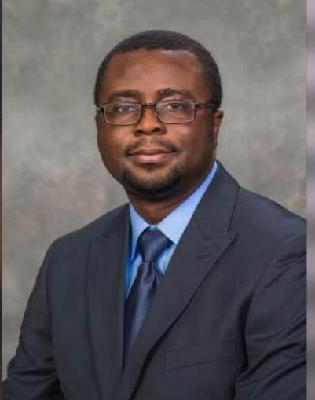
Detrick Yurnell Rogers, a 38-year-old African American man from Murphysboro, Illinois, was remembered by those around him as “Dimp,” a former local football standout whose name still echoed on the Murphysboro Red Devils' field and in neighborhood conversations long after his playing days ended. Friends and family described a man who had grown into a beloved son, father, brother, uncle and friend, someone whose easy presence and athletic legacy gave him a kind of hometown celebrity that never really faded.
In the early morning darkness of October 24, 2016, the quiet near the intersection of Shomaker Drive and South 20th Street broke with the sudden crack of dozens of gunshots. Around 1:30 a.m., Murphysboro police officers rushed to the scene after reports of multiple shots fired and found Rogers lying in the yard of a home on Shomaker, gravely wounded, as shell casings lay scattered across the intersection. A second man, later identified as Cortez Lemont Turner, turned up at the hospital with a gunshot wound that was serious but not immediately life-threatening. Rogers was taken first to a local hospital and then transferred to a facility in the St. Louis area, but by the following day he had died from his injuries, his death later recorded as occurring in St. Louis, Missouri and his burial arranged at Oakland Cemetery in nearby Carbondale.
As detectives began to reconstruct what had happened at the corner that night, witnesses spoke of a car creeping through the neighborhood and a sudden eruption of gunfire. Initial reports pointed to a black Lincoln that had been seen in the area; officers soon located such a vehicle, still warm, with a pistol case inside and an assault-style rifle hidden in a nearby brush pile. Further investigation led them to a white Kia that, according to court records, had carried four men through the streets that night, including Rogers' eventual co-defendants; inside that car police found gunshot residue and spent. 223-caliber and. 357-caliber casings that tied it to the shooting. Turner's own wound, to his thigh, turned out not to be the random misfortune he first claimed when he told authorities he had been walking on the street when stray shots rang out; later findings showed he had been in the vehicle from which shots were fired and that he was struck while still inside, with what prosecutors believed was his own weapon.
Even as Rogers lay in critical condition, the investigation quickly focused on 26-year-old Juwan K. Jackson of Murphysboro. On October 25, the day after the shooting, an arrest warrant was issued accusing him of aggravated battery with a firearm, armed violence and possession of cannabis with intent to deliver, all connected to the same burst of gunfire that had left two men bleeding on Shomaker Drive. For several days Jackson was publicly sought as a fugitive, with county and state agencies enlisted to help find him, until he was captured in Decatur in early November and returned to Jackson County to face the charges; authorities said he had shot Rogers in the head, causing the injuries that led to his death. According to later court filings, Jackson confided to an acquaintance that something terrible had happened that night and that he believed he had killed someone, a statement that would loom large once the case reached the courts.
The case widened in April 2017, when a Jackson County grand jury indicted another Murphysboro man, 28-year-old Cortez L. Turner, on first-degree murder charges in Rogers' death and joined his fate to Jackson's in the same indictment. Prosecutors announced that both men now faced three counts of first-degree murder, along with charges of aggravated discharge of a firearm and conspiracy, alleging that they had together carried out the shooting that killed Rogers and wounded Turner. Eventually, the two cases were severed. Turner elected to go to trial, and in December 2018 a judge, sitting without a jury, found him guilty of two counts of first-degree murder as well as aggravated discharge of a firearm and conspiracy, concluding that he had been one of the armed occupants in the car from which the fatal shots were fired.
In May 2019, Turner returned to court for sentencing. The judge imposed a total term of 37 years in the Illinois Department of Corrections, broken into 29 years for murder, eight additional years for aggravated discharge of a firearm, and concurrent sentences for conspiracy and two counts of perjury stemming from his false testimony to a grand jury about how he had been shot. Around the same time, Jackson stood before a different judge and, under a negotiated agreement with prosecutors, pleaded guilty to one count of first-degree murder for his role in Rogers' death; he received a 20-year prison sentence, later reflected in state corrections records and upheld by an appellate court when he tried to withdraw his plea. With those convictions, the two principal suspects in the case moved from small-town rumor to prison rolls, their names fixed in the legal record alongside Rogers'.
For the people who knew him best, however, the legal outcome could never feel like enough to balance what had been taken from them. Online memorials and fundraisers organized in the days after his death spoke of a “gridiron legend” whose real greatness lay not only in what he had done under Friday-night lights but in the warmth he brought to his family, his children and the wider Murphysboro community. Neighbors lit candles, posted tributes and tried to make sense of how an ordinary night on a familiar corner had ended with a beloved friend dying far from home in a St. Louis hospital. Even after the indictments, trials and appeals, the story that lingers in Murphysboro is not about the men who rode through the dark in a car loaded with guns, but about Detrick “Dimp” Rogers, whose life and loss still ripple through the town he once carried on his back down the football field.