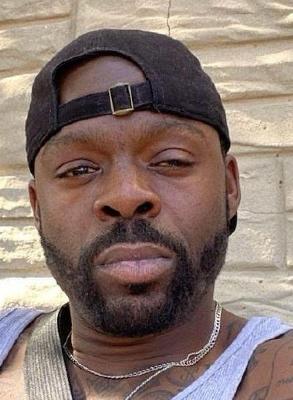
Ronald Douglas Crosby, 56, was killed on January 14, 2009, in Baltimore, Maryland, on the 5400 block of Jamestowne Court. He was a Black man.
A single line like that can feel brutally small for a life that was anything but. It pins a person to a date and an address, as if the place where someone dies is the place they belong. But Ronald belonged to more than a block number. He belonged to the people who knew the sound of his voice, the rhythm of his routines, the way his presence filled up ordinary moments. He belonged to a city that has seen too much grief, and to a family—whether large or small—left to carry a loss that doesn’t fit neatly into any record.
Jamestowne Court is the kind of location that sounds like it should be safe simply because it’s familiar: a stretch of homes and sidewalks, somewhere you can picture a person walking, driving, coming and going. After violence, places like that change. The pavement and streetlights stay the same, but the memory of what happened sinks into the corners of the mind. People replay their last conversations, the last time they saw him, the last day that felt normal. In the wake of a death, a neighborhood can feel like it’s holding its breath—doors closing a little earlier, voices lowering, the air thick with questions that don’t have anywhere to land.
What’s especially hard in Ronald’s case, with only these known details, is the silence that follows the fact of his death. No suspect is named. No arrest is mentioned. There are no charges, no courtroom scenes, no verdict to point to as a turning page. Just the stark knowledge that he is gone, and the aching uncertainty of what justice might have looked like—what it still might look like—if the person or people responsible were ever identified.
When a case is defined mostly by what isn’t known, the grief becomes its own kind of endurance. Loved ones are left balancing two weights at once: the sorrow of losing Ronald, and the relentless pull of unanswered questions. It’s not just the absence of him at the table or on the phone. It’s the missing pieces—the why, the who, the how—that can haunt a family for years, turning every anniversary into a fresh wound. Even a community can feel that strain: the quiet vigilance, the nagging feeling that danger didn’t just pass through but settled in for a while.
And yet, even with so little preserved in the public telling, Ronald’s life is more than the circumstances of his death. He was not only a victim; he was a person with a past, with connections, with days that mattered long before January 14, 2009. Someone laughed with him. Someone trusted him. Someone remembers him in small, vivid flashes—an expression, a gesture, a phrase he used, a way of walking into a room. Those human details don’t appear on a list, but they’re the truest record of who he was.
In Baltimore, where names can sometimes blur into statistics, Ronald Douglas Crosby should not be reduced to a number. He was one life, one story, one man whose absence left a space that cannot be filled. The simplest facts are all we have here, but they still carry a heavy truth: on Jamestowne Court, a life ended, and the people who cared for him were left to keep loving him in his absence, holding onto memory while the rest of the story remains out of reach.