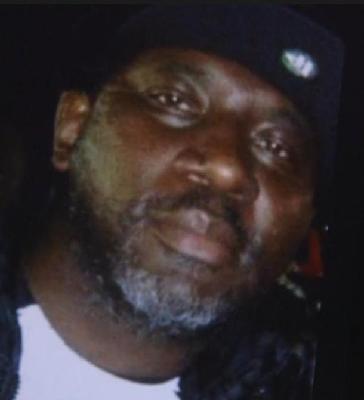
On a spring day in Atlanta, Georgia, what began as a disagreement between longtime friends culminated in a senseless act of violence that claimed the life of Tony Saffo. The 46-year-old African American man was fatally shot on March 11, 2016, outside an auto body shop on Jonesboro Road in the southeastern part of the city. Saffo, who had been friends with his assailant for over a decade, found himself in the middle of an argument involving his friend and another individual.
When Saffo intervened and asked his friend, Tevision Troy, to leave, Troy reportedly felt disrespected.
This feeling of disrespect festered, and about an hour later, Troy returned to the auto body shop. He was no longer just angry; he was armed with a Mac-10 semi-automatic submachine gun. Saffo was sitting in his vehicle when Troy opened fire, striking him multiple times. Despite being gravely wounded with two gunshot wounds to his torso and one to his left arm, Saffo managed to crawl out of his car. In his final moments, as he lay dying, he identified Tevision Troy as the man who had shot him.
Two days after the shooting, police located and arrested Tevision Troy during a traffic stop. He had a packed suitcase with him, leading authorities to believe he was attempting to flee the city. Troy, also 46 years old, was charged with a litany of offenses, including felony murder, malice murder, aggravated assault with a deadly weapon, possession of a firearm during the commission of a felony, and possession of a firearm by a convicted felon. Investigators made a significant discovery during their investigation; ballistic evidence from the weapon used to kill Saffo matched a 1998 shooting to which Troy had previously pleaded guilty.
In March 2017, a Fulton County jury found Tevision Troy guilty on all counts. He was subsequently sentenced to life in prison without the possibility of parole, with additional consecutive sentences for the firearm charges. An appeal of his conviction, which contested the admission of evidence from the 1998 shooting, was denied by the Georgia Supreme Court in 2021, solidifying his sentence and bringing a measure of legal closure to the tragic and violent death of Tony Saffo.