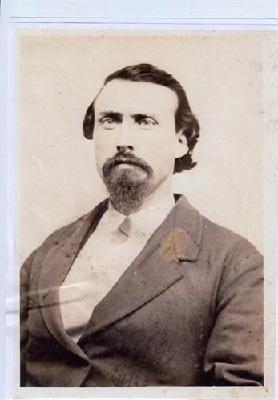
Elisha Graham Johnson, a 36-year-old white male, served as a Deputy Collector for the Office of Internal Revenue and was a member of the Florida Senate. On July 21, 1875, Johnson was tragically murdered while searching for an illegal still approximately 10 miles from Fernandina, Florida. His death had significant political repercussions, as he was a prominent figure in the Republican faction during a time of intense political rivalry in Florida.
Johnson's murder occurred under suspicious circumstances. He was shot and killed, and it was later revealed that his life had been threatened by the Ku Klux Klan. Despite his service as a Major in the Confederate Army, Johnson was considered a traitor by many of his former comrades due to his alignment with the Republican Party. This political affiliation made him a target, and his assassination was seen as a politically motivated act.
Following his death, a suspect was arrested and charged with murder approximately two months later. However, the outcome of the case remains unclear. Johnson's widow sent letters describing the trial, indicating that the murder was covered by newspapers in Jacksonville and Savannah. Despite the arrest, the killer was eventually released, highlighting the challenges and complexities of the legal proceedings during that era.
Johnson's murder not only ended his life but also had a profound impact on the political landscape of Florida. His death broke a 12-12 stalemate in the state Senate between Republicans and Conservatives, shifting the balance of power. Johnson was survived by his wife and father, and he was buried in Bosque Bello Cemetery in Fernandina Beach, Florida. His legacy is remembered through various memorials and reflections on his contributions to the state and his ultimate sacrifice.