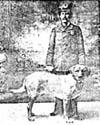
In the early morning hours of November 27, 1900, in Cobleskill, New York, a fifty-year-old night watchman named Mathew Wilson was making his usual rounds. At approximately 2:00 a.m., he met with a local lunch wagon operator, Charles Warner, and they observed a group of suspicious men near the First National Bank. Recognizing none of them as locals, Wilson informed Warner of his intention to retrieve his gun and instructed him to come quickly if he heard gunshots. A short time later, the sound of gunfire echoed through the streets.
Warner rushed toward the corner of Main and Union Streets to find Wilson lying on the stone steps of Martin Borst's store. He had sustained four bullet wounds, one of which had struck his heart. Mathew Wilson, a married father, was pronounced dead at the scene. An investigation of the area uncovered a number of burglars' tools, leading authorities to believe the men had intended to rob a local store. A reward of $500 was offered for the arrest and conviction of the murderers.
The First National Bank hired the renowned Pinkerton Detective Agency to investigate the attempted burglary and bring the perpetrators to justice. The investigation revealed that the six men had, in fact, been planning to rob the bank. Over the following few years, all six suspects were identified and apprehended.
The legal proceedings brought closure to the case. 'Goat' Hinch was arrested in February 1901, convicted of first-degree murder, and sentenced to death. 'Whitey' Sullivan, also known as James Sullivan, was arrested around March 1901, convicted of murder, and executed. William 'Sheeny' Harris confessed and testified against the others. 'Dublin Ned' confessed to being present at the burglary but denied involvement in the shooting; he served ten years in prison. Charles Ballard was killed in an explosion before he could be arrested. The last to be apprehended was 'Canada Blackie', or John Murphy, who was charged with Wilson's murder in 1903. Two of the convicted men were executed in the electric chair in 1903.