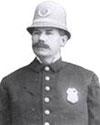
On the morning of September 24, 1980, Joseph McCoy was walking through Niagara Falls, New York, when a stranger closed in from behind and fired at close range, leaving him dead on the pavement in broad daylight before fleeing the scene. He was a 43-year-old Black man.
In the first shock of it, there was little to hold on to besides the blunt shape of the attack: an approach from the rear, two quick shots, and a retreat into the city as if the killer had planned the escape route as
carefully as the ambush. Early reporting described the assailant as a white male and, in the haze of witness impressions, sometimes as a “white youth,” but there was no immediate arrest and no clear personal connection between McCoy and the gunman who selected him.
What made McCoy’s death feel even colder to investigators was how neatly it fit into a rapidly unfolding pattern. His killing was widely treated as the fourth in a tight cluster of. 22-caliber shootings across the Buffalo area over roughly a day and a half, and authorities said the same firearm linked the attacks. That linkage pulled Niagara Falls into a larger manhunt—one that, at the time, produced fear, rumors, and anger as police searched for a single offender who seemed to be striking strangers at random.
Months later, suspicion centered on Joseph G. Christopher, a white Buffalo native whose later violence and statements would draw law enforcement toward him. Accounts of his capture trace it back to the U.S. Army at Fort Benning, Georgia, where he was confined after an unprovoked knife attack on a Black soldier; while in military custody and hospital settings, he reportedly boasted to medical staff about killing non-white victims, prompting military officials to relay information back to investigators in New York. Police searches of his home and a family hunting cabin turned up. 22-caliber items, including ammunition and a sawed-off barrel, which authorities described as key physical evidence tying him to the earliest shootings and supporting indictments.
In court, the legal story splintered into multiple tracks. Christopher pleaded not guilty as proceedings moved through questions of competency and responsibility. He was prosecuted most forcefully on the first three shooting deaths, and later reporting describes convictions that were overturned on appeal before a subsequent trial again resulted in conviction; separate prosecutions also resulted in additional sentences tied to New York City attacks. As for Niagara Falls, reports from the period and afterward describe him as indicted or facing a separate Niagara County murder trial for killing a Black man during that same 36-hour window—an accusation that aligns with the timing and location of McCoy’s death—yet the publicly summarized records in these sources emphasize the Buffalo-area convictions and do not clearly document a final, specific courtroom resolution for the Niagara County case in the same way.