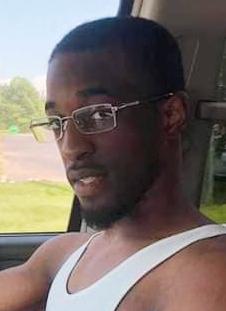
Preston Smith, a Black man from Lynchburg, South Carolina, lost his life on January 7, 1897, in the middle of a killing spree that stunned the quiet farming communities stretching between Lynchburg, Magnolia, and Sumter. His name appears in surviving records alongside those of Benjamin Esau Wilson, Wesley Wilson, and Mrs. Wilson, all killed that same morning, marking him as one of several victims of a single, brutal rampage.
Contemporary listings of gun deaths and local accounts remember him simply as Preston Smith, killed by gunfire near Lynchburg on that date, with little personal detail beyond the fact that he happened to be in the wrong place when a notorious local outlaw passed his way.
The man responsible was Simon Cooper, already feared before the Lynchburg murders. Days earlier, on New Year's Day, he had shot and killed Grant Davis, a Black man, during an Emancipation Day celebration in Magnolia, South Carolina. That killing, described as the result of a drunken “free fight,” made Cooper a wanted man; he was widely believed to be armed, volatile, and indifferent to human life. By late January of that year, Sumter newspapers were listing the Wilson family as white victims and tracing a straight line from Davis's murder to the later deaths at Lynchburg, presenting Cooper as a roaming menace who moved through the countryside leaving bodies behind him.
On January 7, 1897, the danger that had been moving through rumors and telegraph lines stepped directly into Lynchburg. Reports pulled together later from Richmond and Sumter newspapers describe Cooper arriving in the town, drunk and heavily armed, intent on forcing a young Black girl to marry him. When the girl and her mother slipped away into the swamp, word spread quickly, and men from the area organized a posse to hunt Cooper through the woods. He slipped their net, vanishing into the swampy pine land overnight, and at first light he emerged at the home of a Black farmer named Boyle, taking Boyle's horse and forcing Boyle's son, Isaac, to ride with him. From there, he turned his attention toward the Wilson farm, a short distance away.
At the Wilson place, the morning was just beginning when Cooper rode up and demanded the use of a buggy. From the road, he called Wesley Wilson to the window and asked to borrow the buggy, telling Wilson he was crippled and needed it. When Wilson refused, Cooper fired through the window with a pistol, dropping him on the spot. He then went around to the back door, entered the house, and more shots rang out. Inside, three members of the Wilson family were killed: the elderly father Benjamin, still clutching a shotgun as if he had tried to defend his home; Wesley, whose head was later found split open; and Mrs. Wilson, found on the floor with her head beaten and her throat cut. Later descriptions from local writers spoke of her being dragged about the premises and assaulted before she, too, was murdered, emphasizing the calculated cruelty of the attack and the shock it left in the community that had known the family for years.
When Cooper stepped back out into the yard, he forced Mrs. Wilson, still alive at that point, to bring out the buggy harness. With Isaac Boyle holding the horse, Cooper made her help hitch up the buggy, then returned briefly into the house; more gunshots were heard, and by the time he left, everyone inside was dead. Taking the buggy and his weapons, he turned down the road away from the Wilson home. It was along that road that he crossed paths with Preston Smith, walking along the way, unaware that a massacre had just taken place behind him and that the man approaching him in the buggy had already shot multiple people that morning.
Witness testimony recorded later in the Sumter paper paints the last moments of Preston Smith's life in stark detail. As Cooper drove away from the Wilson house, he met Smith on the road and ordered him to “drop on his knees.” Smith refused to submit. In response, Cooper raised his rifle and shot him, knocking him to the ground. Not satisfied, he stepped down from the buggy, came over to the fallen man, and slashed at him twice with a razor. Then he went into the Wilsons' back yard, fetched an axe, and returned to where Smith lay. He buried the axe in Smith's head and left it there, driven in so deeply that later accounts described it as sticking in the back of his neck, nearly severing his head from his body. When neighbors and officials reached the scene, they found the Wilson family slain inside their home and Smith's body in the road, the axe still embedded, a final, grotesque signature of Cooper's violence.
News of the killings raced out from Lynchburg. Telegraphs carried word to Sumter that Cooper had killed Ben Wilson, Wesley Wilson, Mrs. Wilson, and “a colored man named Smith,” and that he might have killed yet another Black victim elsewhere. The sheriff of Sumter County, Pierson, quickly chartered a special train and raised a large posse, coordinating with groups from nearby towns. They fanned out between Lynchburg, Maysville, and Sumter, following reports of a crippled, heavily armed man seen on the roads and in the woods. During this time, Cooper forced other Black men, including Robert Wilson and the boy Isaac Boyle, to stay near him under threat of death, using them to help him move and watch for pursuers.
The manhunt ended not far from Sumter, where Cooper holed up in a small cabin on a hill. He had Winchesters, pistols, a valise full of cartridges, and flasks of whiskey scattered around him. A Black man named Jake Dargan slipped away from the house in the early hours to warn a white neighbor that Cooper was sleeping there, and a deputy sheriff came back with a posse. For hours, Cooper traded shots with the officers, making it dangerous to approach. The sheriff even arranged to bring up a cannon and had iron shields fashioned so his men could crawl closer. Eventually, coaxed by someone he knew, Cooper stepped into the yard armed, aiming his gun; a rifle shot from the posse struck him, and later, as he emerged again, another bullet tore through his cheek. When at last the lawmen rushed the cabin and seized him, they found the razor hidden in his clothes and a pistol tucked under his waistband, confirming that even wounded he was prepared to kill again.
For a moment, it appeared that Cooper would actually face a courtroom for the deaths in Magnolia and Lynchburg. He was placed in a wagon under the guard of Deputy Sheriff John Gaillard and another man, and the party started back toward Sumter with nearly a hundred armed civilians trailing behind. But at a place known as Green Swamp, the crowd turned from escort to lynch mob. Men stepped forward and demanded that Cooper be handed over. Gaillard tried to refuse, telling them he would not allow a prisoner in his custody to be killed; in response, several of the mob seized him, dragged him off the road, and held him while others went for Cooper. They dragged the injured man from the wagon, looped a plow line around his neck, and hauled him up into a tree. Once he was hanging, the crowd lined up along the road and fired volley after volley into his body until the rope itself was shot apart and his corpse dropped to the ground. Later estimates put the number of bullets in his body at well over a hundred.
His mutilated body was left by the roadside for a time, viewed by crowds in Sumter, even posed in a sitting position in a wagon to be photographed before finally being turned over to the Black community for burial. The coroner convened a jury, but, in the standard formula of the era, it ruled that Cooper had died “at the hands of persons unknown,” despite the fact that dozens had participated in and witnessed the lynching. On Cooper's person and in the house where he had been cornered, officials found notes in which he boasted that he had been “killing men for ten years” and declared that no man would ever take him alive, adding a grim, taunting epilogue to the story of Preston Smith's death and the others that preceded it.
In the tense hours after Cooper's capture and death, attention turned to those who had been seen with him. Robert Wilson and Isaac Boyle were both jailed in Sumter and questioned at length. Boyle told a detailed story of being forced at gunpoint to accompany Cooper, of watching him at the Wilson house, and of seeing him kill Preston Smith on the road before boasting that he had “killed all the Wilsons” and would return to shoot more people in Lynchburg if he could get fresh cartridges in town. Robert Wilson claimed he, too, had been coerced, but subsequent investigation showed he had traveled into Sumter in broad daylight to buy a new suit of clothes, shoes, a hat, and two quarts of whiskey for Cooper, paying with a large bill and then rejoining the fugitive instead of escaping. Sumter reporters argued that these actions made him an accomplice after the fact in the murders of the Wilson family and Preston Smith, and there was talk that he should be held for trial in that capacity. Another man, Jake McLeod from Magnolia, was also brought to jail for “safe keeping” after rumors that he had harbored Cooper earlier, and there was scattered talk in nearby towns of mobs crossing the county line to seize Wilson and Boyle for lynching as well.
Yet the record that survives offers no clear conclusion about whether any of these men were ever formally tried or convicted in connection with Preston Smith's killing. What is clear is that Smith's death was swept into a wider narrative: a county terrorized first by the murder of Grant Davis, then by the slaughter at the Wilson home and along the road, and finally by a lynching that denied even a man as violent as Simon Cooper the possibility of a lawful trial. In that whirlwind of bullets, axes, rumors, and revenge, Preston Smith appears in the surviving accounts for only a few brief lines, standing upright in the road when he was ordered to kneel, refusing, and paying for that refusal with his life.