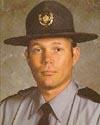
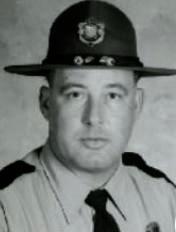
Robert Aaron Mobley, a 50-year-old male South Carolina Highway Patrol sergeant, had built a life around public service long before the summer evening when it was taken from him. Born on November 12, 1928, in Vina, Alabama, he grew up in Greenwood, South Carolina, with his siblings and graduated from Greenwood High School in 1946. After serving with the United States Marine Corps in China following World War II, he came home and, in 1958, joined the South Carolina Highway Patrol.
Over the next two decades he moved through assignments in places like Anderson County and later Florence County, earning promotions to corporal and then sergeant. Colleagues and family would later recall that he enjoyed working on cars and even ran a paint and body shop in Greenwood, but his deepest calling was the uniform he wore on the state’s roads.
By July 19, 1979, Mobley had become a twenty-one-year veteran of the Patrol and one of its respected supervisors in Florence County. That evening he was patrolling Highway 51, a stretch of road running through rural countryside a few miles south of the city of Florence. At about five miles south of town, near what is now known as Pamplico Highway, he stopped a motorcycle whose rear light was not working properly, various accounts describing it as a burned-out taillight or non-functioning brake light. It was the kind of minor traffic infraction troopers handled countless times, and there was no outward sign that this stop would be any different from the routine warnings and citations that filled his shifts.
What began as a simple roadside encounter quickly turned violent. During Mobley’s contact with the motorcyclist, a struggle broke out on the shoulder of Highway 51. In the chaos of that close-quarters fight, the rider wrested away Mobley’s service revolver. With the trooper suddenly disarmed, the assailant opened fire. Later summaries by state authorities and local media would note that Mobley was shot six times with his own weapon, and he collapsed there at the scene before help could reach him. For fellow troopers responding to the call, the location on Highway 51—an otherwise unremarkable stretch of road—would be seared into memory as the place where a veteran sergeant’s last traffic stop ended in gunfire.
In the hours that followed, investigators from the Highway Patrol and local law enforcement agencies moved quickly to identify and locate the motorcyclist who had fled the scene. By the next day, Friday, July 20, authorities announced that a man named Elijah Belin Jr. had been arrested and formally charged with the murder of Sergeant Mobley. For security reasons he was transferred to the Central Correctional Institution in Columbia, a state facility often used at the time to hold defendants in high-profile or volatile cases. That swift arrest helped calm a shaken law enforcement community and signaled that the state intended to pursue the case aggressively.
Mobley’s funeral was held at West Side Baptist Church, and he was laid to rest with full military honors in Florence National Cemetery, his service as both a Marine and a trooper recognized in the rituals at his graveside. He left behind his wife, Nell Grover, three sons—Dwight, Ralph, and Walter—his mother, other close relatives, and grandchildren, several of whom would carry his legacy of public service forward. One son, Ralph, was already a member of the South Carolina Highway Patrol at the time of his father’s death and would eventually rise through the ranks to become colonel of the Patrol from 1999 to 2001.
In court, the state’s case against the gunman centered on the events of that traffic stop: the lawful attempt to address a defective light, the sudden struggle, the seizure of the trooper’s revolver, and the fatal shots fired into a uniformed officer on the side of a public highway. Official remembrances from the Department of Public Safety and legislative records describe the outcome succinctly but decisively: the suspect in Mobley’s shooting was convicted of murder. That conviction closed the criminal case and provided a formal acknowledgment that his death was not an accident of circumstance but a deliberate killing of a law enforcement officer performing his duty.
In the decades since, the memory of Sergeant Mobley has been woven into the physical and institutional landscape of South Carolina. He was inducted into the South Carolina Law Enforcement Officers Hall of Fame in 1986, and in the 2020s the General Assembly approved a resolution naming a portion of SC-51 in Florence County the “Sgt. Robert A. Mobley Highway.” The dedication ceremony brought together his family, fellow troopers, and local officials to unveil signs along Pamplico Highway near the place where he fell. Memorial sites and gun-violence remembrance pages list his name among those lost, sometimes associating his death with Blythewood—the home of the Department of Public Safety’s headquarters—even as the historical record makes clear that the fatal encounter occurred on a rural road in Florence County. Through these honors, Sergeant Mobley’s story is preserved not just as a line in a roster of fallen officers, but as the life of a husband, father, veteran, and trooper whose final act was a routine stop that turned, without warning, into the moment he gave his life in service to his state.