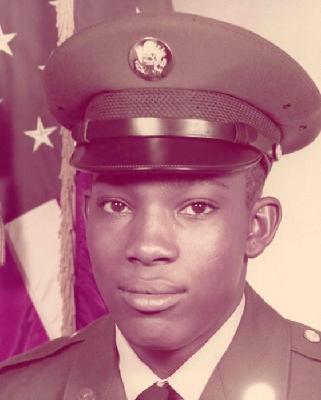
Keith Anthony Broome was a 27-year-old Black man from Mullins, South Carolina, born on April 8, 1987 in the Bronx, New York, to T.C. and Gracie Broome. He moved south as a child and grew up in Mullins, attending local schools before going on to Denmark Technical College, where he learned welding, and later continuing his studies at Florence-Darlington Technical College.
Family and friends remembered him as a young man who had worked to build a skilled trade and a future for himself, rooted both in the small city where he was raised and in the Northern borough where his life began. Online memorials describe a loved son and father, whose name now appears among other gun violence victims, with candles lit in his memory by those who still miss him.
In the early hours of New Year’s Day 2015, Mullins was still awake when the celebration at a local nightspot turned into chaos. The nightclub, known as “In the Living Room,” sat on West Laurel Street and drew a crowd that night; accounts from investigators describe anywhere from several dozen to as many as 80 people inside when the music and noise were shattered by gunfire. At around 5:45 a.m., emergency dispatchers received a call reporting a shooting at the club. Police and first responders arrived to find that Keith had been struck by a single gunshot to the head. Authorities later identified the weapon as a. 380-caliber pistol, and his body was transported to Charleston for autopsy, formalizing what his family already feared: he had died there on the first morning of 2015.
The club itself quickly became a symbol of the community’s anger and grief. Residents described it as a place where police were called repeatedly for disturbances, fights, and other violence even before Keith’s killing. In the days after his death, a petition appeared on Change.org calling on city officials to shut down The Living Room permanently, arguing that a night out in Mullins should not mean risking one’s life and pointing to his New Year’s Day shooting as proof that the club could not keep patrons safe. Within weeks, the Living Room’s future was being decided not on the dance floor but in a courtroom: a petition filed by the Twelfth Circuit Solicitor detailed multiple shootings at the club since 2013, including the murder of Keith Anthony Broome, and portrayed the business as a chronic source of violence, drugs, and fear. A South Carolina Circuit Court judge granted a temporary injunction to close the nightclub, and Keith’s mother spoke publicly about feeling a measure of relief that the doors were finally shut, even if it could not bring her son back.
As investigators worked the scene and interviewed terrified witnesses, attention turned to finding the person responsible for the single, fatal shot. According to police reports and local news coverage, a 28-year-old Mullins man named Henry Sherman was soon identified as the suspect. On the morning after the shooting, Sherman phoned the Mullins Police Department, told officers where he was, and was picked up walking down the street after turning himself in. He was charged with murder and with possession of a weapon during the commission of a violent crime, then taken to the Marion County Detention Center. A bond hearing held shortly afterward ended with bond being denied, meaning any decision on his release would have to come from a Circuit Court judge at a later date. Investigators noted at the time that the murder weapon had not been recovered and that no clear motive had been established; the South Carolina Law Enforcement Division was brought in to assist with the case.
Gun Violence Archive records list Keith as the victim in a bar or club incident and name Henry Sherman as the subject-suspect, noting that he was arrested and unharmed, which echoes the initial media reports of a voluntary surrender rather than a violent confrontation with law enforcement. Yet beyond those early stories of his arrest, bond denial, and the temporary closing of the nightclub where the shooting took place, later public reporting on what happened in court is scarce. The accessible record leaves the sense of a case whose most visible chapters are the night of the shooting and the immediate aftermath: a young father and tradesman killed by a single bullet in a crowded room; a suspect in handcuffs facing a murder charge; a club shuttered under court order; and a family left to remember a son whose name now survives in obituaries, grave records, and online memorials rather than in the life he was trying to build.