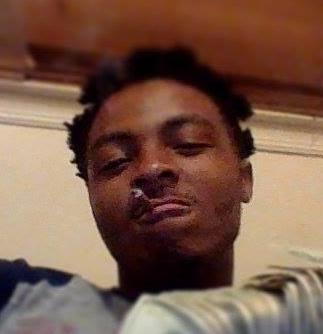
Eduardo Aleata Graham, a 42-year-old Black man from Lake City, South Carolina, spent the evening of Saturday, October 21, 2017, in the rural stretch just outside his hometown, not far from where North Green Road meets Highway 341. Sometime before 11 p.m., whatever had brought him out onto that road turned into a confrontation that would end his life.
Later, his name would appear on online memorials alongside hundreds of other gun violence victims, with loved ones lighting digital candles, calling him a jokester and remembering him as an entrepreneur who built a small business under the name Graham Enterprises.
Shortly before 11 o’clock that night, deputies from the Florence County Sheriff’s Office were called to reports of gunfire on North Green Road, just off Highway 341. When they arrived, they found two people shot. Both victims were rushed for medical care, but Eduardo’s wounds were too severe; he died from his injuries, and the county coroner identified him publicly as the man killed in the double shooting. His body was sent to the Medical University of South Carolina for an autopsy, while the surviving victim was treated in hospital for injuries that authorities did not detail in public reports. Investigators described their work as being in its early stages, stressing that they were still gathering evidence and trying to piece together exactly what had unfolded in those late-night minutes on the roadside.
Over the next days and weeks, detectives worked to connect fragments of witness statements and physical evidence to a suspect and a motive. By early November, they announced a breakthrough: a 23-year-old Lake City man named Herbert McDowell III had been arrested and charged with murder in connection with the October 21 double shooting. According to a news release cited in local coverage, deputies linked McDowell to the scene on North Green Road around 11:30 p.m. that night, where officers had found the two gunshot victims who were taken to the hospital and where Eduardo was later pronounced dead.
Investigators said that, before the gunfire, Eduardo and McDowell had gotten into an argument. That dispute, they explained, was believed to have directly led to the shooting that cost Eduardo his life. The exact subject of the argument was never made public, but authorities were clear that they viewed it as the spark for the violence. After his arrest, McDowell was booked into the Florence County Detention Center on the murder charge and was expected to appear first before a magistrate and then at a full bond hearing. At the time of those reports, he remained incarcerated, and no plea or trial schedule had yet been described in news stories.
In the years that followed, McDowell’s name surfaced again in local crime reports, suggesting a continuing entanglement with the justice system. In June 2018, after a month-long undercover narcotics investigation in the Lake City area, Florence County narcotics investigators announced that a 24-year-old Herbert McDowell III from Lake City had been arrested on a slate of drug and weapons charges, including multiple counts related to cocaine and methamphetamine and possession of a weapon during a violent crime; in that case, his bond was denied. Later, in 2025, deputies and state agents serving a probation-violation warrant in Timmonsville arrested six people on drug and weapons counts, including a 31-year-old Herbert McDowell of Lake City who was charged with possessing less than a gram of cocaine and selling or delivering a pistol to unlawful persons. Publicly available news stories, however, do not spell out what ultimately happened to the earlier murder charge stemming from the night Eduardo was shot; they end with McDowell in custody awaiting further court proceedings, leaving the final legal resolution of Eduardo’s killing unclear in the record that can be seen from the outside.
While the criminal case receded from headlines, Eduardo’s absence remained vivid for those who knew him. On the National Gun Violence Memorial, his name appears among the people killed with guns on October 21, 2017, a stark entry marked only by his name, date, and state. On his dedicated memorial page, family and friends have left brief, aching tributes: notes that say the family is “truly missed,” messages signed by someone who calls herself his “Queen T,” and small details that sketch a life beyond the circumstances of his death—a man who made people laugh, who built a business, who belonged to a family that still speaks to him in the present tense. Together, the sparse official accounts and the richer, more intimate memorials form the story that remains: a roadside argument on a dark October night, a gun, an arrest, and a life whose fullness is now preserved mostly in the memories of those who loved him.