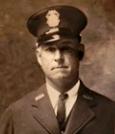
On January 2, 1932, a violent confrontation known as the 'Young Brothers Massacre' claimed the life of 28-year-old male Charles Lee 'Charlie' Houser near the small community of Brookline, Missouri. Houser, a patrol driver for the Springfield Police Department, was part of a multi-agency raiding party assembled to apprehend two notorious fugitives, Harry and Jennings Young.
The brothers were wanted for a string of crimes, including the 1929 murder of a town marshal and the recent theft of a vehicle. Acting on a tip that the suspects were hiding at their family's farmhouse west of Springfield, Greene County Sheriff Marcell Hendrix organized a posse comprising nearly a dozen lawmen to surround the property.
The raid quickly turned catastrophic when the officers approached the farmhouse. As Sheriff Hendrix and a deputy attempted to breach the back door, the Young brothers unleashed a barrage of gunfire from inside using a high-powered rifle and a shotgun. The initial volley mortally wounded the sheriff and his deputy. Charles Houser, who had taken a tactical position behind a large tree in the yard, attempted to engage the suspects. When he peered around the tree to return fire or assess the situation, he was struck in the forehead by a rifle bullet, killing him instantly. Houser was one of six law enforcement officers who lost their lives in the shootout, which remains the deadliest single incident for law enforcement in the history of the region.
Following the massacre, the suspects, Harry and Jennings Young, managed to escape the scene in a stolen vehicle, fleeing south and triggering a massive manhunt. Investigators tracked the brothers to a boarding house in Houston, Texas, where they were cornered on January 5, 1932. Law enforcement surrounded the building and deployed tear gas to force a surrender. Rather than face capture and prosecution for the murders of Houser and his colleagues, the brothers retreated to a bathroom where they died of gunshot wounds. Authorities ruled their deaths as a double suicide, ending the pursuit without a trial or conviction. Houser was survived by his brother and common-law wife and was interred in an unmarked grave in Joplin, Missouri.