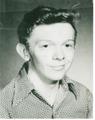
In the winter of 2004, 60-year-old Donald Gordon Jessup vanished from the area of Enumclaw, Washington, a city nestled in King County. He was last seen on or around December 15, a date that marks the beginning of a long and unsettling mystery for his family and investigators. His disappearance was immediately considered suspicious, launching a complex investigation into the life he led and the circumstances that may have contributed to him going missing.
Jessup was a significant figure in a world many only glimpse from a distance; he was the former president of the notorious Gypsy Jokers Motorcycle Club, a detail that would become central to the unfolding investigation. The suspicious nature of his disappearance, coupled with his high-ranking position in the motorcycle club, pointed investigators toward a strong possibility of foul play.
The investigation into Donald Jessup's whereabouts stretched on, and as time passed, the hope of finding him alive began to fade. The King County Sheriff's Office, leading the inquiry, pursued various leads, many of which were intertwined with the often-violent world of outlaw motorcycle gangs. Eventually, the focus of the investigation narrowed onto a member of a rival gang. This individual was ultimately charged and convicted of Jessup's murder, a legal conclusion that brought a semblance of justice but no closure regarding Jessup's final resting place. Despite the conviction, a crucial piece of the puzzle remains missing: Donald Jessup's body has never been found. This haunting fact has left his family in a state of perpetual limbo, unable to provide him with a proper burial or find complete peace.
The case of Donald Jessup is a somber tale of a man whose life outside mainstream society likely led to his untimely and violent end. Although the legal system identified and punished a perpetrator for his murder, the full truth of what happened in the days surrounding December 15, 2004, remains partially obscured. The absence of his remains means that while the criminal case may be closed, the personal tragedy for his loved ones endures. The King County Sheriff's Office continues to list him as a missing person, a silent acknowledgment that until he is found, the case cannot be fully laid to rest. The overview of this case highlights the difficult reality that even with a murder conviction, the lack of a body leaves an unfillable void and a story without its final chapter.Last Seen: Dec 15, 2004