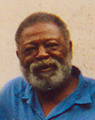
Jason Landry was a 21-year-old man and Texas State University student when he was last seen on December 13, 2020, during a nighttime trip that was supposed to take him from San Marcos to his family’s home in Missouri City, Texas. Investigators determined that Jason left his San Marcos apartment at approximately 10:55 p.m. and traveled south on State Highway 80, passing through Caldwell County and several small communities before reaching Luling.
Digital evidence showed that his phone was using the Waze navigation application during the drive, with its last connection occurring in Luling at about 11:26 p.m. Authorities came to believe that instead of making the turn that would have taken him toward Interstate 10 and on to Missouri City, Jason continued along Austin Street and eventually onto the rural Salt Flat Road outside Luling. Somewhere along that dark stretch of roadway, his journey home abruptly ended.
Shortly after midnight on December 14, Jason’s Nissan Altima was discovered crashed and abandoned on Salt Flat Road. Investigators concluded that the wreck appeared to have been a single-vehicle collision, and a later review by the Texas Attorney General’s Office supported the finding that there was no evidence another vehicle had been involved. Jason was nowhere around the car. His personal belongings and clothing were found in and around the area of the wreck, creating an unsettling scene but providing no clear explanation of where he had gone after the crash. Investigators examined his electronic devices and online activity and found no evidence that he had arranged to meet anyone in Luling. A geofence search warrant also failed to reveal activity around the crash site that would explain his disappearance. The available evidence led investigators to believe that Jason had survived the initial collision and somehow left the immediate area, but what happened after that remained unknown.
The disappearance prompted an enormous and prolonged search effort. Law enforcement officers, professional search teams, rescue organizations and volunteers repeatedly combed the countryside surrounding Salt Flat Road. Searchers used ground teams, dogs, drones, aerial surveillance and Forward Looking InfraRed technology in an effort to locate Jason or uncover evidence showing the direction he may have traveled. Investigators even asked the Texas Railroad Commission to search oil tanks in the surrounding area and review operational records for anything unusual, but those efforts produced no indication of Jason’s whereabouts. As months turned into years, the mystery deepened because searches repeatedly covered the difficult rural terrain without finding him.
In February 2022, the Caldwell County District Attorney’s Office and Caldwell County Sheriff’s Office formally requested assistance from the Texas Attorney General’s Cold Case and Missing Persons Unit. That investigation involved another comprehensive examination of the evidence, forensic testing, witness interviews, search warrants, digital analysis and consultation with specialists. In November 2023, the Attorney General’s Office assembled experts in digital forensics, geospatial science, data mapping and criminal intelligence alongside representatives from agencies including the FBI, Texas Rangers, the Texas Department of Public Safety, Texas Search and Rescue and local authorities. After reviewing the case, the panel concluded that the credible leads and investigative steps available at that time had been thoroughly pursued. Even so, Jason’s case remained active, and his family and the people searching for him continued waiting for an answer.
That answer finally began to emerge nearly six years after Jason vanished. On September 8, 2026, a local resident discovered human skeletal remains east of Salt Flat Road, between Soda Springs and Biggs Road in Caldwell County. The location was several miles from the area where Jason’s wrecked vehicle had been discovered. Authorities recovered the remains and submitted them for forensic examination and DNA testing. On September 23, 2026, the Texas Attorney General’s Cold Case Unit announced that testing performed by the University of North Texas Center for Human Identification had conclusively established that the remains were Jason Landry’s. His family was notified, ending the long uncertainty over whether he might someday return home. Official records now reflect that Jason was located deceased.
The discovery answered the central question of where Jason had gone, but it did not explain exactly how he died. Authorities stated that the condition of the skeletal remains did not provide additional insight into either the cause or manner of death, and investigators said they had found no indication of foul play. No evidence released by authorities has established that another person caused Jason’s disappearance or death. His case ultimately became the story of a young college student whose nighttime drive home ended with a crash on a remote Texas road, followed by years of intensive searching and investigation before his remains were finally recovered. For Jason’s family, the identification brought a painful conclusion to nearly six years of uncertainty: he was no longer missing, but the precise circumstances of his death remain unresolved.Last Seen: Dec 13, 2020