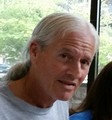
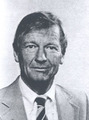
In the summer of 2003, 38-year-old Douglass Wallace Svendson III was last seen in Moab, Utah, a place he had been staying for several months. Known to be a traveler who often moved between Utah, Colorado, and California, his disappearance in July of that year marked the beginning of a long and painful period of uncertainty for his family. His brother, David Svendson, who had lived in Moab for three decades, grew deeply concerned when Douglass, who relied on Social Security payments accessed via
a debit card, abruptly stopped withdrawing money in late 2003. This sudden lack of financial activity was a clear sign to David that something was terribly wrong, prompting him to report his older brother missing.
Before his disappearance, Douglass was living a transient life. His brother recalled that before the onset of a psychiatric disorder in his mid-teens, Douglass was an outgoing person with friends. In the period leading up to when he went missing, he had been camping on an undeveloped 40-acre parcel of land his mother owned in Willits, California. This area, located in Mendocino County, is part of the region known as the Emerald Triangle, a major hub for marijuana cultivation. Investigators were initially concerned that his proximity to two illegal marijuana grow operations might have played a role in his disappearance, fearing he could have run into trouble with the growers. This possibility cast a dark shadow over the early stages of the investigation, suggesting a potentially sinister explanation for his vanishing.
For over two decades, the question of what happened to Douglass Svendson remained unanswered. The case grew cold until a persistent detective from the Moab Police Department, Jeremy Drexler, took a fresh look at the file. Through careful review of internet databases, Drexler made a critical connection between Douglass's case and unidentified remains found in California. In January 2004, a partial skeleton had been discovered in a ravine off of Highway 101, just outside of Willits and about 17 miles from where Douglass had been camping on his mother's property. The remains had gone undiscovered for a time due to their location down a ravine off the highway. At Drexler's request, a DNA sample was finally extracted from a femur in late 2024. After an initial presumptive match with his brother David's DNA, a conclusive identification was made in July 2025 using a sample from his mother, confirming the remains were indeed those of Douglass Svendson. While the discovery was heartbreaking, it finally brought a degree of closure to his family after twenty years of waiting. The prevailing belief held by both the detective and Douglass's brother is that he was the victim of a hit-and-run accident. Tragically, he had been struck by a vehicle once before on the very same highway and had been hospitalized. It is thought that a second, more severe impact, likely at a higher speed outside of the town limits, is what led to his death. After so many years, his brother was able to make arrangements to have his remains cremated and brought home to finally be at peace.Last Seen: Jul 1, 2003