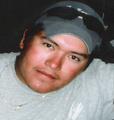
Donald John Watson was a 50-year-old man whose final known movements carried him far from his home area in Ontario and into the border region of Laredo, Texas. Missing-person listings use March 3, 2013, as the date associated with his disappearance, and the most significant known trace of him came from information showing that he had crossed the international border between Mexico and the United States at Laredo.
Watson was known to live a transient lifestyle and frequently traveled on foot, making it possible for him to cover long distances without maintaining the kind of routine or paper trail that might otherwise have allowed relatives or investigators to follow his movements closely. His disappearance would ultimately be treated as an Ontario missing-person case, but the Laredo border crossing became a critical point in reconstructing where he had gone and what may have happened afterward.
The story of Watson’s disappearance had actually begun months before that border crossing. His mother had last seen him in Ontario in September 2012, meaning there was already a significant period during which his precise travels were not publicly documented. Watson was described as someone who moved from place to place and often walked, a lifestyle that could make long gaps in contact less immediately unusual while also making a later disappearance exceptionally difficult to investigate. At some point after his mother last saw him, Watson traveled south through North America. Canadian border authorities eventually determined that he had crossed from Mexico through the Laredo, Texas, area in March 2013. Publicly available case information does not explain why Watson had gone to Mexico, how long he had been there, where he stayed during his travels, whether anyone was accompanying him, or what destination he intended to reach after entering the United States. No publicly documented account describes a confirmed encounter with Watson after the border crossing, leaving investigators and his family with an enormous geographic area and very little information from which to determine his next movements.
Watson’s physical description has remained an important part of efforts to identify him or connect later information to his disappearance. He was approximately 5 feet 3 inches tall, with brown hair and brown eyes. Because he frequently traveled on foot and lived a transient lifestyle, the circumstances of his disappearance differ from a case in which someone vanished from a fixed residence, abandoned vehicle, workplace, or other clearly defined location. There was no single scene publicly identified where investigators could establish that Watson had encountered trouble. Instead, the known timeline stretches from his mother’s last contact with him in Ontario to his later movement through Mexico and the border crossing at Laredo. The absence of a publicly documented destination after Laredo creates one of the central difficulties in the case: Watson could have remained in Texas, continued traveling elsewhere in the United States, attempted to return to Canada, or taken another route entirely. Public missing-person information does not establish which of those possibilities occurred, and there is no publicly reported evidence explaining why communication with his family ceased.
Watson has continued to be identified in missing-person resources connected with Canadian authorities. Public case information lists him with the Royal Canadian Mounted Police and identifies his disappearance as an Ontario case, with the Ontario Provincial Police serving as a contact for information that could assist investigators. The case has also been associated with North Frontenac Township, Ontario, reinforcing that although his final known trace was far away in Laredo, his disappearance remained connected to his family and authorities in Canada. The passage of time has made any overlooked encounter, travel record, photograph, personal recollection, or unidentified-person comparison potentially significant, particularly because Watson was accustomed to traveling independently and could have interacted with people who never realized he would later be reported missing. His case is therefore remembered as the disappearance of a 50-year-old Ontario man whose travels took him across a continent, whose mother last saw him months before his final documented movement, and whose trail appears to end after authorities learned he crossed the Mexico–United States border at Laredo, Texas. In overview, Donald John Watson’s case is defined by a long and uncertain journey, a transient lifestyle that complicated the reconstruction of his movements, a final known border crossing in March 2013, and the enduring absence of confirmed information explaining where he went afterward or what became of him.Last Seen: Mar 3, 2013