Karl Artur Anderson was 76 years old when he disappeared from Upsala, Ontario, on September 3, 1974. Anderson, a male born in 1898, was last known to be in the Upsala area before apparently setting out on a journey that may have been connected to his health. The information preserved in Canada’s national missing-person records is brief, but it provides one particularly important possibility concerning his intended destination: investigators believed Anderson may have travelled by train from
the area toward either Sioux Lookout or Thunder Bay in order to seek medical treatment. What prompted him to need treatment, whether he had a specific doctor or medical facility in mind, and whether arrangements had been made for his journey are not described in the publicly available case information. There is also no published account establishing that he actually boarded a train, reached either community, or arrived at a hospital or other medical facility. What began as what may have been an ordinary trip for medical care instead became a disappearance that would leave very few publicly documented clues about where Anderson went after he was last seen.
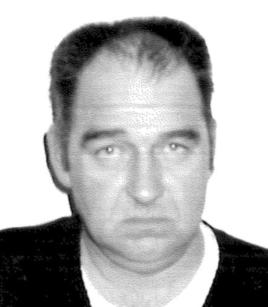
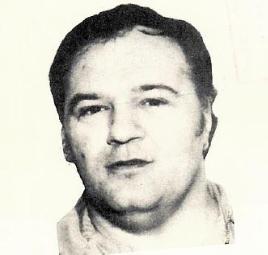
Investigators had a detailed physical description that could have helped distinguish Anderson from other travelers. He was approximately 5 feet 10 inches tall and weighed about 161 pounds, with a heavy build and a ruddy complexion. He had blue eyes and white hair that was described as balding, and records also note that he had false teeth. Anderson wore reading glasses and had a particularly significant physical characteristic: a deformity involving his left leg caused him to walk with a limp. He also spoke with a Swedish accent, another characteristic that could have made him recognizable to anyone who encountered or spoke with him during his travels. His combination of age, accent, limp, appearance, and clothing would have given witnesses several distinctive details by which to remember him, particularly if he stopped at a railway station, sought assistance while traveling, or presented himself somewhere for medical attention.
The clothing information retained with Anderson’s case is unusually specific for a disappearance dating back to the 1970s. He was associated with a grey felt hat, a red jacket, blue suit pants, and black Oxford-style shoes, along with his reading glasses. Taken together with his white hair, blue eyes, ruddy complexion, Swedish accent, and noticeable limp, these details provided a fairly recognizable description of an elderly man who may have been attempting to make his way across northwestern Ontario. Yet the central uncertainty has never been eliminated by the information made public: the record does not identify a confirmed sighting after September 3, does not establish which train or railway route Anderson may have taken, and does not document his arrival in either Sioux Lookout or Thunder Bay. Nor does the publicly available profile explain whether investigators were able to identify hospitals, clinics, doctors, railway employees, passengers, lodging establishments, or other locations that Anderson might have encountered while seeking treatment. With so much time having passed, the absence of those details makes the last known possibility surrounding his movements especially important.
The Thunder Bay detachment of the Ontario Provincial Police is identified in the national missing-person record as the law-enforcement agency associated with Anderson’s disappearance, under reference case RM05023529. The case has also been preserved within Canada’s national missing-person system, ensuring that his identifying characteristics and the limited circumstances surrounding his disappearance remain available long after the events of 1974. For an elderly man who reportedly may have been traveling because he needed medical attention, even seemingly ordinary circumstances could have created difficulties: his left-leg impairment and limp were significant enough to be specifically included in his description, and his age would have made determining whether he successfully reached his intended destination particularly important. Still, publicly available information does not establish that Anderson suffered an accident, encountered foul play, voluntarily disappeared, became lost, or experienced a medical emergency. None of those possibilities should be treated as fact without evidence.
More than five decades separate the present day from the morning and circumstances surrounding Karl Anderson’s disappearance, yet the essential mystery is remarkably unchanged. The surviving record gives investigators and the public a clear picture of the man they were looking for but only a narrow glimpse of where he might have been going. There is an elderly man with a Swedish accent, white balding hair, blue eyes, a ruddy complexion, reading glasses, false teeth, and a distinctive limp; there is a last known location in Upsala; and there is the possibility that he intended to travel by train to Sioux Lookout or Thunder Bay for medical treatment. Beyond that point, the trail becomes uncertain. No publicly documented subsequent sighting establishes where Anderson went or whether he ever reached the medical care he may have been seeking. In overview, Karl Artur Anderson was a 76-year-old man last seen in Upsala, Ontario, on September 3, 1974, whose distinctive appearance and physical characteristics were well documented, and whose possible plan to travel by train for medical treatment remains the most important publicly known clue to his movements after leaving Upsala. What happened after that intended journey began remains the unanswered question at the heart of his case.Last Seen: Sep 3, 1974