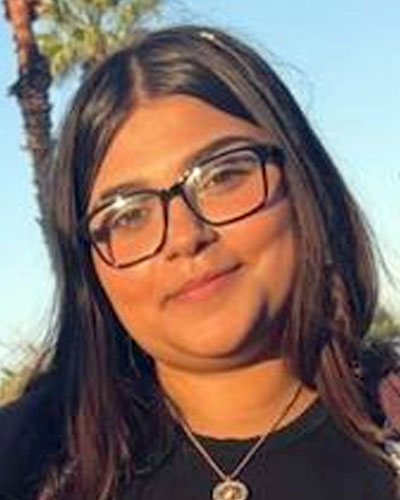
Diane White, later known as Diane Marie Webb after her marriage, was a 17-year-old female whose disappearance became one of the longest-running missing-person mysteries connected to Phoenix, Arizona. National missing-child records list May 6, 1959 as the date Diane went missing from Phoenix, although later Phoenix Police Department records describe the date more broadly as sometime between 1959 and 1961, and some case summaries have used a 1960 date.
Diane was born April 20, 1942, and had grown up with her parents and siblings in San Bernardino, California. In March 1959, her family moved to Dolan Springs, Arizona, but Diane wanted to remain behind because of her relationship with her teenage boyfriend, Bennie Milton Webb. She eventually visited her family in Arizona and told them that she was pregnant and intended to marry Bennie, who was then associated with the Phoenix area. Diane's father reportedly opposed the relationship and pregnancy, while her mother and younger brother supported her enough to travel to Indio, California, for the young couple's wedding. That occasion would become especially important because it was the last time members of Diane's immediate family were known to have personally seen her. At the time, Diane was described as approximately 5 feet 2 inches to 5 feet 4 inches tall and roughly 110 to 120 pounds, with brown hair, brown or gray eyes, pierced ears and a noticeable freckle at the tip of her nose.
After the marriage, Diane did not immediately disappear from her family's life. For a period of months she continued corresponding with them through the mail, providing reassurance that she was still out there building a life of her own. One of the most poignant surviving pieces of that correspondence was the final known letter she sent her family, mailed on August 22, 1959, for her younger sister's birthday. Along with the letter, Diane reportedly sent handmade or crocheted handkerchiefs as a gift. Then the letters stopped. Because Diane had married young, was living apart from her parents and had already been moving between California and Arizona, the silence apparently did not immediately establish exactly when something had gone wrong. More than a year later, a letter from Bennie arrived at her parents' home and appeared to assume that Diane was living with them. Alarmed by the implication that Diane was neither with her husband nor with her family, her parents wrote back asking what had happened. Bennie's response, dated January 5, 1961 in later case summaries, stated that he had not seen Diane for a long time. He said he had given her $100 and placed her on a bus so she could return to her family. He also said that after she left, Diane had written him once and told him she had suffered a miscarriage. According to the account, Bennie suggested that Diane's parents contact one of her female friends in California because that friend might know where she had gone.
That bus trip became the central unresolved moment in Diane's disappearance. Phoenix Police eventually described the case by stating that Diane was last seen boarding a bus in Phoenix to go to her family, but she never arrived at her parents' home. The department's own missing-person bulletin acknowledged how uncertain the chronology had become, listing the disappearance only as occurring sometime between 1959 and 1961 and describing Diane as somewhere between 17 and 19 years old at the time. There is no indication in the publicly available police bulletin that another independent witness confirmed seeing Diane arrive at her destination, and the years that passed before the circumstances were fully reconstructed left investigators with an unusually difficult timeline. Diane's father did not simply accept that his daughter had voluntarily disappeared. Later accounts state that he traveled to Truth or Consequences, New Mexico, where Bennie had family connections, hoping to learn what had happened to her. One published case summary alleges that a relative of Bennie's who held a law-enforcement position threatened Diane's father and told him to leave town; because this account comes from later retellings rather than the Phoenix Police bulletin itself, the precise details should be treated cautiously. Decades later, investigators located Bennie and interviewed him. Missing-person summaries report that he said he remembered Diane but claimed not to remember marrying her, even though records of the marriage reportedly existed, and that he subsequently declined further cooperation and a polygraph examination. No public source establishes that Bennie was charged with a crime in connection with Diane's disappearance, and his statements remain one part of a case built largely from old letters, family recollections and an incomplete timeline.
One of the few possible traces of Diane after her disappearance surfaced in August 1961, when a woman using Diane's name reportedly visited a dentist's office in California. Investigators have never been able to establish publicly whether that woman was actually Diane or simply someone with the same name. Years later, the family endured another painful development. In November 1967, skeletal remains belonging to a young woman were discovered in the Catalina Mountains of southern Arizona. Authorities at one point believed the remains might belong to Diane, and the death associated with those remains had been classified as a suicide. Diane's parents, however, did not believe the remains were their daughter and refused to accept that identification. Their doubts ultimately proved justified. The remains were later exhumed, and DNA testing performed in 2013 established that they were not Diane's. What initially appeared as though it might finally answer the family's questions instead eliminated one possibility while returning the investigation to where it had been for decades: with no confirmed location for Diane after the period surrounding her disappearance. The development was nevertheless important because it prevented an incorrect identification from permanently closing a case in which Diane's family had continued insisting that the evidence did not fit.
Diane's parents died without learning what became of their daughter, but her siblings continued searching for her and helped keep the case before investigators and the public. Her photograph was later included in national missing-child publicity distributed in cooperation with the National Center for Missing and Exploited Children, and Phoenix Police have continued to identify her disappearance as an unresolved missing-person case. Even decades after she vanished, public missing-child notices have continued to list Diane White as missing from Phoenix, demonstrating that no verified recovery or resolution has replaced the uncertainty surrounding her fate. Her story is especially difficult because the surviving evidence spans several places and several different accounts: a teenage girl from a California family, a move to Arizona that she chose not to make with her parents, a pregnancy and youthful marriage, affectionate letters home that suddenly stopped, a husband's later claim that he put her aboard a bus, a journey in which she apparently never reached her family, a possible dental visit that could never be confirmed, and human remains that were once thought to be hers but were ultimately excluded by DNA. More than six decades later, the central question remains unchanged. Diane White was a young woman whose family believed she was beginning a new chapter of her life, yet somewhere amid the movement between California, Phoenix and her family's Arizona home, she disappeared without leaving a confirmed trail. Her case endures as a deeply personal family mystery as well as a long-standing Phoenix missing-person investigation, with the surviving records offering pieces of Diane's final known years but still no definitive explanation for where she went or what happened to her.Last Seen: May 6, 1959