Jan 27, 2026
Jan 27, 2026
Robert
Clarence Dunbar
4
4
Unknown inches
White
Male
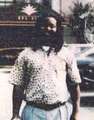
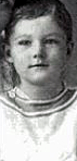
In the late summer of 1912, the Dunbar family embarked on a fishing trip to Swayze Lake in St. Landry Parish, Louisiana, an outing that would irrevocably alter the course of their lives. On August 23rd, their four-year-old son, Robert Clarence "Bobby" Dunbar, a boy with large round blue eyes and light hair that was just beginning to darken, vanished without a trace. One moment he was there, and the next, he was gone, leaving behind only a set of bare footprints leading away from the family's lunch spot. An extensive search of the swampy area and the nearby railroad trestle yielded no sign of the young boy. Convinced that their son had been abducted, Bobby's parents, Lessie and Percy Dunbar, initiated a frantic, nationwide search, offering a substantial reward for his safe return. They distributed postcards bearing his image and a detailed physical description, including a notable scar on his left big toe from a burn he had sustained as a baby. The desperate search for Bobby Dunbar stretched on for eight agonizing months. Then, in April of 1913, a breakthrough came. A boy matching Bobby's description was located in Mississippi in the company of an itinerant handyman named William Cantwell Walters. Walters insisted that the boy was Charles "Bruce" Anderson, the son of a woman named Julia Anderson who worked for his family. He claimed that Julia had willingly given him custody of the child. The Dunbars traveled to Mississippi to identify the boy, and despite some initial uncertainty, they ultimately claimed him as their own. The child was returned to the Dunbars in Opelousas, Louisiana, where he would be raised as Bobby Dunbar. Walters was arrested and charged with kidnapping. Julia Anderson also traveled to Louisiana to contest the Dunbars' claim, asserting that the boy was her son, Bruce. However, a court ultimately sided with the Dunbars, and the boy remained in their care. Walters was convicted of kidnapping, though his conviction was later overturned. For decades, the story of Bobby Dunbar's disappearance and remarkable return was considered a closed chapter. The boy who was found in Mississippi grew up as Bobby Dunbar, eventually marrying, having his own children, and living his life under that name until his death in 1966. However, questions and doubts about his true identity lingered within some family circles. Nearly a century after the boy's disappearance, one of his granddaughters began to research the case, driven by a desire for the truth. This renewed investigation culminated in a landmark event in 2004, when DNA testing was conducted. The results were definitive: the man who had been known as Bobby Dunbar was not related by blood to the Dunbar family. This revelation confirmed that he was likely Bruce Anderson, the son of Julia Anderson, who had been wrongly identified all those years ago. The true fate of Robert Clarence Dunbar remains a mystery to this day. Many speculate that he may have tragically fallen into Swayze Lake and drowned on that fateful day in 1912. His case, a heart-wrenching saga of loss, mistaken identity, and a search for truth that spanned generations, is a poignant reminder of the enduring pain and uncertainty that surrounds a missing child. Due to the passage of time, law enforcement is no longer actively investigating his disappearance.
Aug 23, 1912
Opelousas
Louisiana
Opelousas
None
05/08/2026