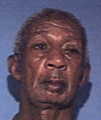
Jerry Laron McCoy’s disappearance began with a quiet and painful absence in Little Rock, Arkansas. Public missing-person records identify him as a Black male who was 49 years old at the time he went missing, with his date missing listed as January 28, 2019. His NamUs case is MP69664, and publicly available summaries tied to NamUs identify Little Rock as the place connected to his last known contact.
The same public case information describes Jerry as approximately 5 feet 6 inches tall, weighing about 159 to 160 pounds, with black hair. Beyond those identifying details, the publicly available record gives very little about what happened that day, leaving his loved ones and the public with only the stark fact that he was last known to be in Little Rock and then was no longer accounted for.
More than a year after Jerry was last known to be in Little Rock, the Little Rock Police Department renewed public attention to his case. On May 5, 2020, KATV reported that police were asking for help finding Jerry McCoy, stating that he had last been known to be in Little Rock on January 28, 2019. The report described him as 5 feet 6 inches tall and 160 pounds and included a request that anyone with information contact detectives at 501-404-3014 or 501-371-4829. That public appeal suggests that, by that point, investigators still needed information from people who might have seen Jerry, heard from him, or knew something about where he may have gone after his last known contact.
The most difficult part of Jerry’s case is how little has been made public. There are no detailed online accounts explaining where in Little Rock he was last seen, what he was believed to be doing, whether he was traveling on foot or by vehicle, what clothing he may have been wearing, or whether there were any known circumstances that raised immediate concern. The absence of those details does not make the case any less urgent; it only makes the public record feel more incomplete. In missing-person cases, especially those where few facts are released, even small pieces of information can matter because they may help establish a timeline, confirm a sighting, or give investigators a clearer picture of the final known movements of the missing person.
Jerry’s case also sits within Arkansas’s broader missing-person response system, where public identification information is used to help bring attention to missing children and adults. Arkansas’s public missing-person resources emphasize that there is no required waiting period to report someone missing and that law enforcement should be contacted without delay, a principle that reflects the seriousness of cases like Jerry’s. The Arkansas Attorney General’s office has also described missing-person work as support for families, law enforcement, and social service agencies, underscoring that each listing represents a real person and a family living with unanswered questions.
As of the available public information, Jerry Laron McCoy’s case remains defined by a last known date, a last known city, a physical description, and an appeal for help. He was last known to be in Little Rock, Arkansas, on January 28, 2019; he was 49 at the time, Black, about 5 feet 6 inches tall, around 159 to 160 pounds, and had black hair. The online record does not provide a public resolution indicating that he was found alive or located deceased, and the circumstances of his disappearance remain vague in the sources available. In overview, Jerry’s case is the story of a man who vanished from Little Rock with very few publicly released details, a police department that asked the community for information, and an unresolved absence that continues to deserve attention, compassion, and answers.Last Seen: Jan 28, 2019