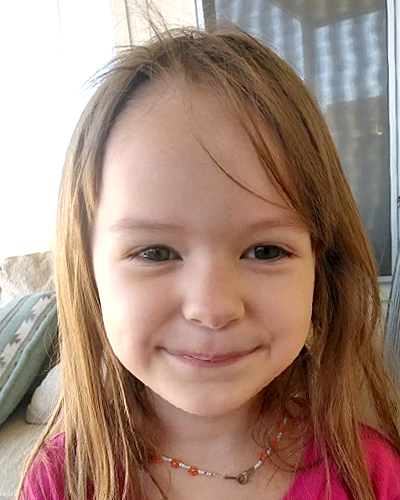
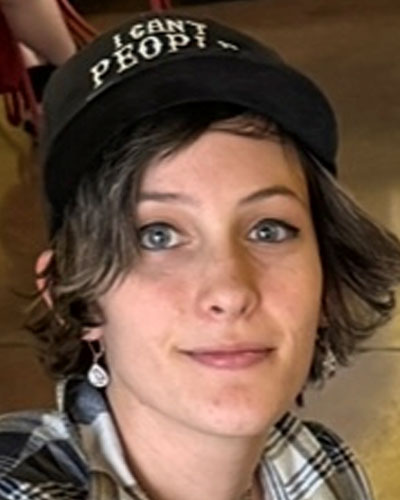
Alissa Marie Turney was a 17-year-old girl living in Phoenix, Arizona, when she disappeared on May 17, 2001, the final day of her junior year at Paradise Valley High School. Her last independently corroborated sighting came at school, where she briefly spoke with her boyfriend and told him that her stepfather, Michael Turney, was taking her out early. Michael later said he picked Alissa up, took her to lunch, and argued with her after she asked for greater freedom to spend time with friends.
According to his account, they returned home and he later left Alissa there while he ran errands and picked up her younger sister. When he came home, he said Alissa was gone and a note had been found in her bedroom stating that she was leaving for California. Michael reported her as a runaway. About a week later, he said he received a brief telephone call that he believed came from Alissa, with telephone records indicating that the call originated from a payphone in Riverside, California. Michael said he traveled there and distributed missing-person flyers, but no confirmed witness ever came forward to establish that Alissa had actually reached California. The National Center for Missing & Exploited Children continues to list Alissa as missing and notes that she may have traveled to California, but no verified contact from her has been established since her disappearance.
Alissa had already endured significant loss by the time she vanished. Her biological parents divorced when she was young, her mother later married Michael Turney, and Michael adopted Alissa and her older brother. When Alissa was nine, her mother died of cancer, leaving Michael to raise Alissa and her younger half-sister Sarah. Family members later remembered Alissa as social, loving, and creative; one brother described her as someone who enjoyed reading and drawing and had an unforgettable smile. By 17, she had a boyfriend, friends, a job at Jack in the Box, and plans for a life in which she hoped to have more independence. Friends and relatives acknowledged that she sometimes talked about wanting to leave home, and California was not an entirely unfamiliar idea: she had discussed traveling there, and an aunt in California had reportedly been willing to let her stay for the summer. Those circumstances contributed to the early belief that she had simply run away. Yet details that initially seemed consistent with a runaway began to trouble investigators. Police later noted that Alissa had about $1,800 in savings that was never touched and that she had left her cell phone behind. A classmate testified years later that she and Alissa had discussed plans for that very evening, and the friend said she never heard from Alissa again. For a teenager described as deeply connected to siblings, friends, a boyfriend and everyday routines, the complete and permanent silence became increasingly difficult for investigators and loved ones to reconcile with a voluntary disappearance.
For several years, the case remained largely framed as the disappearance of a teenager who had chosen to leave. That began to change after a convicted murderer in Florida claimed responsibility for Alissa's death. Investigators ultimately determined that his confession was false, but examining the claim caused Phoenix detectives William Andersen and Stuart Somershoe to take a fresh look at the original circumstances. As they interviewed relatives, friends and others who had known Alissa, detectives began questioning the runaway theory and focusing more closely on Michael Turney, who maintained that he had nothing to do with her disappearance. The renewed investigation uncovered an unusually controlled home environment. Sarah Turney later testified that her father recorded telephone conversations and used a hidden camera to monitor Alissa, while Michael himself acknowledged publicly that he had been a very strict parent. Investigators also learned about detailed written rules governing Alissa's behavior. In 2008, police searched the Turney residence. They did not find evidence establishing that the house had been a crime scene, and they did not find Alissa's remains. Instead, the search led to an entirely separate criminal matter when authorities discovered more than two dozen improvised explosive devices, numerous firearms and other materials. Michael later pleaded guilty to unlawful possession of unregistered destructive devices, was sentenced to 10 years in federal prison and was released in 2017. That conviction was separate from Alissa's disappearance and did not establish what happened to her, but the investigation surrounding it ensured that her case would no longer be treated simply as an old runaway report.
As the years passed without Alissa being located, her younger sister Sarah became one of the most persistent public advocates for answers. Sarah had been only 12 when Alissa vanished and initially accepted much of what she had been told about her older sister running away. As an adult, she began reviewing the circumstances for herself, speaking publicly about the case and pressing authorities to pursue it. Her advocacy through social media and her Voices for Justice podcast brought renewed national attention to Alissa, and law-enforcement officials publicly credited her perseverance when the case reached a major turning point. In 2020, a Maricopa County grand jury indicted Michael Turney on one count of second-degree murder in connection with Alissa's presumed death. Prosecutors proceeded without Alissa's remains, without a known crime scene and without forensic evidence directly showing how she had died. Their case relied heavily on circumstantial evidence and testimony from Alissa's siblings, friends, former coworkers and investigators. During the 2023 trial, Sarah testified about the strained relationship between Alissa and Michael and about the surveillance and recordings inside the home. Other witnesses described Alissa's personality, her relationships and their last interactions with her. Michael's defense emphasized the evidence suggesting Alissa had wanted greater independence and had contemplated California, while arguing that the prosecution could not prove that Alissa was dead or that Michael had caused her death. Michael consistently denied killing Alissa. After the prosecution rested, his attorneys sought a judgment of acquittal under Arizona's Rule 20, which requires an acquittal when there is not substantial evidence capable of supporting a conviction. Judge Sam Myers granted the motion, finding that the evidence was insufficient to permit the murder charge to proceed to a jury verdict. The Maricopa County Attorney's Office publicly stated that it disagreed with the ruling but respected the court's decision.
The acquittal resolved the criminal charge against Michael Turney, but it did not resolve Alissa's disappearance. No court determined what ultimately happened to her, her remains have never been recovered, and the National Center for Missing & Exploited Children continues to maintain a missing-child poster for Alissa, including an age-progressed image intended to show how she might look as an adult. More than two decades of investigation have therefore left her family with an extraordinarily painful divide between what is known and what remains unanswered. It is known that Alissa was at Paradise Valley High School on May 17, 2001; that she expected to leave school early with her stepfather; that Michael said he later left her at home and found a note saying she had gone to California; that no independent sighting subsequently confirmed she was alive in California or anywhere else; and that money, personal connections and other parts of her life remained behind. It is also known that detectives ultimately rejected the simplicity of the original runaway theory, spent years investigating the disappearance as a possible homicide, and obtained an indictment that ultimately ended in an acquittal because the judge found the state's evidence insufficient for a conviction. Through every development, Alissa herself has remained at the center of an enduring absence: a 17-year-old daughter, sister, friend, student and young woman whose ordinary plans for the end of a school year abruptly stopped. In overview, the case has traveled from an initially reported teenage runaway, through renewed scrutiny and a homicide investigation, to a murder prosecution that ended without a conviction, while the fundamental mystery remains unchanged—Alissa Turney disappeared from Phoenix in 2001, no verified account has established where she went afterward, and she remains listed as missing.Last Seen: May 17, 2001