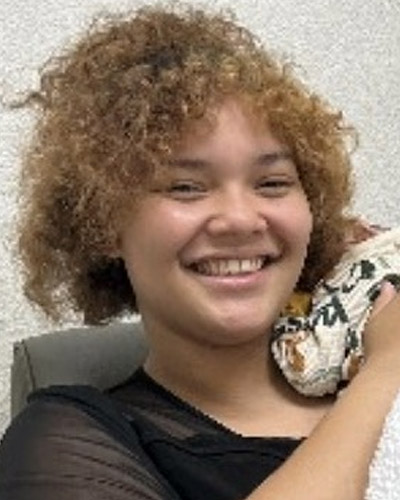
In early 1985, thirty-seven-year-old Valerie Ann Larkin set out on a long bus journey from her home, intending to travel across the country to Virginia. She was a petite woman, about 5 feet 2 inches tall and approximately 120 pounds, with brown hair and hazel eyes. Her teeth were in poor condition, with a noticeable large chip in one of her upper front teeth and a slight overbite, features that would have been immediately recognizable to those who knew her.
She left behind a son and a daughter who, even as children, were deeply affected by her disappearance and the silence that followed.
During the journey, Valerie reached Needles, a small city in San Bernardino County, California, situated along the Colorado River and surrounded by harsh desert terrain. At some point between February and May 1985, commonly recorded as around February 1, she contacted her parents from Needles. She told them that she had lost both her bus ticket and all of her money and could not continue on her own. Her parents responded with concern and quickly wired her funds so she could purchase a new ticket and continue toward Virginia. That call is the last confirmed contact that anyone in her family ever had with her. There is no confirmed evidence that she boarded another bus after receiving the money, reached her intended destination, or made any further contact with relatives or friends.
Family recollections and later information shared by those close to Valerie indicate that she had been diagnosed with bipolar schizophrenia and had a history of going on and off her prescribed medication. Periods of stability could be followed by episodes of significant mental distress if she was not consistently medicated. Because of this history, those who loved her have long believed that her mental health likely played a central role in her disappearance. Some family members have expressed the belief that Valerie may have experienced a manic episode while in Needles and, in an altered state of mind, walked out into the surrounding desert. This belief has been strong enough that certain public listings have described her as “voluntarily missing,” reflecting the possibility that she left on her own, even if she was not fully in control of her actions.
Despite that belief, the possibility of foul play has never been entirely ruled out in the minds of those who knew her. A vulnerable woman, alone, far from home, and possibly in the midst of a mental health crisis, could have been at risk of encountering someone with harmful intentions. It remains possible that a predatory individual may have taken advantage of her condition and circumstances. However, family members have not reported specific evidence or concrete interactions from that time that clearly point toward a particular suspect or scenario. In the absence of clear indicators, their prevailing sense has been that her mental health crisis and the unforgiving desert environment might explain much of what happened next.
There are also lingering questions about her belongings. Some recollections suggest that some or even all of her possessions may have been found left behind on the bus in Needles, which, if accurate, would indicate that she disembarked without the items she had traveled with. That small detail, if confirmed, adds a haunting layer to the story: it suggests a sudden, disorganized departure from the relative safety of structured travel into an unknown and potentially dangerous environment without money, identification, or personal effects.
Official records of Valerie’s disappearance are sparse and sometimes inconsistent. Different databases and reports list different dates in 1985 as the time she was last seen, with February 1 commonly used in connection to the phone call from Needles. What does not change is the core fact that she vanished that year somewhere in or near Needles, California, and was never heard from again. Over time, investigators and missing persons organizations have documented her physical description, dental features, and other identifying characteristics, and DNA reference samples have been collected from family members so that any unidentified remains can be compared to her profile. It is an ongoing attempt to preserve every possible avenue toward an eventual answer.
For Valerie’s children and extended family, the passing years have brought a painful blend of acceptance and unresolved grief. Those who were young at the time of her disappearance grew up with stories instead of memories, trying to piece together who she was from the fragments left behind. They have long understood, in their hearts, that she is almost certainly gone, yet they remain without the certainty that comes with knowing where she is or what exactly happened in those final hours of her journey. Theories about a solitary walk into the desert, the potential involvement of another person, or an accident that has never been discovered all exist side by side, none ever proven.
Today, Valerie Ann Larkin’s story remains one of absence and unanswered questions. Her last known steps lead to a bus stop and a telephone call in a remote desert town, followed by silence. The official files record her height, weight, dental features, and medical history; the memories of those who loved her add the context of a woman living with serious mental illness, trying to navigate her life and her relationships as best she could. Her disappearance is not just an unsolved case but a deeply human loss, felt across generations. Even as her family has, in many ways, come to terms with the likelihood that she will never return, there remains a quiet hope that some fragment of truth might surface one day, bringing a measure of clarity, dignity, and peace to a woman who was cherished and to the family that has carried her absence for so long.Last Seen: Feb 1, 1985