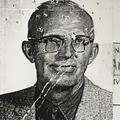
In the spring of 1990, just weeks before his high school graduation, 17-year-old Christopher Alan Temple was on the cusp of a new chapter in his life. On April 22, 1990, a day meant for celebrating Earth Day, Christopher, a male from the Lansing, Michigan area, joined four friends for a day of festivities at Riverfront Park. As evening approached, the group decided to continue their celebration with a camping trip at the Rose Lake Recreation Area in nearby Bath Township.
They gathered around a campfire, but at approximately 9:00 p.m., Christopher stood up, walked into the surrounding woods, and vanished without a trace. His friends initially assumed he was simply seeking a moment of privacy and was not a cause for immediate concern. At the time of his disappearance, he was wearing a black T-shirt with a rock group design, a faded jean jacket, and jeans.
As the hours stretched on with no sign of Christopher, his friends began to worry. By the early morning hours, they initiated a search, which soon expanded to include law enforcement. An extensive search of the vast and swampy Rose Lake area was launched, involving canine units and helicopters, but turned up no sign of the missing teenager. Initially, authorities considered the possibility that Christopher had run away, a theory his parents vehemently rejected, citing his recent positive life changes and academic success. Christopher, who had transferred to Haslett Community Education to benefit from smaller class sizes, was an excellent student with perfect attendance. The only piece of potential evidence discovered came a year and a half after his disappearance when one of his weathered sneakers was found about 300 yards from the campsite in a previously searched area.
Over the years, the investigation into Christopher Temple's disappearance has shifted to suspecting foul play. One theory that emerged was connected to his involvement in selling drugs; it has been suggested that he may have angered a customer by shorting them, leading to a violent confrontation. The remote and marshy landscape of the Rose Lake Recreation Area could have easily concealed evidence of a crime. Despite the passage of time, Christopher's family and friends have continued to keep his memory alive, hoping for answers in a case that has grown cold. The mysterious circumstances of his disappearance, a young man who seemingly walked away from a campfire and into the unknown, have left a lasting and painful void for those who knew him, and the case of what happened to Christopher Alan Temple remains unsolved.
Christopher Alan Temple was a 17-year-old White male when he disappeared from Bath, Michigan, on April 22, 1990. At approximately 9:00 that evening, Christopher was last seen at a recreational area where he had been camping with friends. He was about five feet seven inches tall and weighed approximately 130 pounds, with brown hair and hazel eyes. Christopher wore contact lenses and was dressed in a black T-shirt bearing the design of a rock group, blue jeans, and a faded denim jacket. The gathering should have ended with the teenager returning home, but sometime after he was last observed at the campsite, Christopher vanished without leaving behind a confirmed explanation of where he went.
The publicly available record does not identify the recreational area by name or describe the full sequence of events surrounding Christopher’s final hours. It is not clear when the camping trip began, how many friends were with him, or whether he had planned to remain at the site overnight. The record also does not explain whether Christopher walked away from the campsite, entered a vehicle, became separated from the group, or told anyone that he intended to go elsewhere. No vehicle is listed in connection with his disappearance, and there is no publicly confirmed account of anyone seeing him traveling along a nearby road after 9:00 p.m.
The setting created several possible directions for the original investigation. A recreational area may contain trails, wooded land, bodies of water, uneven ground, and places that become difficult to search after darkness falls. If Christopher left the main camping area alone, he could have become lost, injured, or disoriented. However, the available information does not report that any personal possessions, articles of clothing, or other physical evidence belonging to him were located in the surrounding terrain. Nothing publicly released establishes that an accident occurred, and no recovery has provided an answer to what happened after he was last seen.
Another possibility investigators had to consider was that Christopher encountered or left with another person. As a teenager camping with friends, he may have known people in the area or accepted transportation without attracting immediate attention. In 1990, there were no mobile telephone location records, widespread surveillance cameras, electronic payment histories, or automated license-plate readers capable of preserving his movements. If Christopher entered a car or walked away with someone, the investigation would have depended heavily upon statements from witnesses and information supplied by people who were present that evening.
The public record does not reveal whether Christopher and his friends had disagreements that night, whether alcohol or other substances were present, or whether anyone unfamiliar had approached the group. It also does not state who reported him missing or how much time passed before authorities began searching. These unanswered details make it difficult to reconstruct the moment when an ordinary camping trip became a missing-child investigation. Although Christopher was 17 and capable of moving about independently, he was still a minor, and his disappearance without a confirmed later contact immediately raised serious concerns for his safety.
There is no publicly documented evidence that Christopher had made preparations to run away. No available account indicates that he packed additional clothing, withdrew money, arranged long-distance transportation, or told relatives that he wanted to leave Bath permanently. There is also no reliable indication that he later contacted his family, enrolled in school elsewhere, obtained employment under his identity, or established a life in another community. The absence of such a trail does not conclusively rule out a voluntary departure, but it has left no evidence that Christopher successfully began a new life after walking away from the recreational area.
No suspect or person of interest has been publicly identified in Christopher’s disappearance. Available records do not report an arrest, criminal charge, confession, or discovery of evidence linking another person to his fate. Investigators have not publicly classified the case as a confirmed abduction or homicide, and the known facts do not establish that anyone harmed him. At the same time, the complete lack of a verified sighting after the camping trip has prevented authorities from eliminating the possibility of foul play.
As the years passed without an answer, specialists produced several age-progressed images showing how Christopher might look as an adult. One portrayed him at approximately 33 years old, another at 39, and a later progression depicted him at about 45. These images were intended to help members of the public recognize Christopher if he survived and his appearance changed over time. His original photograph and age progressions remain important because decades have passed since anyone last saw the teenage face his family remembers.
Christopher’s parents also provided DNA reference samples to support the continuing search. Genetic profiles from his mother and father were processed through the Federal Bureau of Investigation Laboratory and entered into the national DNA system. His mother’s mitochondrial and standard DNA profiles were made available for comparison, while a standard profile from his father was also uploaded. These family samples allow authorities to compare unidentified remains found anywhere in the country with Christopher’s biological relatives, including remains recovered long ago and only later tested with modern forensic methods.
The existence of those DNA profiles does not mean that remains believed to be Christopher’s have been located. Instead, they preserve a scientific pathway to identification should a possible match emerge. This is especially valuable in a case that began before DNA databases became a routine part of missing-person investigations. As unidentified-person cases are reviewed and new genetic testing is completed, Christopher’s family reference profiles remain available to help determine whether any discovery could be connected to him.
The Bath Township Police Department remains the investigating agency associated with Christopher’s disappearance, and his case is also listed with the National Center for Missing & Exploited Children. The known story has remained painfully brief: Christopher was camping with friends, he was seen at the recreational area at approximately 9:00 p.m., and afterward no confirmed trace of him was found. The lack of a publicly identified destination, vehicle, witness to his departure, or later communication has left his family without the most basic answer of how he disappeared from a place where he had been surrounded by people he knew.
In overview, Christopher Alan Temple vanished from a recreational area in Bath on April 22, 1990, while camping with friends at the age of 17. He was last seen wearing a rock-group T-shirt, jeans, and a faded denim jacket, but no verified sighting established where he went after leaving the group. No suspect has been publicly named, no arrest has been reported, and no recovery has resolved his fate. His case remains an enduring mystery centered on a young man’s unexplained disappearance from a campsite, the unanswered events that followed his last sighting, and a family that has spent decades hoping that preserved photographs, age-progressed images, DNA evidence, or someone’s memory will finally bring Christopher home.Last Seen: Apr 22, 1990