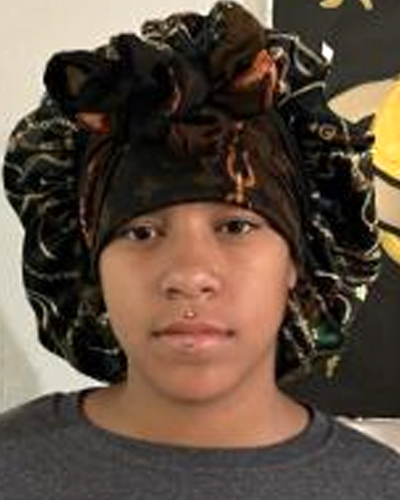
On January 2, 1999, 11-year-old Mikelle Diane Biggs, a female child living in Mesa, Arizona, was last seen outside her family’s home as daylight faded over her neighborhood. Mikelle and her younger sister, Kimber, had been outside with other neighborhood children, and the sisters were waiting for an ice cream truck they believed they could hear in the distance. Mikelle was riding the bicycle that evening while Kimber remained nearby.
As the sun began to set and the other children started going home, Kimber, who was nine years old, became cold and went back toward the family house, only a short distance away. Their mother told Kimber to return outside and tell Mikelle that it was time to come in. Kimber walked back down the driveway calling for her sister, but Mikelle did not answer. Near the intersection of Toltec Street and El Moro Avenue, Kimber saw the bicycle lying in the roadway. One of its wheels was still turning. Two quarters that had been intended for ice cream were also left behind. Mikelle herself was nowhere to be seen. Investigators would come to believe that the opportunity in which she disappeared may have lasted only about 90 seconds. The Mesa Police Department continues to list Mikelle as missing, describing her as 11 years old at the time, approximately 4 feet 8 inches tall, with brown hair and hazel eyes. She was wearing a red shirt with a white stripe across the chest and blue jeans with designs along the sides.
There was almost nothing at the scene to explain how an ordinary evening had become a disappearance. No witness came forward to say that they had seen Mikelle being forced into a vehicle, and there was no reported cry for help that provided investigators with a direction to follow. Police quickly flooded the area, while neighbors, friends, church members and other volunteers began searching as word spread that a child had vanished. Flyers appeared and search parties formed with extraordinary speed. Kimber later remembered police cars, blocked streets, helicopters, news crews and strangers moving through the family home as the search expanded. Investigators interviewed people in the neighborhood and worked through possible explanations, but the physical evidence remained painfully limited: the bicycle Mikelle had been riding and the two quarters left in the road. Detectives came to believe that someone could have seized her and placed her in a vehicle during the extremely short interval when she was alone. The disappearance drew widespread attention partly because of how abruptly it occurred; Mikelle had not gone somewhere distant or disappeared after being unaccounted for over a long period. She had been within a few houses of home, her sister had left her only momentarily, and then she was simply gone.
Behind the missing-person photographs was a child whose family has spent decades trying to preserve who she was rather than allowing her to become only the subject of a cold case. Mikelle was a sixth-grade honor student who played the clarinet and dreamed of someday becoming an animator for Disney. Kimber has repeatedly described her older sister with affection and has spoken of her final memory of Mikelle riding happily in the evening light, her hair illuminated by the setting sun. The emotional consequences of that brief separation never disappeared for the family. Kimber has described how quickly childhood was replaced by police activity, searches, media attention and uncertainty, and in later years she became involved in efforts to improve how families and children are treated during missing-person investigations. The Biggs family has also continued trying to keep Mikelle’s name and story before the public. Decades after the disappearance, Kimber participated in a documentary project intended not only to reconstruct the investigation but also to show Mikelle as a daughter, sister and child whose absence permanently changed the people who loved her. Those efforts reflect the particular cruelty of an unresolved disappearance: the family has had neither a reunion nor a definitive answer about what happened after Mikelle vanished from that Mesa street.
As the investigation continued, detectives examined people living in the surrounding neighborhood, including registered sex offenders. One neighbor who would receive continuing scrutiny was Dee Blalock, who lived about two blocks from the Biggs family. Blalock was questioned early in the investigation, and an alibi was initially provided for him. He later went to prison after being convicted of serious violent offenses in an unrelated attack on another woman. The Biggs investigation subsequently returned to him repeatedly, but no physical evidence has publicly been identified as tying him to Mikelle’s disappearance, he has denied being responsible, and he has never been charged in connection with her case. Years later, the focus remained significant enough that Mesa Police Detective Paul Sipe publicly confirmed in 2024 that Blalock was the person of interest on whom he was concentrating. That distinction is important: being identified as a person of interest is not the same as being charged or proven responsible. Detectives have received thousands of tips during the life of the investigation, many of which proved false or led nowhere, leaving police with the difficult task of continually separating potentially meaningful information from rumor, speculation and deliberate misinformation.
One of the most unusual later developments surfaced in 2018, nearly two decades after Mikelle disappeared and more than 1,700 miles from Mesa. A one-dollar bill was turned over to police in Neenah, Wisconsin, after someone noticed handwriting around its edge. The message claimed to have been written by Mikelle, referred to her kidnapping from Mesa and asserted that she was alive, although her first name was misspelled. Mesa investigators treated the discovery as a possible tip rather than dismissing it outright, consistent with their practice of following new information until it can no longer be pursued. The discovery briefly revived public attention and, inevitably, hope, but no official finding has established that Mikelle wrote the message or that the bill provided a verified account of her whereabouts. For her family, such developments have carried an especially difficult burden: a new lead can offer the possibility that an answer is finally within reach while also raising the prospect of another painful dead end. The dollar bill did not bring the public resolution that investigators and Mikelle’s loved ones had sought.
The passage of more than a quarter century has not caused authorities to erase Mikelle from their active work. In 2024, detectives publicly expressed confidence that the case could still be solved, and the Mesa Police Department continued examining the longstanding person of interest and any information capable of clarifying the narrow window in which Mikelle vanished. Her family likewise continued public efforts to preserve attention on the investigation. As recently as 2026, reporting based on the ongoing investigation stated that Mikelle’s case remained open and that Mesa detectives were still asking anyone with information to come forward. The City of Mesa also continues to display Mikelle on its official missing-persons page, along with her photograph, physical description and the circumstances of her disappearance. There has been no official announcement establishing what happened to her after she disappeared. Kimber has expressed the painful hope for the truth in whatever form it ultimately takes—whether that truth establishes that her sister survived or finally explains where she was taken and what happened to her. In overview, the case remains defined by an extraordinarily small window of time and an equally extraordinary absence of conclusive evidence: 11-year-old Mikelle Biggs was outside near her Mesa home on January 2, 1999, waiting for an ice cream truck; her younger sister stepped away for roughly a minute and a half; the bicycle and two quarters were left behind; and Mikelle disappeared. Massive searches, thousands of tips, scrutiny of a longstanding person of interest and later clues have not yet supplied the missing answer. More than twenty-seven years later, Mikelle remains part of an open investigation, and the enduring purpose of that investigation is the same as it was on the night she vanished—to learn where she went, what happened to her, and to give a family that has lived for decades with uncertainty the truth it has never stopped seeking.Last Seen: Jan 2, 1999