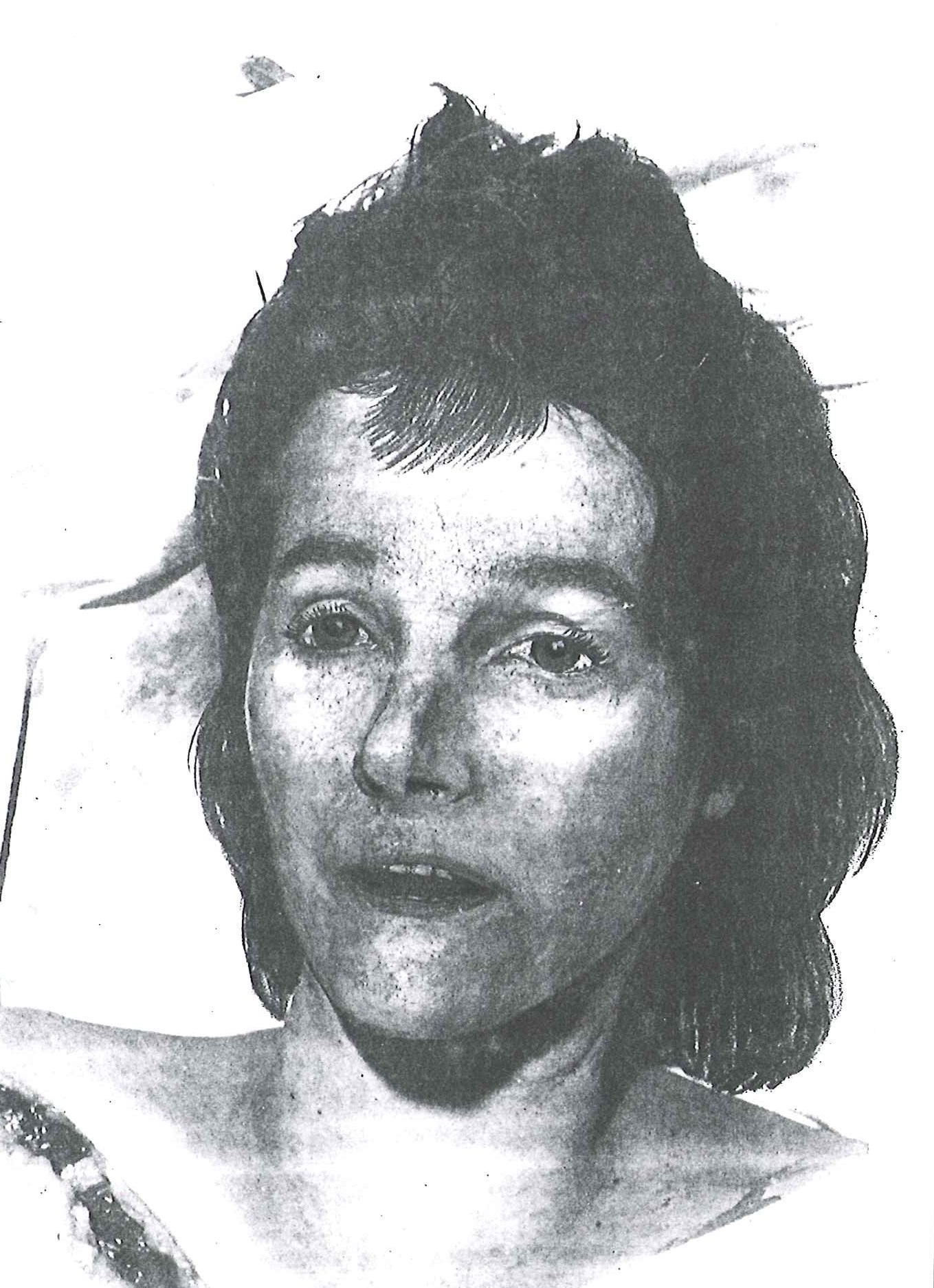
In the mid-1970s, a young woman named Teresa Gail Cupps found herself in a difficult situation, living in a juvenile shelter in Tecumseh, Oklahoma, known as Girlstown. By the age of nineteen, she was navigating a life that had already presented significant challenges. The last confirmed contact with Teresa was around 1978 in Oklahoma City, Oklahoma, though some accounts suggest she was last heard from in 1977.
At the time of her disappearance, she was described as a white female, standing between five feet and five feet three inches tall, and weighing around 120 pounds, with brown hair and brown eyes. She had a tattoo on her right ankle and possibly another on her lower right leg. The circumstances of her life preceding her disappearance were complex; she had a history of drug use and was reportedly involved in sex work. These factors, combined with a conviction for grand larceny in 1975 under the alias Kimbi Boyd, created a precarious existence for the young woman.
Teresa's disappearance was not immediately reported, a fact that speaks to the transient nature of her life at the time. In 1977, she ceased reporting to her parole officer, which resulted in a warrant being issued for her arrest. For thirteen years, there was no sign of Teresa, leading the state to eventually drop the charges against her. It wasn't until 2004, following the death of her mother, that her younger sister officially filed a missing persons report, prompting an investigation into her whereabouts. Investigators attempting to piece together her last known movements found that all public records for Teresa ended abruptly in the late 1970s, making the task of finding her exceedingly difficult. Some information suggests she may have been living with a man named Bobby Boyd in Oklahoma City around the time she vanished.
The case of Teresa Gail Cupps is a somber reminder of how easily a vulnerable individual can slip through the cracks of society. For decades, her absence was a silent void, known only to those who loved her. The official report filed years after she was last seen finally gave a name and a face to her disappearance, turning an unofficial absence into a formal, albeit cold, case. The investigation, handled by the Tecumseh Police Department, has been hampered by the significant passage of time and the sparse amount of information available from the period when she was last seen. With all public records ceasing in the late 1970s, the trail grew cold almost as soon as it began. Her case remains an unsolved and endangered missing person case, a lingering question for her family and the investigators who have sought to bring her home.Last Seen: Jan 1, 1978