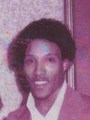
In the late summer of 1981, a 29-year-old man named Joe Burnic Hill, also known as Joe Banks, was living in Detroit, Michigan. He had recently returned from a trip to Florida with his children, where they had visited Disney World. After dropping one of his daughters off with her mother in Alabama, he returned to Michigan with his other children. It was shortly after this trip, on September 1, 1981, that Joe Hill was last seen by his family.
He left his home and, for reasons that remain unclear, never returned. The father of three, who was also a skilled martial artist with a 2nd-degree black belt in Tae Kwon Do, had vanished.
The days following Joe Hill's disappearance brought troubling discoveries. On September 4th, a torso was found in a garbage dump on Detroit's east side. However, at the time, investigators did not connect these remains to Joe's case, mistakenly believing they belonged to a white male. Four days later, on September 8th, Joe's distinctive 1979 gray Pontiac Firebird Trans Am was found abandoned at a car wash in Clinton Township. The car had been stripped of its wheels, T-top cover, and license plate. The owner of the car wash reported that the vehicle had been parked there since September 3rd. Despite these findings, the investigation into Joe's disappearance stalled, leaving his family with unanswered questions and growing concern.
For decades, the family of Joe Hill lived in a state of uncertainty, holding out hope for answers. His brother, Robert Hill, remained a persistent advocate, pushing law enforcement for a more thorough investigation. A significant breakthrough in the case would not come for many years. Decades later, after the description of the partial remains found in 1981 was made public, Robert felt a strong conviction that they belonged to his brother. The family made the difficult decision to have the remains exhumed in August of 2017. In March of 2018, their suspicions were confirmed through DNA testing; the torso was positively identified as Joe Burnic Hill. While this discovery brought a partial sense of closure, it also reopened old wounds for his loved ones. The case, which had been a missing person investigation for 36 years, was now officially a homicide investigation. The circumstances surrounding Joe's death remain unsolved, and his family continues to seek justice and answers for the man who was a beloved father, brother, and a central figure in their family. Anyone with information regarding the unsolved murder of Joe Burnic Hill is encouraged to contact the Detroit Police Department.
Joe Burnic Hill, also known as Joe Banks, was a 29-year-old Black male who was last seen in Detroit, Michigan, on September 1, 1981. He stood approximately 5 feet 10 inches to 5 feet 11 inches tall, weighed about 170 pounds, and had black hair, brown eyes, and a scar on the left side of his neck. Joe was a father whose children were still young when he disappeared, and relatives remembered him as a strong, athletic, intelligent, and generous man who placed great importance on family. He had attended Western High School in Detroit and earned a second-degree black belt in Tae Kwon Do after studying at the Tiger Chung Dojo with his brother. Behind his physical strength was a curious and inventive personality; his family recalled that he enjoyed understanding how things worked and was always eager to help the people around him.
Shortly before Joe vanished, he had taken his children on a family trip to Florida. They visited Walt Disney World and another amusement park, creating memories that would later carry a painful significance for those he left behind. On the return journey, Joe took his daughter Leisa to her mother’s home in Alabama before continuing toward Michigan with his other children. Leisa later remembered having an overwhelming difficulty letting him leave. Joe reassured her that he would return and reminded her of the strength he believed she possessed, but she never saw him again. Once he returned to Michigan, Joe left his family’s home and disappeared, beginning a period of uncertainty that would last for more than three decades.
Joe was associated with a gray or silver 1979 Pontiac Firebird Trans Am, described as a silver-anniversary model with a T-top. The car became one of the earliest physical clues after his disappearance. On September 8, Clinton Township police recovered it from the Rub-A-Dub Car Wash on Gratiot Avenue. The owner of the business said the vehicle had been parked there since approximately September 3, only two days after Joe was last seen. By the time police found it, the wheels, license plate, and T-top cover had been removed. The stripped vehicle provided no public explanation for who had driven it to the car wash, whether Joe had been inside when it arrived, or what had happened to him afterward.
While Joe’s family was searching for him, authorities were already in possession of evidence that would eventually reveal part of the truth. Within days of his disappearance, a human torso was discovered in the 1500 block of Harper Avenue, in or near a garbage disposal area on Detroit’s east side. Published sources differ by one day on whether the remains were found on September 4 or September 5, but they agree that the discovery occurred only a few days after Joe vanished. The torso had been separated from the rest of the body, and no additional remains belonging to the victim were recovered at the scene. Despite the close timing and location, investigators did not initially connect the unidentified man with Joe’s missing-person case.
Joe’s relatives later said they had been told that the recovered torso belonged to a white man. Because Joe was Black, that description caused the family and investigators to rule out an apparent connection between the unidentified remains and his disappearance. The torso remained unidentified while Joe continued to be listed as missing, leaving his family to wonder whether he had been harmed, had gone somewhere unexpectedly, or was still alive but unable to contact them. His brother Robert later expressed anguish over the mistake, questioning how the remains of a Black man could have been classified in a way that prevented an earlier comparison with Joe.
The years passed without a confirmed sighting, communication, or explanation. Joe never returned to his children, and he missed their milestones, their adulthood, and the arrival of grandchildren and great-grandchildren who would know him only through family stories. His absence changed the structure of the family. Relatives described Joe as someone who carried and supported those around him, making the silence after his disappearance especially difficult. They did not accept that a father so deeply connected to his children would simply walk away permanently without a word. As time continued, the possibility that he had been killed became increasingly difficult to ignore, although there was no body identified as his and no publicly named suspect.
A major breakthrough came decades later when more information about the unidentified torso was made publicly available. Robert reviewed the physical description and noticed that the estimated height and weight were consistent with his missing brother. He became convinced that the unidentified man could be Joe and helped push for the remains to be examined. The Hill family arranged for the torso to be exhumed in August 2017 so modern forensic testing could be conducted. DNA reference profiles from Joe’s mother and brother were available for comparison, allowing investigators to test a possibility that had been overlooked since 1981.
In March or April 2018, depending on the reporting source, DNA testing positively identified the partial remains as Joe Burnic Hill. The discovery ended the question of whether he had chosen to abandon his family or had secretly continued his life elsewhere. Joe had been killed around the time he disappeared, and his dismembered torso had been found in Detroit almost immediately. The identification brought his family a measure of certainty and allowed them to recover part of him, but it also reopened decades of grief. His brother described the identification as both welcome and deeply painful: the family finally had part of Joe back, yet they were forced to confront the violent reality of what had happened to him.
The identification did not solve the homicide. Publicly available records do not explain where Joe was killed, how he died, or where the remainder of his body was taken. They do not identify the person or people who dismembered him, transported his torso to the east side, stripped his Pontiac, or abandoned the vehicle at the Clinton Township car wash. His family has raised questions about people who were close to Joe at the time, including why certain individuals may not have received sufficient scrutiny, but no one has been publicly charged with his murder. The official investigation remains open, and the Detroit Police Department continues to seek information that could identify those responsible.
Joe’s NamUs missing-person entry has also remained open because only part of his body was recovered. Although his identity and death have been confirmed, additional remains are still missing and could contain evidence important to the investigation. Their recovery might reveal more about the injuries he suffered, the method used to kill him, the place where the crime occurred, or the manner in which his body was concealed and divided. The continued listing therefore reflects an unfinished search rather than uncertainty about whether Joe survived. He has been identified as deceased, but law enforcement and his family are still waiting for the rest of him to be found and for his killer or killers to be held accountable.
Those who loved Joe have worked to ensure that his life is remembered for more than the brutality of his death. His children recall a father who taught them to believe in their own strength. His daughter’s memory of him flexing his arms and telling her that she was strong became a story shared with later generations. His family remembers his kindness, athletic ability, intelligence, curiosity, and willingness to support others. These details preserve the person behind the cold-case file: a young father whose life extended far beyond the unidentified remains stored for decades without his name.
In overview, Joe Burnic Hill disappeared from Detroit on September 1, 1981, shortly after returning from a family trip with his children. His stripped 1979 Pontiac was abandoned at a Clinton Township car wash, while a torso found on Detroit’s east side only days after he vanished was mistakenly left unconnected to him for approximately 36 years. DNA testing finally identified the remains in 2018, confirming that Joe had been killed and dismembered, but the remainder of his body has not been recovered and no one has been charged with his murder. What began as a missing-person investigation is now an unresolved homicide centered on a devoted father whose family endured decades without knowing that part of him had been found almost from the beginning. The identification gave Joe back his name, but his case remains incomplete until his remaining remains are located and the person responsible for taking him from his children is identified.Last Seen: Sep 1, 1981