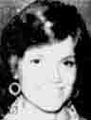
In the autumn of 1983, a cloud of concern settled over Troy, Michigan, with the disappearance of 36-year-old Carol De Arment. On the evening of October 26th, the mother of three was last seen leaving her boyfriend's apartment between 11:00 and 11:45 p.m. to return to the home she still shared with her estranged husband, Donald De Arment. Carol, who was described as a dedicated mother, uncharacteristically failed to leave a note for her children, a practice she always followed if she were going to be away. This small but significant detail was one of the first indicators to her loved ones that something was gravely wrong. Friends and family were adamant that she would never have voluntarily left her children. Her car was found parked in the driveway of her home, but disturbingly, the keys were still in the ignition, and her purse and eyeglasses were left behind on the front seat. All of her personal belongings, including her clothes and money, remained untouched in the house.
The circumstances surrounding Carol's life at the time of her disappearance painted a troubling picture. She was in the midst of a contentious divorce from her husband, Donald, who was 21 years her senior. Their relationship was described by friends as volatile and filled with bitter arguments. Friends of Carol reported that Donald was a controlling spouse who isolated her from her own friends and activities. In court documents related to the divorce, Carol made serious allegations of physical and sexual abuse against her husband, stating that she feared for her safety. Despite these claims, and six police reports on file involving the couple, none of them officially documented her as a victim of assault. The divorce was set to go before a judge in November, just weeks after she vanished. Adding to the complexity of their separation, an audit had been arranged by Carol's attorney to determine her husband's true net worth, which some estimated to be in the millions, a few days before she went missing.
The investigation into Carol's disappearance quickly focused on her estranged husband, Donald De Arment. Although they lived in the same house, he claimed to have not seen her since October 19th, a week prior to her going missing. A court order had been issued to prevent him from entering the study of the house, which Carol had been using as her bedroom. A significant and grim discovery was made when police found blood matching Carol's blood type on a sofa in the home and in the trunk of Donald's 1978 Mercedes. Despite the mounting suspicion, Donald was never charged in connection with his wife's disappearance. In 1986, as he was dying from cancer, the lead detective on the case visited him in a final attempt to get answers, but Donald refused to speak with him. With his death, the investigation stalled, leaving a painful void for Carol's loved ones. Carol De Arment was legally declared dead in 1993, but her case remains an unsolved and poignant mystery, a story of a mother who vanished amidst a turbulent period of her life, leaving behind a family and a community to grapple with unanswered questions.
Carol Kresge DeArment was a 36-year-old woman and mother of three when she was last seen in Troy, Michigan, on October 26, 1983. That evening, Carol visited her boyfriend at his apartment and remained there for approximately two hours. She reportedly left sometime between 11:00 and 11:45 p.m., intending to return to the Wentworth Place home she was sharing with her estranged husband, Donald DeArment. Carol was never seen or heard from again. Her disappearance was immediately troubling because she was deeply devoted to her children and was known to tell them where she was going whenever she planned to be away. This time, she left no note, gave no explanation and made no arrangements for an extended absence. Friends and relatives insisted that Carol would not willingly abandon her children, making the sudden silence surrounding her disappearance seem entirely out of character.
When Carol's vehicle was examined, it created even more questions about what had happened after she left her boyfriend's apartment. Her 1981 Buick was found parked in the driveway of her Troy residence, with the keys reportedly still in the ignition. Her purse and prescription eyeglasses were inside the vehicle, while her clothing, money and other personal belongings remained at the house. The discovery suggested that Carol had at least reached her property or that someone had brought her car there after she disappeared. Nothing about the scene indicated that she had prepared to leave Troy or begin a new life elsewhere. She had not packed clothing, withdrawn her belongings or taken the personal items she would have needed. At the time she vanished, Carol was believed to be wearing tan slacks, a maroon blouse and a navy-blue blazer with a red-and-white plaid pattern. She was described as approximately 5 feet 5 inches tall and weighing about 120 pounds, with blue eyes and short, light-brown hair that had frosted blond tips.
Carol was the great-granddaughter of Sebastian S. Kresge, the founder of the S.S. Kresge retail chain that eventually became Kmart. Her family connection brought considerable public attention to the case, and the FBI offered assistance to Troy police during the early investigation. Authorities initially reported that there had been no ransom demand, despite Carol's association with a wealthy and prominent family. There was also no reliable evidence that she had been abducted for money. As the investigation continued, attention shifted away from the possibility of a kidnapping by strangers and toward the difficult circumstances within Carol's home. She and Donald were estranged but were still living in the same residence while going through a bitter divorce. Their relationship had deteriorated badly, and disputes involving finances became an important part of the investigation.
The financial conflict between Carol and Donald reportedly intensified shortly before she disappeared. Donald owned four businesses and stated in divorce documents that his net worth was approximately $297,000, although others believed his actual wealth could have been between two and four million dollars. Carol's divorce attorney arranged for an accountant to audit Donald's finances and determine the true value of his assets. Carol vanished only days before that audit was scheduled to take place. This timing, combined with the tensions surrounding the divorce, caused investigators to examine Donald closely. He eventually became the principal suspect in Carol's presumed death, although he was never arrested or formally charged. Investigators reportedly developed a theory that Carol was attacked inside the residence and that her body was then transported away in Donald's vehicle.
Physical evidence discovered during the investigation strengthened police suspicions. Blood matching Carol's blood type was reportedly found on a sofa inside the house and in the trunk of Donald's 1978 Mercedes. The forensic testing available in 1983 was far more limited than modern DNA analysis, and the evidence did not lead to criminal charges. Authorities nevertheless came to believe that Carol had been struck and strangled before her body was placed in the trunk of the Mercedes and removed from the property. Her remains were never located, leaving investigators without the physical evidence needed to establish precisely how, where or when she died. Donald continued to deny involvement, and the case remained unresolved while he was alive.
In 1986, Donald was dying from cancer at the age of 59. The detective overseeing Carol's case went to his bedside in the hope that Donald might finally reveal what had happened or identify the location of her remains. Donald refused to speak with the detective and died without providing an explanation. His death eliminated the opportunity to question the investigation's main suspect further, and the case gradually stalled. No other person has been publicly identified as a comparable suspect, and no one has ever been prosecuted for causing Carol's disappearance. Nearly ten years after she vanished, a probate judge declared Carol legally dead in April 1993. The legal declaration allowed matters involving her estate to proceed, but it did not establish what happened to her or provide her children and loved ones with the certainty of recovering her remains.
Carol's case remains recorded with the Troy Police Department under agency case number 83-25288 and with the National Missing and Unidentified Persons System as MP10412. Although investigators came to suspect that she was killed inside the home she shared with her estranged husband, the available official case information contains no confirmed recovery or formal resolution. Her disappearance is therefore remembered not simply as the unexplained absence of a wealthy heiress, but as the loss of a mother whose children were left without answers. In overview, 36-year-old Carol Kresge DeArment disappeared in Troy, Michigan, on October 26, 1983, after leaving her boyfriend's apartment and apparently returning to her residence. Her car and essential belongings were left behind, blood consistent with her type was reportedly discovered in the home and in her estranged husband's vehicle, and Donald DeArment became the principal suspect but died without being charged or revealing where Carol could be found. Her remains have never been recovered, and the central question of what was done to Carol after she arrived home that night continues to shadow a family that has endured decades without a final answer.
Last Seen: Oct 26, 1983