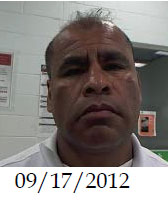
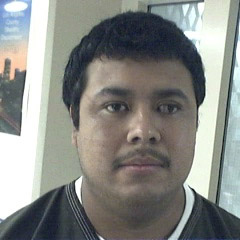
In the autumn of 2010, a time of uncertainty and hope for many, 39-year-old Jose Angel Olivas Siari embarked on a journey that would leave his family with years of unanswered questions. On October 25, 2010, Jose, a Hispanic male with black hair and brown eyes, was last seen in Nogales, Arizona. Standing at 5 feet 8 inches and weighing approximately 180 pounds, his presence was a familiar comfort to those who knew him.
The specific details of his last known moments are sparse, but it is understood that he was in the process of crossing the border between the United States and Mexico. This single piece of information provides a backdrop to a story that has remained unresolved for over a decade, a narrative of a man who seemingly vanished while on a path often fraught with peril and uncertainty.
The passage of time has not erased the distinct memories of Jose held by his loved ones, memories that are now intertwined with the few tangible details left behind. He had a scar on his chin and a puncture scar on his elbow, small markers of a life lived. More significantly, a portrait of Jesus Christ was tattooed on his left leg, accompanied by the poignant Spanish words 'Se busca,' meaning 'Wanted' or 'Searched for.' When he was last seen, he was wearing a red and white short-sleeved shirt with buttons, a green zip-up jacket with a hood that was red and white on the inside, and black 'Nike' tennis shoes. He carried with him a black wallet, a red 'Angels' hat, a card bearing the face of a little girl, a voter ID card, and a list of telephone numbers, each item a small breadcrumb leading back to a life abruptly put on hold.
The investigation into Jose's disappearance was officially reported on November 19, 2010, and his case was later documented by the Pima County Medical Examiner's Office. Despite the passage of years, his case remains an open wound for his family. The circumstances surrounding his disappearance while crossing the border create a complex and challenging scenario for investigators. The vast and often unforgiving landscape of the border region, coupled with the transient nature of a migratory population, presents significant obstacles to uncovering what might have happened to him. The official narrative remains that he was last seen crossing the border, a vague and haunting final image that offers little in the way of closure. For his family, the lack of information has meant a prolonged state of ambiguous loss, a continuous cycle of hope and despair as they await any news of the man they remember. The case of Jose Olivas Siari is a somber reminder of the many individuals who go missing under similar circumstances, their stories often untold and their fates unknown.Last Seen: Oct 25, 2010