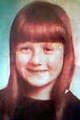
Iris Leslie Brown was 27 years old when she was last seen in Burlington, Vermont, on March 15, 1976. Online missing-person records describe her as a White woman with dark brown hair and hazel eyes, about 5 feet 4 inches tall and 127 pounds. She was reportedly wearing a long green wool coat and blue jeans when she disappeared. Her case remains listed in NamUs as Missing Person case MP20111, and the attached case data does not mark the case as resolved as alive or deceased.
Iris was last seen leaving her Burlington apartment with William John Posey Jr., who said he was going to drive her to Connecticut to see her boyfriend, Martin Gold. According to case summaries, Posey told Iris that Gold, who was incarcerated on drug charges, was being released early and wanted to see her. Iris never arrived in Connecticut and was never heard from again. Posey initially claimed he had driven her partway toward Connecticut and left her in Springfield, Massachusetts, after learning that Gold was not actually being released.
Investigators came to believe Iris had been murdered, and Posey became the central suspect. The Charley Project reports that blood matching Iris’s type was found on the seat and floor of Posey’s car. In 1981, Posey was convicted of kidnapping Iris and sentenced to life in prison, though he was not charged with murder because her body had not been found. He later pleaded guilty in an unrelated abduction and murder case involving an Illinois woman, and he was also considered a possible suspect in the 1978 disappearance of Judy Martins from Kent, Ohio.
In 2008, after more than three decades of uncertainty for Iris’s family, Posey confessed to causing her death. Authorities said he admitted that the story about driving Iris to see her boyfriend had been a ruse to get her into his car. He reportedly told investigators that he tried to persuade Iris to help him sell cocaine, that an argument followed, and that he strangled her. The Associated Press reported that investigators offered Posey immunity in the case because he was already serving a life sentence and was seriously ill, and prosecutors said the goal was to give Iris’s family answers.
Posey told investigators he disposed of Iris’s remains somewhere along Interstate 89 in Vermont, but he could not provide a precise location. The Charley Project states that he said he and Iris may not have gone much farther than Barre, Vermont, and that he described leaving her body over a guardrail along the interstate. A search was planned, but online sources continue to state that Iris’s remains have not been found. Because she has not been recovered, her case remains a missing-person case, even though authorities and her family have long treated Posey’s confession as the answer to what happened.
Iris grew up in Enosburg Falls, Vermont, graduated from Enosburg Falls High School, and attended the University of Vermont. The loss endured by her loved ones was made even more painful by the long years without clear answers or a place to bring her home. Her sister Roslyn Brown described the family’s decades of uncertainty as an experience that did not simply end with the confession, emphasizing that knowing what happened did not erase what the family had suffered.Last Seen: Mar 15, 1976