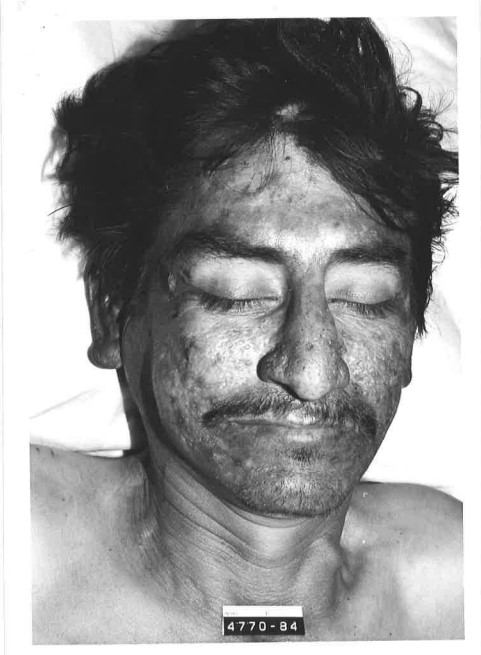
In the summer of 1947, a promising young soldier named Harvey Eugene "Gene" Whitacre vanished from the outskirts of Albuquerque, New Mexico, leaving behind a few scattered belongings and a mystery that has endured for decades. On the evening of June 30th, the 20-year-old corporal, who was stationed at Sandia Base, went to a local bowling alley.
He was known to be the treasurer for his bowling league and was reportedly carrying a significant amount of cash, around $400, on the night he disappeared. The following day, when Gene failed to appear for roll call at the base, he was initially listed as AWOL. However, the discovery of some of his personal items on a side street near the bowling alley quickly shifted the focus of the investigation to a possible foul play. Authorities found his army cap, a tie, his distinctive thick-lensed glasses, and a shirt that was stained with blood and had two slash marks on the back.
The investigation into Gene's disappearance was extensive, involving both the FBI and the Department of Defense. Investigators explored various angles, including the possibility that his work at Sandia Base, a key nuclear weapons installation, might have been a factor. The theory was that he may have had access to sensitive information, but the army officially denied that he held a position that would have endangered national security. Authorities diligently questioned his family and friends, and even went as far as to monitor their mail and tap their phones in the hope that Gene might try to make contact. Despite these efforts, no meaningful leads were ever developed from these surveillance activities. The last known communication from Gene was a letter he had written to his sister just a week before he went missing. The family's belief, supported by authorities, was that he did not disappear voluntarily.
Over the years, the case of Harvey Eugene Whitacre has grown cold, yet the ache of his absence remains for those who knew him. The prevailing theory among some is that he was the victim of a robbery that turned fatal, given the large sum of money he was carrying. His family, including a niece who has actively pursued the case, has worked to keep his memory alive and has submitted DNA to national databases in the hopes of one day finding answers. Officially declared dead in 1954, Gene's disappearance is a poignant story of a young life cut short and a family left with unanswered questions. The few clues left behind on that quiet Albuquerque street paint a grim picture of his final moments, a narrative of suspected violence that has yet to find its conclusion. The case serves as a somber reminder of the many individuals who have vanished without a trace, leaving behind enduring mysteries and the persistent hope for resolution.Last Seen: Jun 30, 1947