Crime Solvers Central
298 Cases Solved. Advancing justice for missing persons, unsolved homicides, unidentified and unclaimed remains.

Case Description

Any updates on this case? Let us know!
Summary based on the NamUs case record (MP25526) and 7 other sources
On March 25, 1990, 19-year-old William "Billy" Hokanson, Jr. and his father, William "Hokey" Hokanson, Sr., disappeared while on a fishing expedition in the Atlantic Ocean. The father and son departed from Fairhaven, Massachusetts, on their vessel, the 'Sol-e-Mar', on March 22, 1990, for what was planned as a multi-day trip to catch flounder near Cape Cod. At the time of his disappearance, Billy was described as 6'2" tall, weighing approximately 180 pounds, with brown hair and brown eyes. A 1989 graduate of the Greater New Bedford Regional Vocational High School's marine industries program, he was a passionate fisherman who owned his own boat, the 'Hokey II'.

The last known contact with the men was on March 25, 1990. On that day, the United States Coast Guard received a brief, four-second distress call from Billy Hokanson. Tragically, this genuine call for help was followed almost immediately by a hoax distress call from another source, leading the Coast Guard to dismiss both as pranks. Consequently, no immediate rescue operation was launched. It was not until March 30, 1990, five days after the distress call, that the family, alarmed at their failure to return as scheduled, notified the Coast Guard that the 'Sol-e-Mar' was overdue.

Following the family's report, the Coast Guard initiated an extensive search, but it was suspended after three days without success. In April 1990, the sunken 'Sol-e-Mar' was discovered by a volunteer search crew off the coast of Martha's Vineyard. Despite the discovery of the vessel, neither William Jr. nor his father were ever found. The tragic incident prompted legislative changes, resulting in the Studds Act, which strengthened penalties for making hoax distress calls and led to upgrades in Coast Guard equipment and procedures to better locate the origin of transmissions. In 1996, human remains were dredged from the ocean in the vicinity of the sinking, but a comparison with the Hokansons' dental records proved inconclusive. Decades later, in 2014, the family officially had both father and son entered into the National Missing and Unidentified Persons System in the hope that DNA technology might one day lead to their identification.

Last Seen: Mar 25, 1990

Possible Unidentified Matches (4)

Unidentified remains cases whose details are consistent with this person, ranked by how closely they compare. Fields that are unknown in either case are left out of the score.

75%Possible
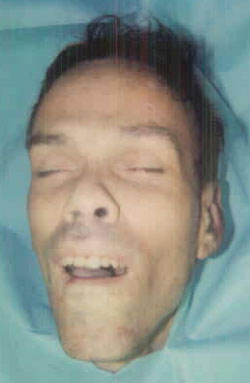
John Doe — Lunenburg, Massachusetts - unidentified case UP14702
John Doe — Lunenburg, Massachusetts
UP14702 • Found Jul 7, 2011
View case
Sex ✓Male
Age 100%Est. 40–45 vs 19 when missing
Race 100%White
Location 81%80 mi away
TimingFound 21 years after last seen
Height 100%6'1" vs 6'2"
Weight 76%140 lb vs 180 lb
75%Possible
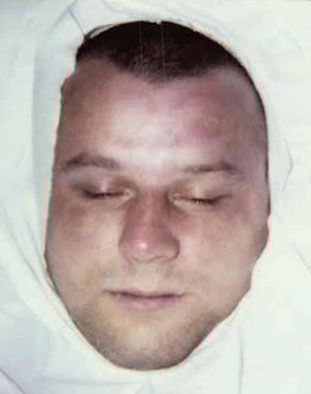
John Doe — New York, New York - unidentified case UP5641
John Doe — New York, New York
UP5641 • Found Nov 20, 2005
View case
Sex ✓Male
Age 97%Est. 35–45 vs 19 when missing
Race 100%White
Location 65%152 mi away
TimingFound 16 years after last seen
Height 100%6'3" vs 6'2"
Weight 100%167 lb vs 180 lb
Hair 100%Brown vs Brown
75%Possible
John Doe — Queens, New York - unidentified case UP5980
John Doe — Queens, New York
UP5980 • Found Sep 28, 2001
View case
Sex ✓Male
Age 100%Est. 20–35 vs 19 when missing
Race 100%White
Location 67%141 mi away
TimingFound 12 years after last seen
Height 84%6'0" vs 6'2"
Weight 68%226 lb vs 180 lb
Hair 100%Brown vs Brown
Eyes 100%Brown vs Brown
75%Possible
John Doe — Queens, New York - unidentified case UP7300
John Doe — Queens, New York
UP7300 • Found May 3, 1995
View case
Sex ✓Male
Age 85%Est. 25–45 vs 19 when missing
Race 100%White
Location 67%141 mi away
TimingFound 5 years after last seen
Height 100%6'1" vs 6'2"
Weight 71%224 lb vs 180 lb
Hair 60%Black vs Brown
Eyes 100%Brown vs Brown

These comparisons are generated automatically from public NamUs case data and are not confirmed identifications. Only DNA, dental or fingerprint comparison by investigators can confirm an identity. If you believe two cases are connected, contact the agency handling the unidentified case.

Unidentified photos are blurred because many are post-mortem. Tap a photo to reveal it.