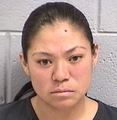
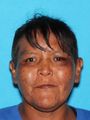
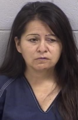
In the late summer or autumn of 1996, a 50-year-old Native American woman named Betty Ann Claw vanished from Farmington, New Mexico, leaving her family with few answers and a profound sense of loss. There is some uncertainty regarding the exact date she was last seen by relatives. Official sources like the National Missing and Unidentified Persons System state her last date of contact was August 2, 1996.
However, other accounts from her family suggest she was last seen on Thanksgiving of that year, which fell on November 28. What is known is that after that time, Betty, a mother and sister, was never heard from again. One of her sisters officially reported her missing in December 1996, but the passage of time did little to clarify the circumstances of her disappearance. The details surrounding what happened to Betty remain scarce, leaving a void in the lives of those she left behind.
Betty was a woman with distinct physical traits that her loved ones hoped would make her easy to identify. At the time she went missing, she stood between 5'3" and 5'6" and weighed approximately 140 pounds. She had black hair and brown eyes and required prescription eyeglasses. Life had left its marks on her; she had a mole on her right shoulder that she affectionately called "her spider" and a surgical scar on the right side of her lip from a previous car accident. That same accident caused lasting damage to her ankles and thumb, which required the insertion of pins. It has been noted that she might have used the first name "Ina" as an alias. Despite these details, years have passed without any confirmed sightings or information on her whereabouts.
The investigation into Betty Ann Claw's disappearance is an active cold case with the San Juan County Sheriff's Office. Over the decades, efforts have been made to bring new life to the investigation. In 2018, more than two decades after she vanished, a detective with the sheriff's office reached out to Betty's family in an attempt to gather new information and hopefully bring them some measure of closure. The case serves as a heart-wrenching example of the silent crisis of missing and murdered Indigenous women, whose stories often go untold and cases unsolved for far too long. The overview of Betty's case is one of quiet uncertainty; a woman disappeared with very few details available to the public. Her family has been left to navigate decades of ambiguity, holding onto hope while grappling with the painful reality that so much about her disappearance remains unknown.Last Seen: Aug 2, 1996