

Why Cold Case Databases Matter for Justice in 2026

Cold case databases are centralized, secure repositories of unresolved criminal case information that give investigators, families, and advocates a structured path toward justice. As of early 2026, an estimated 250,000 homicide cases in the United States remain unsolved. That number represents 250,000 families still waiting for answers. Understanding why cold case databases matter starts with recognizing that without organized, accessible records, most of those cases stay buried forever. Tools like CODIS, digital evidence management systems (DEMS), and forensic genetic genealogy platforms have transformed what investigators can realistically accomplish with decades-old evidence.
Why cold case databases matter for solving unresolved crimes
Cold case databases do one thing no individual detective or filing cabinet can: they make aging evidence searchable, shareable, and actionable at scale. A case from 1987 might contain fingerprints, witness statements, and biological samples stored in separate locations across multiple agencies. A unified database pulls those fragments together so a fresh investigator in 2026 can see the full picture in hours instead of months.
The cold case files significance goes beyond convenience. Databases preserve evidence integrity over time, maintain chain of custody records, and create a living record that can be updated as new forensic methods emerge. When DNA technology advanced in the 1990s, investigators could retest biological samples from cases closed in the 1970s. That only worked because the evidence still existed and was findable. Without a database, those samples would have been lost, discarded, or simply forgotten.
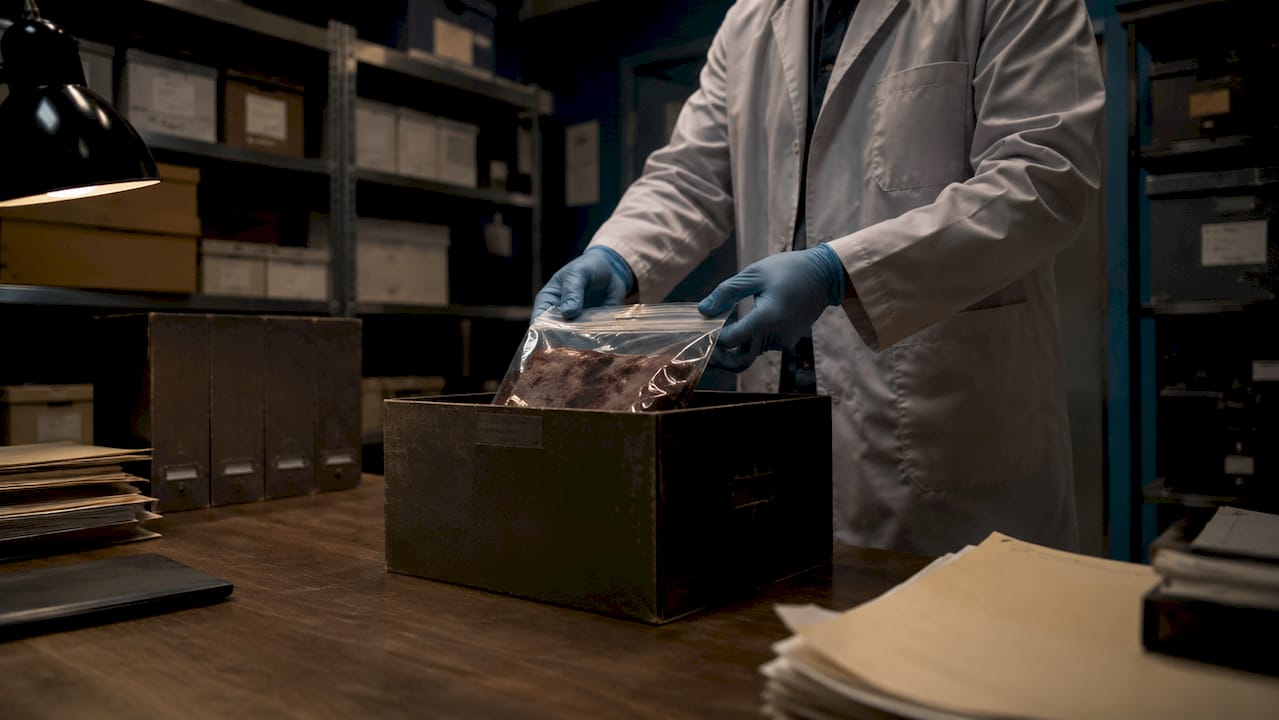
The impact of cold case investigations extends to deterrence as well. Expanding offender profiles in CODIS raises DNA match probabilities and creates a measurable deterrent effect on future crime. A larger, more complete database does not just solve old cases. It prevents new ones.
How does technology improve cold case database effectiveness?
Modern technology has fundamentally changed what cold case databases can deliver. The shift is not incremental. It is the difference between a library with no catalog and one with a real-time search engine.
Ai-powered evidence processing
AI-powered DEMS enable investigators to process and make searchable thousands of hours of recordings in just 24 hours. Manual review of the same volume previously took months or years. That compression of time means investigators can pursue leads while witnesses are still alive and memories are still accessible.
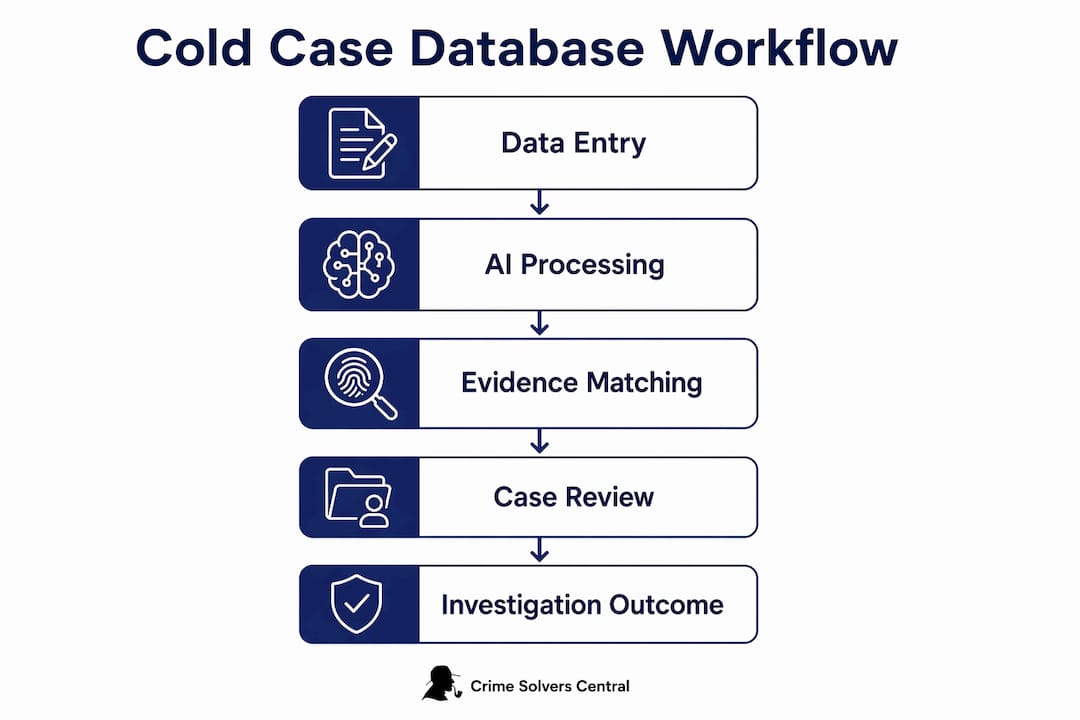
Tools like CrimeOwl scan thousands of pages of degraded documents, audio files, and case records rapidly. They surface connections that no human reviewer would catch across a 40-year-old file box. However, AI tools require human verification to avoid errors and maintain legal standards. The technology accelerates discovery. Trained investigators still make the final call.
Forensic genetic genealogy
Forensic investigative genetic genealogy (FIGG) represents one of the most significant advances in cold case work. FIGG uses voluntary uploads to ancestry databases to identify suspects where traditional DNA methods fail. When a crime scene sample does not match any profile in CODIS, investigators can run it against public databases like GEDmatch to find distant relatives and work backward to a suspect. This method has resolved cases that sat untouched for 30 years.
Digitizing legacy evidence
Digitizing legacy evidence is the prerequisite for all of this. AI cannot analyze evidence it cannot access, and many agencies still hold physical records that have never been scanned or indexed. Completing that digitization step is the single most important infrastructure investment a cold case unit can make.
- Transcription tools convert audio interrogation recordings into searchable text within hours.
- Cross-referencing engines link suspect names across multiple case files automatically.
- Digital tagging systems attach metadata to each piece of evidence, preserving chain of custody in real time.
- Lead generation algorithms flag patterns across unrelated cases that human reviewers would miss.
- Secure cloud storage protects evidence from physical degradation, fire, and institutional memory loss.
Pro Tip: If you are an advocate or researcher working with a local agency, ask whether their pre-2000 case files have been digitized. That single question can identify the biggest gap between a solvable case and a permanently cold one.
What standards govern cold case database reliability?
A database is only as trustworthy as the rules governing it. Without rigorous standards, evidence becomes inadmissible, investigations collapse in court, and public trust erodes.
Accreditation standards like CALEA require that all cold case evidence maintains an unbroken chain of custody and is stored under strict protocols to preserve integrity for forensic use and legal admissibility. These are not suggestions. They are binding requirements for agencies seeking or maintaining accreditation.
The National Institute of Justice (NIJ) publishes best practices that complement CALEA standards, covering everything from evidence packaging to digital storage encryption. Agencies that follow NIJ guidelines demonstrate a measurable improvement in case admissibility rates when cold cases finally reach trial.
Here is what a compliant cold case evidence management process looks like in practice:
- Initial intake documentation: Every item receives a unique identifier and is logged with date, time, and receiving officer.
- Secure physical storage: Biological samples are stored in climate-controlled environments to prevent degradation.
- Digital tagging: Each item receives metadata that tracks every person who accessed it and when.
- Annual audits: Independent reviewers verify that all logged items are physically present and properly stored.
- Prosecutor collaboration: Investigators brief prosecutors at the start of a cold case review, not at the end, so evidence handling decisions are made with admissibility in mind from day one.
| Standard | Purpose | Outcome |
|---|---|---|
| CALEA Accreditation | Mandates chain of custody and secure storage | Evidence remains court-admissible |
| NIJ Best Practices | Guides evidence packaging and digital encryption | Reduces evidence loss and degradation |
| Annual Audits | Verifies physical presence of all logged items | Prevents evidence from going missing |
| Digital Tagging | Tracks access history for every evidence item | Maintains legal integrity of the record |
These standards matter because a solved case that cannot be prosecuted is not justice. It is a second failure for the victim’s family.
How do cold case databases support families and community advocates?
The benefits of using cold case databases extend well beyond law enforcement. Families of missing persons and homicide victims are often the most persistent advocates for their own cases. Databases give them something concrete to work with.
Community involvement and nonprofit advocacy leverage cold case databases to encourage tip submissions, improve public awareness, and apply investigative resources that overwhelmed law enforcement agencies cannot always provide. Organizations like the Doe Network and NamUs have used public database access to generate new leads on cases that agencies had formally deprioritized.
Public access to case information also produces a direct investigative benefit. When a family posts a case summary online or shares database records through social media, they reach people who may have relevant information but never knew where to report it. That tip pipeline has reopened real cases.
For students studying criminal justice, cold case databases serve as primary source material. Reviewing actual case structures, evidence logs, and investigative timelines teaches procedural knowledge that no textbook replicates. Understanding how cold case databases help investigators also teaches advocates how to ask better questions of the agencies handling their loved ones’ cases.
- Nonprofit task forces use database records to identify geographic patterns in unsolved cases.
- Families can monitor case status updates and flag new information directly to investigators.
- Community fundraising efforts target specific digitization projects for agencies with limited budgets.
- Student researchers contribute to case documentation through supervised university programs.
- Advocacy groups use database statistics to lobby for dedicated cold case unit funding at the state level.
What are the biggest challenges facing cold case databases?
Cold case databases are powerful, but they operate under real constraints. Recognizing those limits is part of using them responsibly.
Privacy is the most contested issue in modern cold case work. FIGG’s use of public ancestry databases raises legitimate concerns about whether distant relatives consented to having their DNA used in criminal investigations. The privacy considerations in genetic genealogy are not hypothetical. Several states have passed legislation restricting how law enforcement can access commercial DNA databases, and those restrictions directly affect cold case resolution rates.
Degraded or missing evidence is a structural problem that no database can fully solve. Biological samples stored improperly for decades may be too compromised for modern analysis. Paper records lost in floods, fires, or agency relocations simply do not exist anymore. Databases catalog what agencies have. They cannot recreate what is gone.
Algorithmic bias presents a subtler risk. AI tools trained on historical crime data can reflect the biases embedded in that data, potentially directing investigative attention toward certain communities more than others. AI functions as an augmentation tool, not a replacement for detective expertise, and human oversight is the primary safeguard against those errors.
Resource constraints remain the most common barrier. Digitizing decades of physical records requires funding, staff time, and technical infrastructure that many smaller agencies do not have. The agencies with the most cold cases are often the ones with the least capacity to address them.
Pro Tip: If you are supporting a cold case advocacy effort, consider directing donations specifically toward digitization costs rather than general operating funds. That investment directly expands what investigators can analyze.
Key takeaways
Cold case databases are the single most important infrastructure investment in modern criminal justice, because they transform isolated, aging evidence into searchable, legally admissible records that investigators, families, and advocates can act on.
| Point | Details |
|---|---|
| Scale of the problem | 250,000 unsolved U.S. homicides make organized databases a necessity, not a luxury. |
| Technology as a force multiplier | AI-powered DEMS compress months of manual review into 24 hours of indexed, searchable data. |
| Standards protect admissibility | CALEA and NIJ guidelines preserve chain of custody, keeping evidence court-ready for decades. |
| Community access drives leads | Public database access generates tips and reopens cases that agencies have deprioritized. |
| Human oversight remains critical | AI accelerates discovery, but trained investigators must verify every lead before action. |
The human cost behind every unsolved case
I have spent years working at the intersection of criminal justice data and community advocacy, and the thing that never gets easier is the math. Each of those 250,000 unsolved homicides is a person. Each one has a family that has been living in suspension, unable to grieve fully because there are no answers.
What cold case databases do, at their best, is give those families a fighting chance. Not a guarantee. A chance. The technology is genuinely remarkable. Watching AI surface a connection between two cases from different decades, in different states, based on a shared suspect description buried in a paper file, is the kind of thing that makes you believe the system can work.
But the technology only matters if the data gets in. Agencies that have not digitized their pre-1990 records are sitting on potential breakthroughs they cannot access. That is not a technology problem. It is a funding and political will problem. The databases exist. The tools exist. What is missing is the sustained commitment to feed them properly.
For families and advocates, understanding why cold case units are established and how databases support their work is the first step toward effective engagement. You do not need a law enforcement badge to push for better records management. You need persistence and the right questions.
— Crime
Explore cold case records across every state
Crimesolverscentral maintains a national database of over 264,913 cases, organized by state and case type, giving families, researchers, and advocates direct access to the records that matter most. Whether you are searching for a missing person, tracking an unsolved homicide, or building a case for renewed investigation, the platform provides a structured starting point. You can search cold cases by state and filter by situation to find exactly what you need. Crimesolverscentral also supports community participation through membership and advocacy initiatives, making it one of the most accessible resources available for anyone working toward justice on unresolved cases.
FAQ
What is a cold case database?
A cold case database is a centralized, searchable repository of unresolved criminal case records, including evidence logs, suspect information, and investigative history. These systems allow investigators and advocates to access and cross-reference case materials that would otherwise remain scattered across agencies.
How does CODIS help solve cold cases?
CODIS is the FBI’s national DNA database, and expanding its offender profiles directly increases the probability of matching crime scene DNA to a suspect. Larger databases create more match opportunities, which is why profile expansion consistently correlates with higher cold case resolution rates.
Can families access cold case database records?
Yes. Platforms like NamUs and Crimesolverscentral provide public access to cold case information, allowing families to monitor case status, submit tips, and connect with advocacy resources. Access levels vary by agency and case sensitivity.
What is forensic genetic genealogy and is it legal?
Forensic investigative genetic genealogy uses DNA uploaded to public ancestry databases to identify suspects through familial matching. It is legal in most U.S. states, though some have passed restrictions. Investigators using legal DNA testing services and following established protocols can use FIGG results as investigative leads, not direct evidence.
Why do some cold cases stay unsolved despite databases?
Degraded evidence, missing records, and incomplete digitization are the primary barriers. A database can only work with the information it contains. Cases where biological samples were improperly stored or paper records were lost before digitization often remain unresolved regardless of the tools available.