

Why Cold Cases Are Studied Academically: 2026 Guide

Cold case study is defined as the systematic academic analysis of unsolved criminal investigations to generate new leads, apply modern forensic methods, and train future professionals in criminology and related disciplines. For researchers and students at institutions like Tiffin University, Ferris State University, and Leiden University, the academic study of cold cases fills a critical gap that overstretched law enforcement cannot address alone. Approximately 50% of U.S. murder cases remain unsolved due to resource constraints, which means tens of thousands of victims and families are waiting for answers that only fresh eyes and new methods can provide. Understanding why cold cases are studied academically requires looking at what universities bring to the table that police departments, operating under budget and staffing limits, simply cannot.
Why cold cases are studied academically: the core argument
The academic study of cold cases is not a niche curiosity. It is a structured response to a documented failure in the criminal justice system. Ohio’s Attorney General Cold Case Unit alone holds over 2,500 unsolved murders, a number that reflects a national pattern of cases going dormant not because they are unsolvable, but because no one has the time or resources to work them. Academia steps in as a force multiplier, bringing organized labor, interdisciplinary thinking, and access to emerging technologies that most local agencies cannot fund.
The importance of cold cases in an academic context extends beyond solving crimes. These cases serve as living laboratories where students in criminology, sociology, law, and forensic science apply theory to real evidence. Researchers gain access to longitudinal data on criminal behavior, investigative failures, and systemic biases in the justice system. The benefits of cold case research, therefore, operate on two levels simultaneously: practical contributions to active investigations and the generation of new knowledge that shapes future policy and practice.
How academic programs support law enforcement
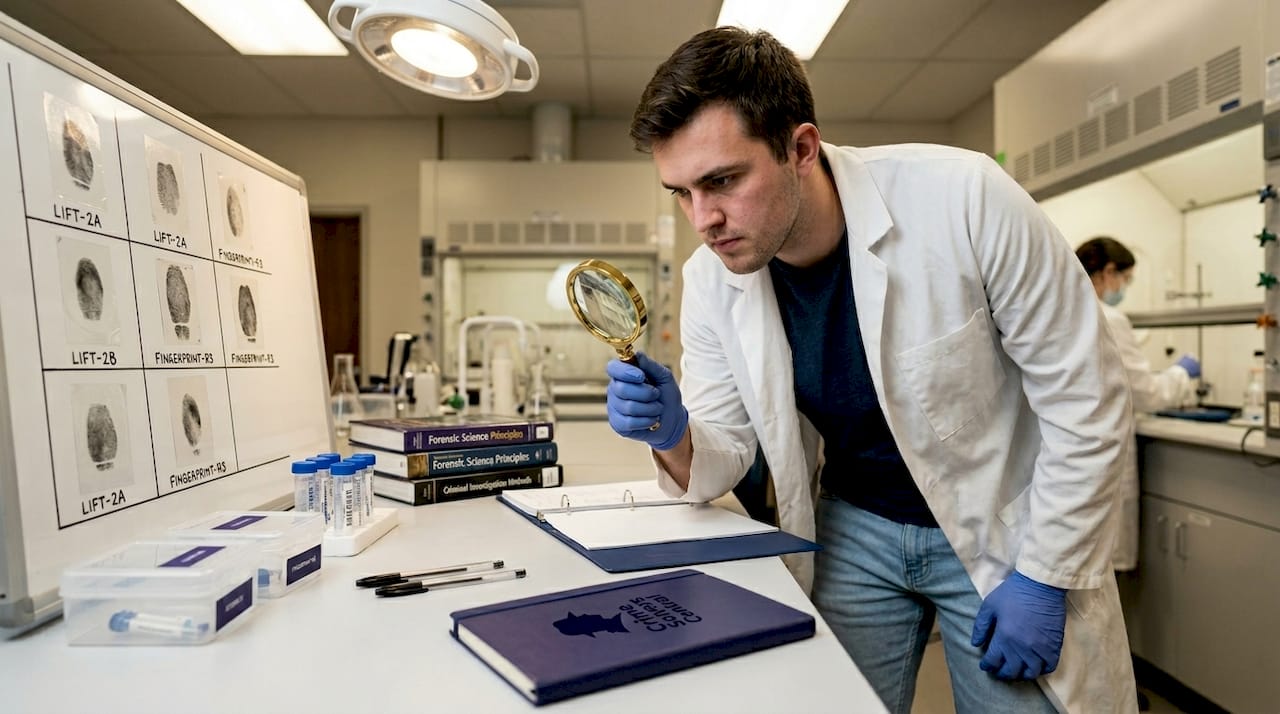
Law enforcement agencies face a structural problem with cold cases. Detectives retire, institutional memory disappears, and active caseloads crowd out dormant files. Many veteran detectives have retired, and academic programs help fill the investigative experience gap by training students to pick up where those investigators left off.
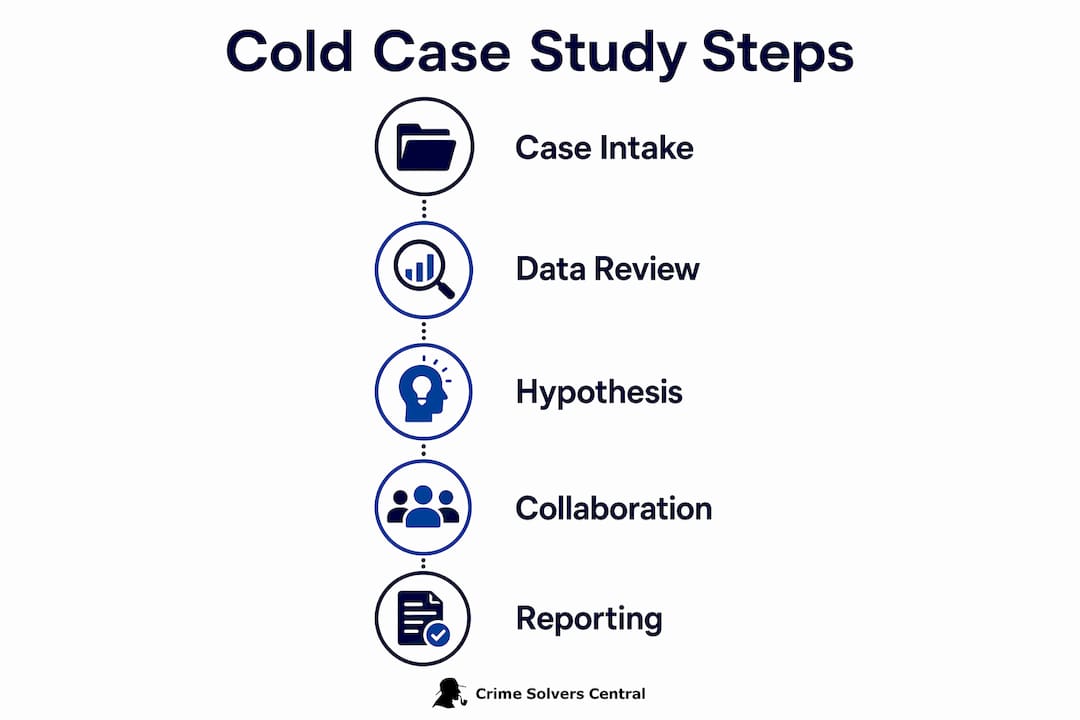
University partnerships with police departments address this directly. Programs at Tiffin University and Ferris State University have embedded students into real cold case workflows, where they review evidence, build timelines, and identify overlooked connections. Researcher Wouter Geven at Leiden University notes that these collaborations produce mutual benefits: law enforcement gains labor and fresh perspectives, while students develop critical and creative thinking skills that no textbook exercise can replicate.
The contributions students make are concrete and measurable:
-
Case file review: Students read through thousands of pages of evidence, flagging inconsistencies that original investigators may have missed under time pressure.
-
Social network analysis: Students identify overlooked connections between suspects, witnesses, and victims by mapping relationships that were not visible in the original investigation.
-
Timeline reconstruction: Organizing fragmented evidence into coherent chronologies often reveals gaps or contradictions that point toward new leads.
-
Administrative support: Digitizing records, cataloging evidence, and organizing case materials frees detectives to focus on active investigative work.
Pro Tip: If you are a criminology student seeking to contribute to cold case research, contact your state’s attorney general office or a local university cold case program. Many programs, including those in Ohio, accept applications from students with no prior law enforcement experience.
What technologies are transforming cold case analysis in academia
Technology is the most visible driver of renewed interest in cold case analysis in academia. Three developments in particular have changed what is possible.
-
Forensic genetic genealogy: Genetic genealogy has solved over 1,400 cold cases since 2018, with some investigations requiring researchers to map social networks of nearly 8,000 individuals to identify a single suspect. This technique, which cross-references DNA profiles with genealogical databases, requires the kind of patient, methodical analysis that academic researchers are well positioned to conduct.
-
OCR digitization of paper case files: Students digitize thousands of pages using optical character recognition software, transforming physical records into searchable data sets. This labor-intensive work is exactly the kind of task that police departments cannot prioritize but that dramatically improves access to historical case information for detectives.
-
DNA retesting with updated methods: Biological evidence collected decades ago can now be retested using techniques unavailable at the time of the original investigation. Academic forensic science programs provide the lab infrastructure and trained personnel to conduct this work at a fraction of the cost of private forensic contractors.
The contrast between academic and traditional investigative use of technology is worth noting. Police departments often lack the budget, time, or specialized training to apply these tools systematically. Academic programs build that capacity deliberately, training students to use forensic genetic genealogy, database analysis, and digital archiving as standard research skills. Western Michigan University’s cold case program has helped solve 7 cold cases since 2020 through exactly this kind of structured student involvement.
What students and researchers actually gain from cold case work
The educational benefits of cold case research are specific and professionally transferable. This is not abstract learning. Students engage with real evidence, real families, and real consequences.
The skill set developed through cold case analysis in academia includes:
-
Critical thinking under ambiguity: Cold cases rarely offer clean evidence. Students learn to reason from incomplete information, weigh competing hypotheses, and resist premature conclusions.
-
Interdisciplinary literacy: Effective cold case work draws on law, sociology, psychology, forensic science, and data analysis. Students who work across these fields develop a breadth of competency that single-discipline programs cannot provide.
-
Ethical reasoning: Handling evidence connected to real victims and grieving families forces students to confront questions of privacy, dignity, and professional responsibility in ways that case studies from textbooks do not.
-
Research methodology: Building timelines, coding case files, and analyzing social networks are transferable research skills applicable across academic and professional contexts.
Dr. Steven Amey at Ferris State highlights that students bring “fresh eyes” to dormant cases, often spotting details that original investigators missed because they were too close to the evidence or operating under time pressure. A high school sociology class studying serial killer cases identified 9 serial killers linked to 82 confirmed murder victims, demonstrating that structured academic analysis, even at a pre-university level, produces results that trained professionals had not achieved.
The role of victim advocacy and support organizations in cold case academies
Victim advocates sit between families and the academic teams reviewing a loved one’s case file. Their work includes:
-
Managing media sensitivity: Advocates report that true crime podcasts and similar coverage can influence an investigation, and part of their role is weighing where that attention helps versus where it risks re-traumatizing a family, per a 2025 Journal of Psychology and Behavioral Science study.
-
Coordinating family outreach: Advocates often serve as the point of contact when a program needs to update a family or request new information.
-
Advising on trauma-informed practice: Faculty supervisors lean on advocates to help students understand how to discuss a case respectfully with relatives who are still grieving.
This layer of support shapes how students conduct interviews and how programs communicate findings back to families.
Challenges that academic cold case programs must navigate
Academic involvement in cold case investigation is not without friction. The administrative, ethical, and practical challenges are real, and programs that ignore them produce poor outcomes for both students and law enforcement partners.
The most significant structural challenge is confidentiality. Academic programs must handle sensitive files under NDAs and require rigorous academic vetting for participating students. Programs include strict confidentiality agreements and academic prerequisites before fellowship acceptance, which means not every interested student can participate. This is a feature, not a flaw. The integrity of an active investigation depends on controlled information access.
“The work is slow, deliberate, and empathetic. It is not what television makes it look like.” Forensic scientist Krystal Hans at Purdue University makes this point directly, warning that the CSI effect creates unrealistic expectations about the speed and certainty of forensic evidence. Students who enter cold case programs expecting dramatic breakthroughs often struggle with the reality that most progress comes from careful file review, not DNA miracles.
A second challenge is managing the relationship between academic freedom and investigative protocol. Students are trained to question assumptions and follow evidence wherever it leads. Detectives operate within legal and procedural constraints that limit what can be done with certain findings. Programs at Tiffin University and Leiden University have addressed this by establishing clear communication protocols that define what students can and cannot act on independently.
Pro Tip: Before joining a cold case academic program, ask specifically how the program handles findings that contradict the original investigation’s conclusions. Programs with clear escalation protocols produce better outcomes for both students and law enforcement.
Key takeaways
Academic cold case research is the most scalable solution to the unsolved homicide backlog because it combines trained labor, modern technology, and institutional independence in ways that law enforcement agencies cannot replicate alone.
| Point | Details |
|---|---|
| Resource gap is real | Over 50% of U.S. murders go unsolved; academia provides labor and expertise to address the backlog. |
| Technology drives breakthroughs | Forensic genetic genealogy has solved over 1,400 cases since 2018, a method well suited to academic research programs. |
| Students gain transferable skills | Cold case work builds critical thinking, interdisciplinary literacy, and ethical reasoning that textbook courses cannot replicate. |
| Confidentiality is non-negotiable | NDAs and academic vetting protect investigation integrity and are standard in programs at Tiffin University and Ferris State. |
| Collaboration produces results | Western Michigan University’s program solved 7 cold cases since 2020 through structured student involvement. |
Why I think academia’s role in cold cases is still underestimated
The conversation about cold cases in criminology tends to focus on technology. Genetic genealogy gets the headlines. DNA databases get the funding proposals. What gets less attention is the organizational and intellectual infrastructure that academic programs provide, and that gap in recognition has real consequences for how these programs are funded and scaled.
What I have seen, working with cold case data across thousands of cases, is that the most valuable thing a student brings to a dormant investigation is not a lab technique. It is the willingness to read every page of a 40-year-old case file without the fatigue or bias that comes from having worked the case originally. That kind of fresh, systematic attention is what surfaces the overlooked witness statement or the misidentified suspect. Technology amplifies that attention. It does not replace it.
The interdisciplinary angle also deserves more credit. A sociology student reading a cold case file sees social network dynamics that a forensic science student might miss. A law student spots procedural irregularities that a criminology student might not flag. Programs that deliberately mix disciplines produce better analysis than those that silo students by major. Leiden University’s approach of combining hologram analysis with case file review is a good model of what this looks like in practice.
The reasons for studying unsolved cases academically will only grow stronger as the unsolved homicide backlog expands and law enforcement budgets remain constrained. The question is not whether academia should be involved. It is whether institutions are willing to invest in the infrastructure, the NDAs, the faculty supervision, and the law enforcement partnerships that make this work legitimate and productive.
— Crime
How Crimesolverscentral supports cold case research
Researchers and students working on cold case analysis need access to organized, reliable case data. Crimesolverscentral maintains a national cold case database covering over 264,913 missing persons and unsolved homicides, all categorized by state and case type. For academic programs building research pipelines or law enforcement agencies looking for collaborative resources, this database provides the kind of structured, accessible case information that supports serious investigative work. Whether you are mapping regional patterns in unsolved homicides for a dissertation or identifying cases that match a specific forensic profile, Crimesolverscentral offers a starting point that no other publicly accessible platform matches in scale or organization.
FAQ
Why are cold cases studied academically?
Cold cases are studied academically because they provide real-world data for criminology and forensic science research while helping law enforcement address a documented backlog of unsolved crimes. Academic programs bring fresh perspectives, modern technology, and organized labor to cases that agencies lack the resources to pursue.
What skills do students develop in cold case programs?
Students develop critical thinking, interdisciplinary research skills, ethical reasoning, and practical forensic analysis techniques. Programs at institutions like Ferris State University and Western Michigan University show that these skills translate directly into measurable investigative contributions.
How does forensic genetic genealogy help academic cold case research?
Forensic genetic genealogy cross-references DNA profiles with genealogical databases to identify suspects in cases where traditional DNA matching fails. It has solved over 1,400 cold cases since 2018 and is well suited to the patient, methodical analysis that academic research environments support.
What are the main challenges in academic cold case programs?
The primary challenges are confidentiality management, countering the CSI effect’s unrealistic expectations, and maintaining clear communication protocols between students and law enforcement. Programs require NDAs and academic vetting to protect investigation integrity.
How do universities partner with law enforcement on cold cases?
Universities establish formal agreements with police departments or attorney general offices that define student roles, confidentiality requirements, and data access protocols. Ohio’s cold case initiatives and Leiden University’s program both use structured partnership models that protect investigative integrity while maximizing student contributions.