

Unidentified Case Investigations: Where to Start and Who to Call
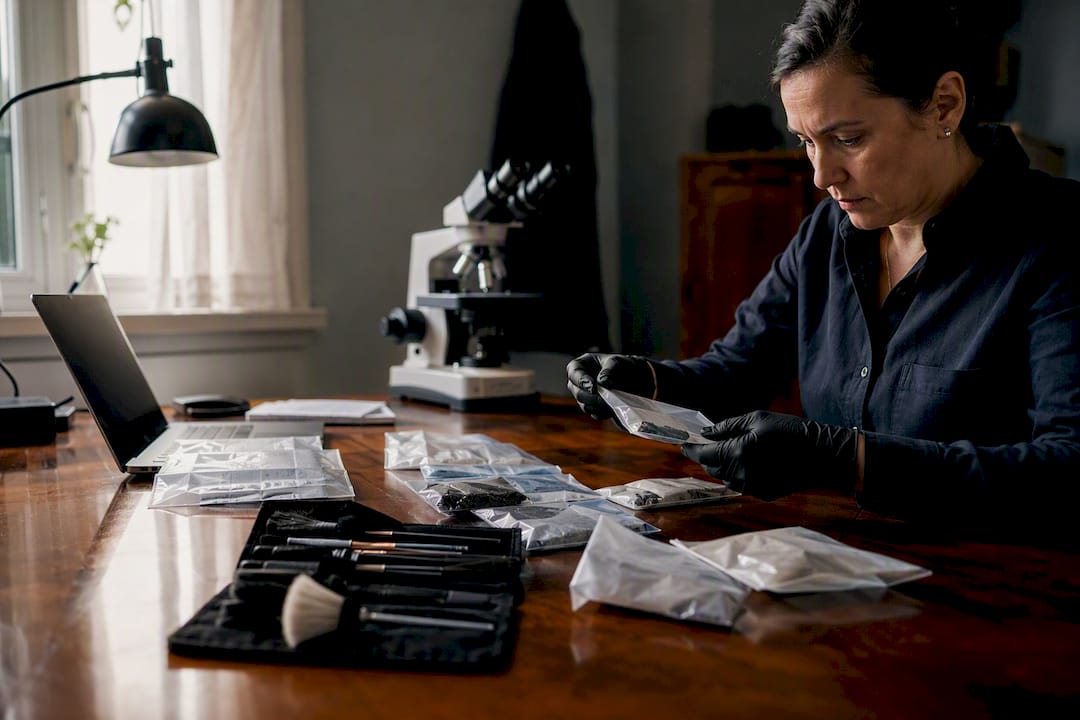
An unidentified case investigation exists to answer one question: who is this person, and how does their record connect to someone reported missing? The work runs through a specific chain of national systems, not a single database.
If you’re a family member, your first move is registering your missing loved one in NamUs and requesting a comparison against unidentified decedent records. If you’re a law enforcement officer or forensic practitioner, submit the case to NamUs, notify ViCAP when the death pattern suggests serial or cross-jurisdictional violence, and request NCIC and CODIS support directly.
- NamUs has directly contributed to 2,325 decedent identifications as of a November 2021 count, and it offers those services free to authorized users.
- ViCAP, run by the FBI, exists specifically to catch patterns across state lines that a single department would never spot on its own.
Key Takeaways
Unidentified case investigations resolve fastest when families, investigators, and forensic specialists coordinate through NamUs, ViCAP, NCIC, and CODIS rather than working in isolation.
| Point | Details |
|---|---|
| Start with NamUs | Register a missing person or unidentified decedent case first; forensic services are free to authorized users. |
| Escalate patterns to ViCAP | Notify ViCAP when a death shows signs of a broader violent-crime pattern across jurisdictions. |
| Request offline NCIC searches | Push past automatic $M reports; offline searches query far more fields and often surface missed leads. |
| Preserve evidence and records | Written retention policies prevent lost samples from closing off future identification methods. |
| Use Crime Solvers Central for research | Its Cold Case Database by State and member tools support family and volunteer efforts alongside, not instead of, official channels. |
Table of Contents
- What Unidentified Case Investigations Rely on: NamUs, ViCAP, NCIC, and CODIS
- The Forensic Toolkit Behind Every Identification
- Building an Investigative Workflow That Actually Moves Cases
- What Families and Volunteers Can Do to Help
- Why Some Unidentified Cases Stay Open for Decades
- How Crime Solvers Central Fits Into an Unidentified Case Investigation
- Three Lessons From Watching Cold Cases Move (or Stall)
- Get Full Case Access Through Crime Solvers Central’s Cold Case Database
- Where to Verify These Resources
- Sources
- FAQ
What Unidentified Case Investigations Rely on: NamUs, ViCAP, NCIC, and CODIS
These four systems don’t compete with each other. They handle different jobs, and knowing which one to use first saves weeks.
NamUs is the front door for most cases. Families can create a missing person profile themselves; medical examiners and coroners enter unidentified decedent cases. NamUs also runs a Cold Case Advisory Team that reviews stalled cases and connects agencies with forensic odontologists, anthropologists, and DNA analysts at no cost to the requesting jurisdiction.
ViCAP matters when the death looks like part of a larger pattern. Investigators feed case details into ViCAP’s repository, and analysts search for similar methods, wounds, or circumstances across jurisdictions that might never otherwise compare notes.
NCIC and CODIS work on hard biometric data. NCIC handles fingerprints, dental records, and descriptive fields; CODIS handles DNA profile matching against convicted-offender and arrestee databases.
- NamUs: Voluntary entry, free forensic assistance, family-accessible portal.
- ViCAP: FBI-managed, pattern analysis across violent crimes and unidentified remains.
- NCIC: Fingerprint and biometric cross-referencing.
- CODIS: DNA profile database matching.
- Doe Network and NCMEC: Volunteer-driven case review and family support, useful when official channels are slow or a case needs public visibility.
The Forensic Toolkit Behind Every Identification
Every identification comes down to matching a physical detail on the remains to a record that already exists somewhere. Which forensic discipline gets used depends on what’s left to examine.
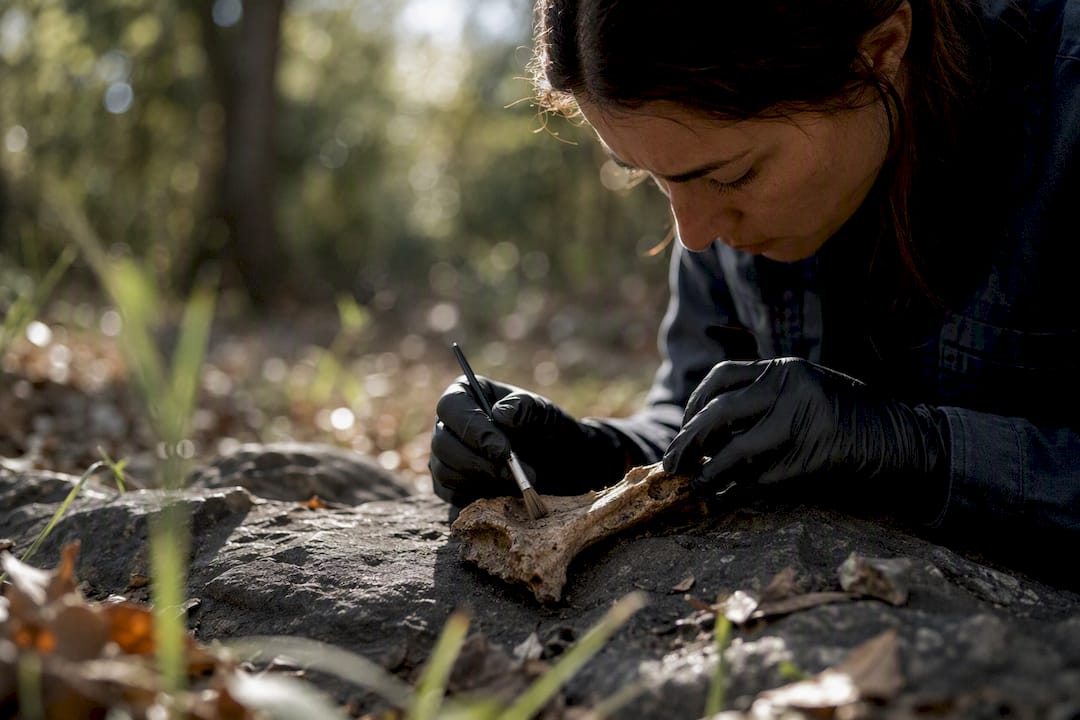
DNA remains the strongest single tool. Standard STR nuclear DNA gets uploaded to CODIS and compared against reference samples. When remains are too degraded for nuclear DNA, labs turn to mitochondrial DNA (traced through the maternal line) or Y-STR testing (paternal line), both of which survive degradation better but produce less specific matches.
Forensic genetic genealogy (FGG) has changed the field over the past several years. Investigators upload a DNA profile to genealogy databases that allow law enforcement use, then build a family tree to work toward a name. It raises real privacy and consent questions, so most agencies reserve FGG for cases where traditional CODIS comparisons have failed.
- Forensic odontology: Dental charting compared against dental records, often the fastest identification method when records exist.
- Forensic anthropology: Skeletal analysis to estimate age, sex, ancestry, and stature, feeding into a biological profile.
- Facial imaging/reconstruction: Used when no dental or DNA match exists, to generate public-facing leads.
- Fingerprinting: Run through AFIS/NGI systems and can resolve a case within hours if the person has a prior arrest or federal employment record.
Pro Tip: If remains include even partial dentition, request an odontology comparison before anything else. It’s often the cheapest, fastest identification path when a name is already suspected.
Building an Investigative Workflow That Actually Moves Cases
Cases stall for a boring reason: nobody built a checklist. A structured intake and review process is what separates a case that gets solved in six months from one still open after fifteen years.
- Document everything at intake. Photographs, measurements, radiographs, clothing, jewelry, and any unique identifiers like tattoos or old fractures need chain-of-custody documentation from day one.
- Run a solvability review. A solvability matrix ranks cases by testable evidence quality (DNA condition, dental records availability, distinctive markers) so labs prioritize cases most likely to close.
- Bring in fresh eyes. A second review team, unfamiliar with the original assumptions, catches details the initial investigators missed.
- Request NamUs forensic services and Cold Case Advisory Team support once local resources are exhausted; this is free to the agency.
- Push past the automatic $M report. NCIC’s automated matching compares only a narrow set of demographic fields. An offline NCIC search, which investigators can request directly, queries a much wider range of archived and active entries and often surfaces leads the automatic system misses.
Written evidence retention policies matter more than most departments realize. Peer-reviewed analysis found that many medical examiner and coroner offices lack formal retention policies, and records or biological samples destroyed decades ago sometimes represent the only physical link to an eventual match.
What Families and Volunteers Can Do to Help
Families are not bystanders in these cases. NamUs was built with a family-facing portal precisely because next-of-kin information and DNA reference samples fill gaps that agencies can’t fill on their own. In 2024, families submitted 170 DNA reference samples added directly to NamUs, samples that later cross-reference against unidentified decedent profiles.
Start by registering the missing person with NamUs and, separately, with the National Center for Missing & Exploited Children if the case involves a minor. Bring dental records, medical history, distinguishing marks, and recent photographs. A cheek swab DNA reference sample from a biological parent, child, or sibling is one of the most useful things a family can provide, and NamUs staff can walk you through collection.
- Report new information to the assigned investigator first, not social media.
- Avoid publicly naming persons of interest; it can compromise the case and expose you to liability.
- Use nonprofit case review platforms to raise visibility, but only after coordinating with law enforcement.
Pro Tip: Keep a written log of every call, email, and update from investigators. Cold cases move slowly, and your own paper trail often becomes the only continuity across staff turnover.
Grief support matters here too. Families navigating years of uncertainty sometimes find comfort in resources like these Bible verses about grief, particularly during the long stretches between updates.

Why Some Unidentified Cases Stay Open for Decades
Entry into national databases is largely voluntary, and that voluntary structure creates real gaps. Some states mandate NamUs entry for unidentified decedents; many don’t, which means matches never happen simply because a record was never entered anywhere searchable.
- Reported unidentified human remains cases actually declined between 2004 and 2018, a trend researchers attribute partly to underreporting rather than fewer actual cases.
- Evidence and biological samples get discarded when retention policies don’t exist, closing the door on future identification attempts using techniques that didn’t exist at the time of death.
- Forensic lab backlogs mean testable evidence sits untested for years, which is why prioritization frameworks matter as much as the testing itself.
Advocacy works here. Mandatory NamUs entry laws, dedicated retention-policy funding, and cold-case unit staffing all trace back to public and legislative pressure, not just agency initiative.
How Crime Solvers Central Fits Into an Unidentified Case Investigation
Crime Solvers Central runs a searchable national Cold Case Database by State, covering missing persons, unsolved homicides, and unidentified or unclaimed remains, organized so a family or volunteer can find relevant cases fast. Membership unlocks full case files, digital evidence boards, a flyer builder, AI image tools, and community forums where volunteers coordinate research.
- Use it alongside NamUs and law enforcement, never in place of them.
- Community forums help surface tips and connect volunteers working the same region or case type.
- The flyer builder and AI image tools support public awareness campaigns families run themselves.
A national database only closes cases when the people searching it actually find each other, whether that’s a family, a volunteer researcher, or an investigator revisiting an old file.
Crime Solvers Central doesn’t replace NamUs forensic services or an agency’s jurisdiction over evidence. It exists to make the surrounding research, coordination, and public outreach easier for everyone working the case from outside the department.
Three Lessons From Watching Cold Cases Move (or Stall)
Community cold-case work teaches you fast that enthusiasm without coordination goes nowhere. Three things consistently separate progress from noise: work with authorities rather than around them, document and preserve every piece of evidence as if a future lab technique depends on it (because one might), and keep families informed even when there’s no real update to give.
Use the official channels first. Everything else is support work.
— Crime
Get Full Case Access Through Crime Solvers Central’s Cold Case Database
Official channels like NamUs and ViCAP handle forensic matching and law enforcement coordination. What they don’t give families and volunteers is a searchable, state-organized view of open cases alongside the tools to actually work them, which is where Crime Solvers Central’s Cold Case Database by State comes in.
Membership unlocks complete case files, source documentation, digital evidence boards, a flyer builder, and AI image tools built for exactly this kind of research. Sign up, search your state’s cases, and join the forums where other volunteers and families are already coordinating. It’s not a substitute for reporting to NamUs or your local agency. It’s the research and outreach layer that keeps momentum going between official updates. Start browsing the database and see what’s already been documented in your state.
Where to Verify These Resources
- NamUs: registration, case search, and free forensic services.
- ViCAP Unidentified Persons: FBI pattern-matching for violent crime cases.
- Unidentified human remains research (PMC): academic analysis of database underuse and retention gaps.
Sources
- NamUs — National Missing and Unidentified Persons System
- ViCAP Unidentified Persons — FBI
- Understanding unidentified human remains investigations through the United States census data — PMC
FAQ
Is there a database for unidentified bodies?
Yes. NamUs is the primary national repository for unidentified decedent cases, alongside unclaimed persons and missing person records, all searchable by the public.
How do missing persons investigations work?
Investigators document the case, enter it into NamUs and NCIC, compare it against unidentified decedent records, and request forensic services like DNA analysis or forensic genetic genealogy when standard matching fails.
Who are some of the most famous unidentified people?
Cases like the “Boy in the Box” and various Jane and John Does cataloged through the Doe Network have drawn national attention, some resolved decades later through DNA advances.
What is the biggest unsolved missing person case?
There’s no single “biggest” case by any official measure, but long-running, high-profile disappearances often stay unresolved due to degraded evidence, jurisdictional gaps, or missing DNA reference samples from family members.