

The Role of Medical Forensics in Investigations
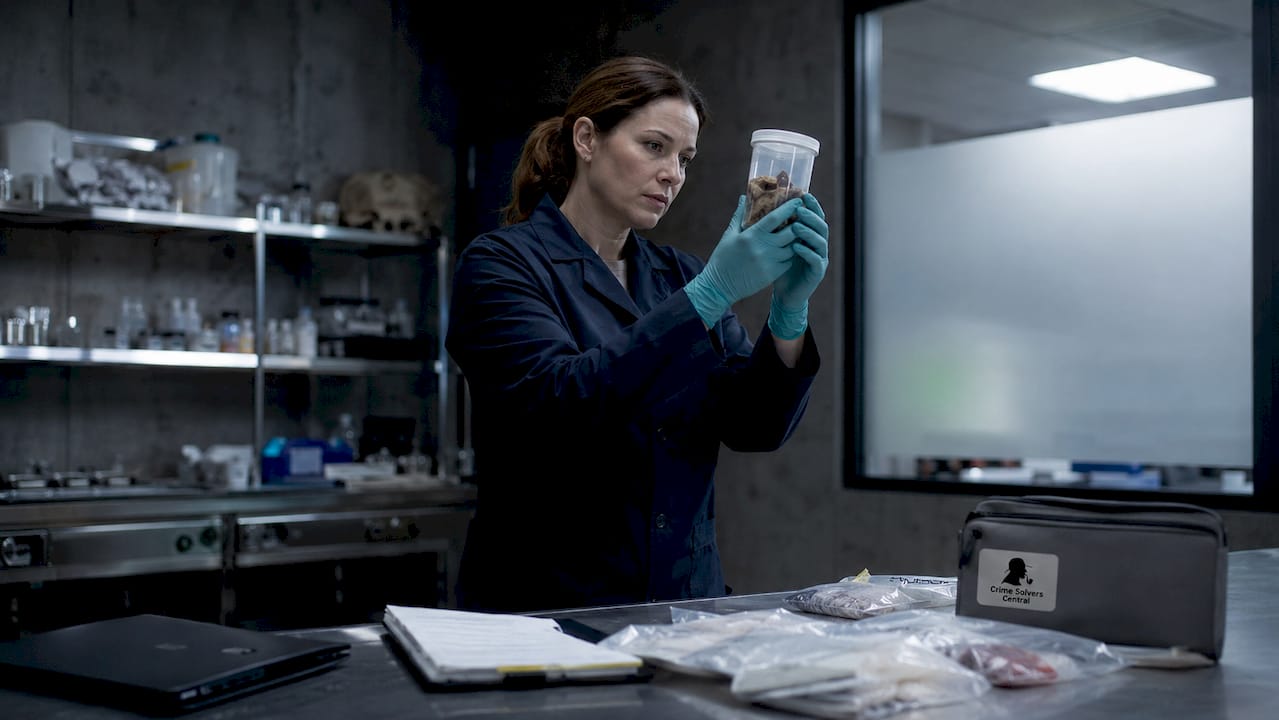
Medical forensics is the application of medical knowledge and techniques to legal investigations to determine causes of death, analyze injuries, and provide objective evidence that supports criminal justice proceedings. The role of medical forensics in investigations extends far beyond the autopsy table. Forensic pathologists, medical examiners, and coroners work together to translate biological evidence into facts that courts and law enforcement can act on. For students, families of missing persons, and anyone seeking answers, understanding how this field works is the first step toward understanding how justice gets done.
What is the role of medical forensics in investigations?
Medical forensics is the scientific backbone of criminal investigations. Without it, law enforcement would rely almost entirely on witness accounts and circumstantial evidence. Forensic pathology in crime scenes provides the objective, biological facts that either confirm or contradict those accounts.
The field covers a wide range of case types. Forensic medical experts work on homicides, suspicious deaths, sexual assaults, poisonings, and cases involving unidentified remains. Their findings feed directly into police reports, prosecutorial decisions, and courtroom testimony. The importance of medical forensics lies in its ability to produce evidence that is grounded in science, not interpretation.
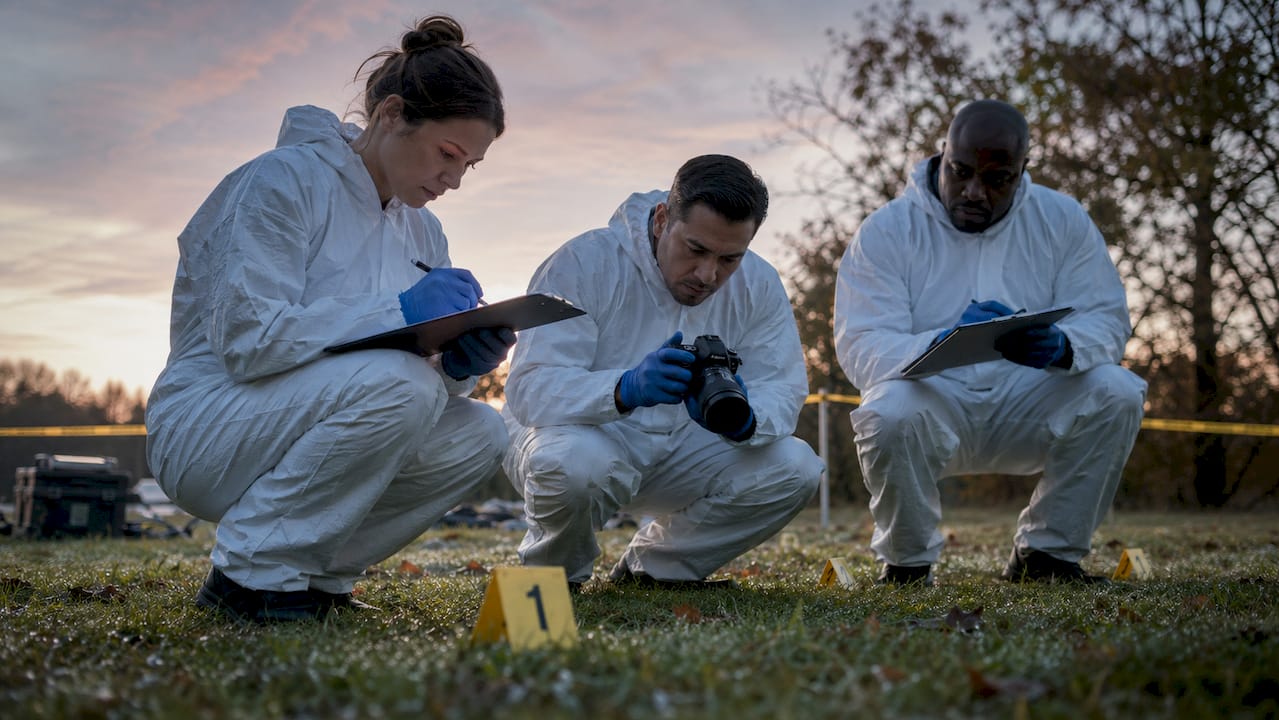
Three key figures drive medicolegal death investigations: the forensic pathologist, the medical examiner, and the coroner. Forensic pathologists hold medical degrees and specialize in determining cause and manner of death. Medical examiners are typically appointed physicians who oversee death investigations in a jurisdiction. Coroners may or may not hold medical degrees, depending on the state or country. Understanding the role of coroners in unidentified cases clarifies how these roles intersect in practice.
How do forensic pathologists determine cause and manner of death?
The autopsy is the central tool of forensic pathology. A forensic pathologist performs a postmortem examination to document injuries, collect tissue samples, and identify any biological abnormalities. The examination covers external injuries, internal organ damage, and microscopic tissue analysis through histology.
Two distinct findings come from every death investigation: cause of death and manner of death. Cause of death is the medical reason a person died, such as a gunshot wound or cardiac arrest from poisoning. Manner of death describes the circumstances, classified as natural, accidental, homicide, suicide, or undetermined. These are separate conclusions, and both matter in court.
Toxicology and DNA analysis are critical to completing the picture. DNA and toxicology results typically require 6–8 weeks before a forensic pathologist can finalize cause of death determinations. That timeline surprises many people who expect results in days, as television dramas suggest.
Key steps in a forensic autopsy include:
- External examination of the body for wounds, bruising, and trace evidence
- Internal examination of organs, including the brain, heart, and lungs
- Collection of blood, urine, and tissue samples for toxicology
- Histological analysis of tissue under a microscope
- DNA sampling for victim identification or perpetrator linkage
- Documentation of all findings in a formal autopsy report
Pro Tip: If you are a family member awaiting autopsy results, ask the medical examiner’s office directly about the expected timeline for toxicology. Delays are normal and do not indicate negligence or a problem with the case.
Forensic autopsies in private cases cost between $3,000 and $5,000, depending on jurisdiction. Families who commission private autopsies often do so when they question official findings or when a death occurs in another country.
How do different investigation systems affect forensic outcomes?
Not all jurisdictions handle death investigations the same way. Three primary models exist: the prosecutorial system, the coronial system, and the medical examiner system. Each produces different outcomes in terms of scientific rigor, objectivity, and public trust.
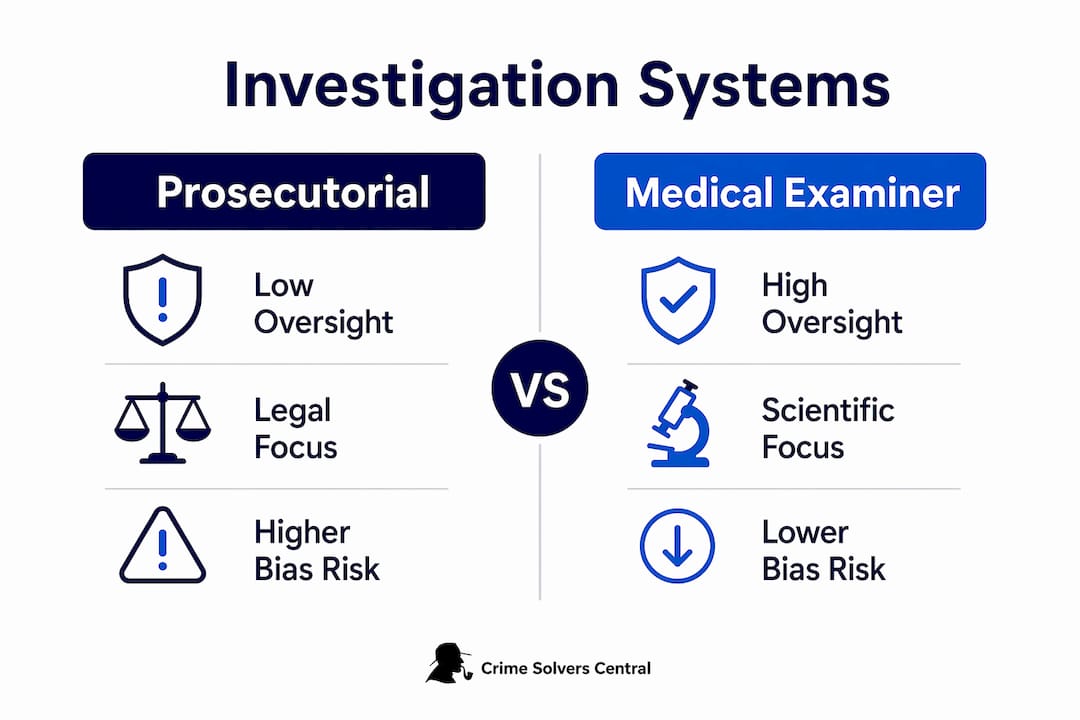
The prosecutorial model places death investigations under the authority of a prosecutor or law enforcement agency. This creates a structural conflict of interest. When the same office that investigates a death also decides whether to prosecute, objectivity suffers.
The coronial system, used in countries like Australia and the United Kingdom, assigns death investigations to a coroner who may or may not be a physician. New South Wales, Australia, receives approximately 8,000 reportable deaths annually through its coroner’s office. That volume illustrates the scale of forensic workload that even a single regional system must manage.
The medical examiner model is the standard in most American urban jurisdictions. Medical examiner systems employ board-certified forensic pathologists and prioritize medical and public health data over legalistic outcomes. This model is widely regarded as the most scientifically accurate of the three.
| System | Medical oversight | Primary focus | Objectivity risk |
|---|---|---|---|
| Prosecutorial | Low | Legal outcome | High |
| Coronial | Variable | Legal and public record | Moderate |
| Medical examiner | High | Medical and public health | Low |
The choice of investigation system directly affects the quality and timeliness of forensic findings. Families and attorneys who understand these differences are better equipped to evaluate the findings they receive.
How does medical forensic evidence support law enforcement and courts?
Forensic medical evidence does not exist in isolation. It works alongside police reports, witness statements, surveillance footage, and physical crime scene evidence. The role of forensics in law is to provide the biological facts that anchor all other evidence to a verifiable reality.
How forensics aids investigations in practice follows a clear sequence:
- The forensic pathologist examines the body and documents findings in a formal report.
- Law enforcement uses that report building or refine their theory of the crime.
- Prosecutors use the report to establish elements of the offense, such as intent or cause of death.
- Defense attorneys may challenge findings or commission independent autopsies.
- The forensic pathologist testifies as an expert witness, explaining findings in plain language.
- The court weighs medical evidence alongside all other facts in reaching a verdict.
Forensic medical experts translate complex biological phenomena into legally understandable facts that are critical for fair criminal trials. That translation function is where forensic pathology earns its place in the justice system.
Forensic evidence analysis also plays a decisive role in sexual assault cases. A Sexual Assault Nurse Examiner, or SANE, collects biological evidence from survivors within a narrow time window. That evidence can identify a perpetrator through DNA, corroborate the survivor’s account, and establish the timeline of events. Cases involving poisoning rely on toxicology reports to identify the substance, the dose, and the likely route of administration.
Pro Tip: Families of homicide victims should request a copy of the autopsy report once the investigation is no longer active. It is a public record in most U.S. jurisdictions and can clarify findings that were never fully explained.
The strength of forensic evidence in trials depends heavily on expert competence and documentation integrity. A poorly written autopsy report or an unqualified expert witness can undermine an otherwise solid case. This is why board certification and rigorous documentation standards matter so much in forensic pathology.
Forensic pathologists also contribute to landmark unsolved homicide cases by providing biological evidence that remains valid decades after the original investigation. DNA technology has reopened cases where the original forensic work preserved samples correctly, even when the investigation stalled.
What are the real limitations of medical forensic investigations?
Television gives a deeply misleading picture of forensic pathology. Real forensic investigations take weeks or months, not hours. Forensic pathologists manage multiple cases simultaneously and require extensive documentation and collaboration with specialists before reaching conclusions.
The most common misconceptions include:
- Forensic pathologists solve crimes. They determine cause and manner of death. Solving crimes is the job of detectives.
- Results arrive in hours. Lab processing for DNA and toxicology averages 6–8 weeks.
- Forensic pathologists analyze blood spatter or interrogate witnesses. Those tasks belong to other forensic specialists, not pathologists.
- A clear cause of death is always findable. Some deaths remain undetermined even after a full autopsy.
Cognitive bias is a genuine threat to forensic accuracy. Accurate and unbiased autopsy findings are essential because cognitive bias and incomplete data can undermine both the investigation and judicial outcomes. A pathologist who receives too much contextual information before an autopsy may unconsciously interpret ambiguous findings in a way that confirms the prevailing theory.
“The forensic pathologist’s job is to let the body tell its own story. The moment you start the autopsy already knowing what you expect to find, you risk missing what is actually there.”
Multidisciplinary collaboration is not optional in forensic medicine. Pathologists work with toxicologists, radiologists, odontologists, and entomologists to build a complete picture. No single expert holds all the answers.
Key Takeaways
Medical forensics provides the scientific foundation that makes criminal investigations credible, fair, and legally defensible.
| Point | Details |
|---|---|
| Cause vs. manner of death | These are two separate findings; both are required for a complete forensic determination. |
| Lab timelines are long | DNA and toxicology results take 6–8 weeks, not hours as TV suggests. |
| System type matters | Medical examiner systems produce more scientifically accurate findings than prosecutorial models. |
| Pathologists have a narrow role | Forensic pathologists determine cause of death; they do not solve crimes or analyze crime scenes. |
| Bias is a real risk | Objectivity must be protected throughout the autopsy and reporting process to preserve judicial fairness. |
What families and students often miss about forensic medicine
Working closely with cold case material, I have come to believe that the most underappreciated aspect of forensic medicine is its patience. Families waiting for answers often interpret delays as indifference. They are not. A forensic pathologist who waits six weeks for toxicology results before signing a death certificate is doing the job correctly. Rushing that process produces errors that can never be corrected once a case goes to trial.
Students drawn to forensic pathology by crime dramas need to recalibrate their expectations early. The work is meticulous, often solitary, and emotionally demanding. The reward is not a dramatic courtroom moment. It is a report that holds up under cross-examination years later.
For families of missing persons, understanding how DNA aids cold cases changes how you engage with investigators. Biological evidence collected and preserved correctly in 1998 can still identify a victim or a perpetrator in 2026. The science does not expire. What expires is the window for collecting it properly in the first place.
The forensic pathologist rarely gets thanked. Families thank detectives. Prosecutors take credit at press conferences. But the report signed by the pathologist is often the document that makes everything else possible. That deserves more recognition than it gets.
— Crime
Crimesolverscentral and the cold case database
Crimesolverscentral maintains a national database of over 264,913 missing persons and unsolved homicide cases, organized by state and situation. For families who have spent years without answers, that database is a practical starting point for understanding where a case stands and what forensic evidence may still be relevant. The platform connects community members, law enforcement, and advocates in ways that keep cold cases visible. Explore the cold case database to search by state, review case details, and contribute tips that could support an active investigation. Forensic evidence matters most when the right people know a case exists.
FAQ
What does a forensic pathologist actually do?
A forensic pathologist performs autopsies to determine the medical cause and manner of death in suspicious or unexpected cases. They do not investigate crime scenes, analyze blood spatter, or interrogate witnesses.
How long does a forensic investigation take?
DNA testing and toxicology analyses typically require 6–8 weeks before a forensic pathologist can finalize cause of death findings. Full investigations often take months when multiple specialists are involved.
What is the difference between a coroner and a medical examiner?
A medical examiner is a board-certified physician, usually a forensic pathologist, appointed to investigate deaths. A coroner may or may not hold a medical degree, depending on the jurisdiction.
Can forensic evidence reopen a cold case?
Forensic evidence, particularly DNA, can reopen cold cases decades after the original investigation. Properly preserved biological samples remain scientifically valid and can identify victims or perpetrators using modern testing methods.
How does medical forensic evidence affect a criminal trial?
Forensic medical experts translate biological findings into legally understandable facts that courts use to establish cause of death, injury patterns, and timelines. The quality of documentation and expert testimony directly affects the fairness of the verdict.