

How to Develop a Criminology Thesis on Cold Cases

Developing a criminology thesis on cold cases is the process of formulating specific, researchable questions about unresolved criminal investigations using contemporary forensic science, archival analysis, and investigative theory. Cold case research sits at the intersection of criminology, forensic science, and institutional analysis, making it one of the richest and most demanding areas for graduate-level thesis work. The field has accelerated sharply since Forensic Investigative Genetic Genealogy (FIGG) entered mainstream law enforcement practice, and frameworks like TRACE and COMPASS from the University of Portsmouth have given researchers structured models for studying long-term case management. If you want to develop a criminology thesis on cold cases that holds up to academic scrutiny, you need a clear operational definition, a defensible methodology, and a realistic scope.
How to develop a criminology thesis on cold cases: framing your topic
The first decision you make shapes everything that follows: what exactly counts as a “cold case” for your thesis? Operationally, most researchers define a cold case as any unsolved investigation where active inquiry has stalled due to insufficient evidence, exhausted leads, or resource reallocation. That definition sounds simple, but its boundaries matter enormously for your research design. A case that law enforcement still considers active does not belong in a cold case study, and conflating the two categories will undermine your methodology from the start.
Once you have your operational definition, thematic frameworks help you narrow the topic to something researchable within a thesis timeline. Evidence-based models like TRACE and COMPASS, developed by University of Portsmouth researchers, systematically analyze governance, resource prioritization, and investigative renewal in long-term missing person and homicide cases. These frameworks are directly applicable as analytical lenses for your thesis, not just background reading.
Strong thesis ideas for criminology in the cold case space tend to cluster around four themes:
-
Forensic renewal: How do advances in DNA technology change the probability of resolution for cases filed before 1990?
-
Organizational dynamics: What institutional factors predict whether a cold case unit receives sustained funding and staffing?
-
Investigative bias: How does initial case classification affect the quality of evidence preservation and long-term solvability?
-
Victim identity: What role does unidentified remains work play in cold case homicide research, and how does victim identification affect prosecution timelines?
Pro Tip: Before finalizing your thesis topic, run a scoping review of dissertations on ProQuest and Google Scholar using the phrase “cold case investigation” filtered to the last five years. You will quickly spot which sub-themes are saturated and where genuine research gaps exist.
Methodologically, your choices will depend on your theme. Qualitative interviews with cold case investigators or prosecutors work well for organizational and bias-focused theses. Case file analysis suits forensic renewal topics. Mixed-methods designs combining archival data with structured interviews are increasingly common in cold case homicide research and signal methodological maturity to thesis committees.
What role does forensic genetic genealogy play in cold case thesis research?
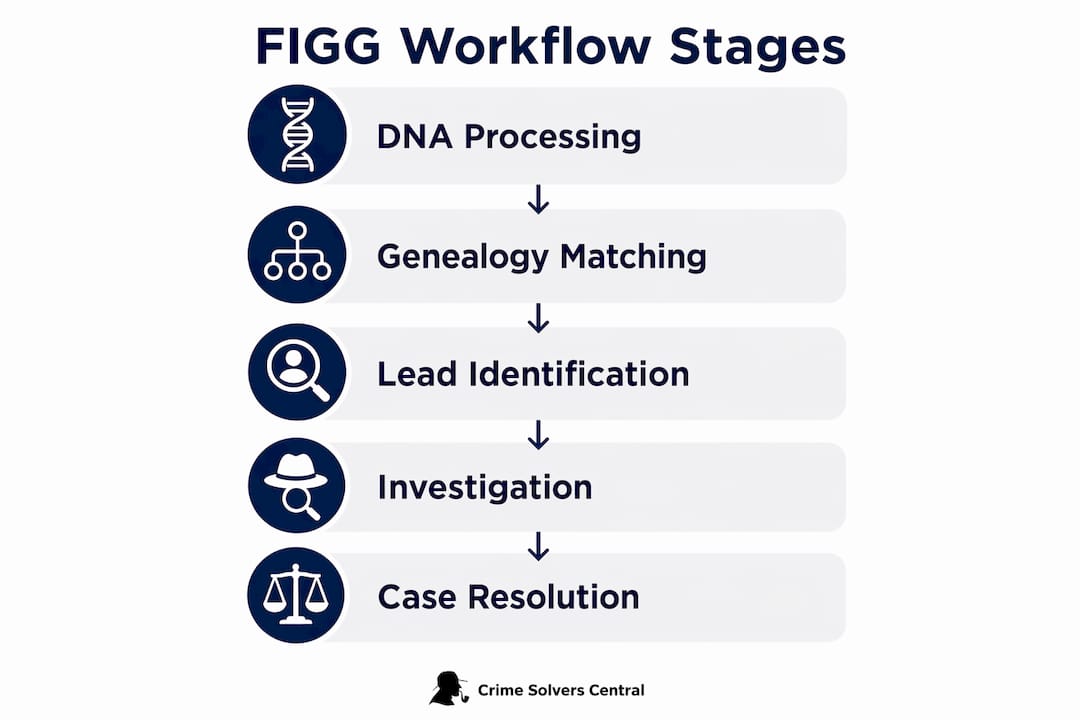
Forensic Investigative Genetic Genealogy has become the most cited forensic breakthrough in cold case research since the 1980s introduction of DNA profiling. The FIGG workflow moves through five structured stages: case identification and DNA sample processing, SNP profiling, genealogical database search, kinship analysis and family tree construction, and investigative lead generation for law enforcement follow-up. Each stage presents a distinct decision threshold that you can analyze empirically in a thesis context.
A 2026 case from El Paso County illustrates the workflow’s real-world complexity. A 1986 homicide victim was identified after nearly 40 years through SNP DNA profiling combined with genealogical database investigation, family tree construction, and official confirmation. The case required multiple institutional actors, significant time investment, and access to consumer DNA databases. That multi-step process is exactly the kind of empirical sequence a thesis can map, critique, and theorize.
Key limitations to address honestly in any FIGG-focused thesis include:
-
Database access costs: Consumer DNA database access for law enforcement can exceed thousands of dollars per case, requiring fundraising and legal approvals that vary by jurisdiction.
-
DNA profile quality: Degraded samples from decades-old evidence may not meet the minimum threshold for SNP profiling, limiting which cases qualify for FIGG analysis.
-
Ethical and legal constraints: Privacy concerns around familial DNA searching remain contested, and some states have enacted restrictions that directly affect research access.
-
Confirmation bias risk: Genealogical leads require independent corroboration. DNA generates investigative direction, not proof.
| FIGG Workflow Stage | Thesis Analysis Opportunity |
|---|---|
| DNA sample processing | Assess evidence preservation quality across case age cohorts |
| SNP profiling | Evaluate lab capacity and cost barriers by jurisdiction |
| Genealogical database search | Analyze legal and ethical access variation across states |
| Kinship analysis | Examine confidence thresholds and error rates in family tree construction |
| Investigative lead generation | Study how leads translate into prosecution decisions |
Pro Tip: If your thesis focuses on FIGG, request case summaries from cold case units that have publicly disclosed resolved cases. Many sheriff’s offices publish press releases with enough procedural detail to reconstruct the workflow without requiring confidential file access.
How should you manage cold case archival data for your thesis?
Cold case research generates an unusual data management problem. Physical case files from the 1960s through the 1990s often exist only in paper form, stored in boxes across multiple agencies. Accessing, organizing, and analyzing that material is itself a methodological contribution when done rigorously.
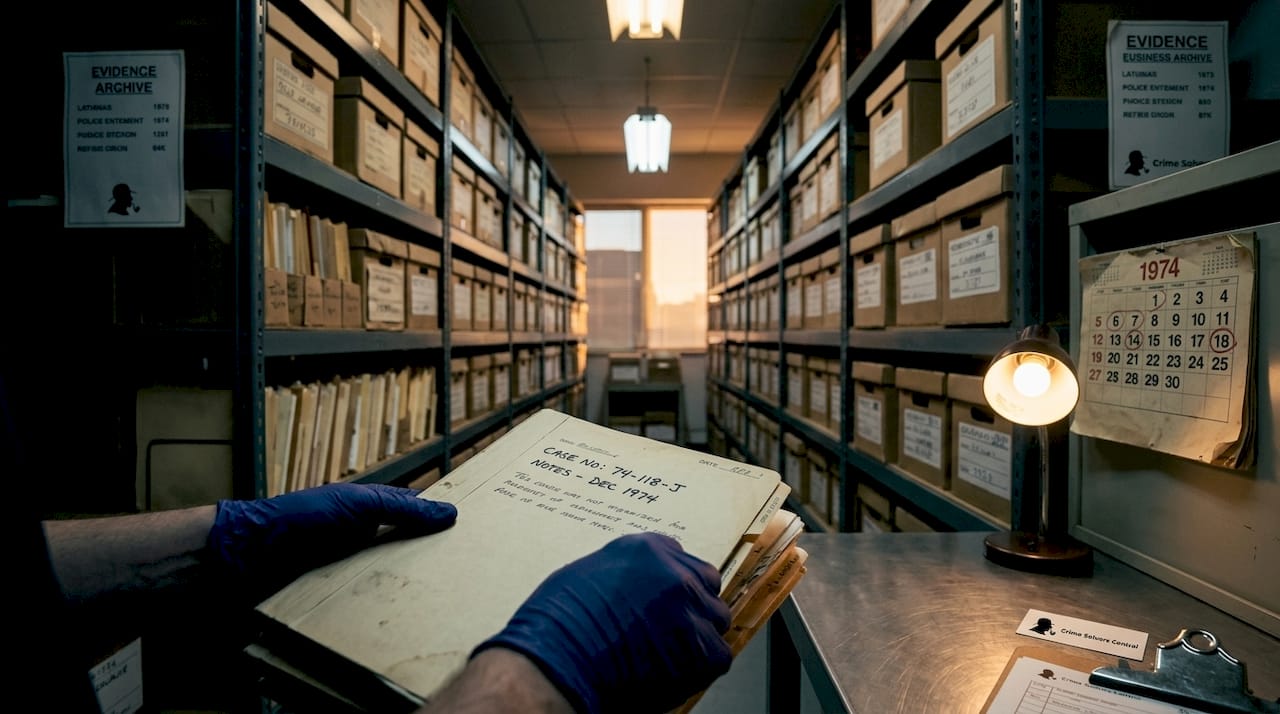
Ferris State University’s cold case investigations class demonstrated what structured digitization can accomplish. Students converted thousands of documents into searchable digital formats using optical character recognition (OCR), which prompted renewed forensic submissions on cases that had been dormant for decades. That outcome illustrates a principle worth building into your thesis design: information management through digitization is a hidden multiplier for investigative progress, not just an administrative task.
| Data Format | Advantages | Limitations |
|---|---|---|
| Physical case files | Original evidentiary integrity, handwritten annotations | Not searchable, fragile, access-restricted |
| OCR-digitized documents | Full-text searchable, shareable, annotatable | OCR errors on degraded documents, requires verification |
| Structured databases | Sortable, filterable, supports quantitative analysis | Requires significant setup time and data standardization |
For thesis purposes, the practical approach is to negotiate a data-sharing agreement with a cooperating agency or cold case unit before your proposal defense. Confidentiality agreements are standard and do not prevent you from publishing aggregate findings. What they do require is that you anonymize case identifiers and obtain IRB approval for any research involving identifiable victim information.
Pro Tip: Use NVivo or Atlas.ti to code digitized case documents thematically. Both tools handle large document sets and allow you to build codebooks that a thesis committee can audit for methodological transparency.
Reconstructing timelines from archival material is one of the most analytically powerful things a criminology thesis can do. A well-constructed timeline reveals investigative gaps, evidence handling decisions, and points where resource constraints shaped case direction. That kind of structural analysis is far more theoretically interesting than a descriptive summary of what happened.
What are the most common challenges in cold case criminology thesis work?
The single most common mistake in developing a thesis on unsolved crimes is treating cold cases as a homogeneous category. Cases go cold for different reasons, at different rates, and with different evidentiary profiles. A thesis that does not account for that variation will produce findings that are difficult to generalize or defend.
Several challenges recur across cold case criminology research projects:
-
Case status ambiguity: Some investigations classified as cold are still receiving intermittent attention from detectives. Without a clear operational definition, your sample may include cases that do not meet your inclusion criteria.
-
Evidence triage constraints: Investigators do not test all available evidence simultaneously. Evidence triage prioritizes lab resources based on what is likely to yield interpretable results and what the budget allows. Your thesis must account for this selection effect when drawing conclusions from forensic data.
-
Incremental resolution: Cold case breakthroughs evolve through a series of small advances rather than dramatic single discoveries. A thesis that expects clean resolution narratives will misrepresent how cases actually close.
-
Source reliability: True-crime podcasts, documentaries, and journalism are not primary sources. Rigorous thesis work requires explicit data sources, verified attribution, and epistemic caution when secondary materials are used.
-
Legal and resource limits: Nashville police conducted an exhumation in a 1969 homicide to apply modern forensic methods unavailable at the time of the original investigation. That kind of institutional decision involves legal authorization, budget allocation, and prosecutorial interest. Your thesis cannot assume those conditions exist for every case you study.
Understanding procedural delays in investigations also matters when you are analyzing why cases stall. Reporting delays, jurisdictional handoffs, and evidence chain-of-custody failures all contribute to the cold case problem in ways that deserve explicit treatment in your literature review.
Key takeaways
A strong criminology thesis on cold cases requires a precise operational definition, a named analytical framework, and a methodology matched to your specific research question.
| Point | Details |
|---|---|
| Define “cold case” explicitly | Establish clear inclusion criteria before selecting your case sample to avoid category errors. |
| Use named frameworks | Apply models like TRACE, COMPASS, or the FIGG workflow as analytical structures, not just background context. |
| Match method to question | Qualitative interviews suit organizational theses; case file analysis and OCR digitization suit forensic renewal topics. |
| Account for incremental resolution | Design your analysis around the reality that cold cases close through accumulated small advances, not single breakthroughs. |
| Prioritize source verification | Cite primary agency records, peer-reviewed forensic literature, and verified case data. Avoid unverified true-crime sources. |
Why cold case thesis work demands more intellectual honesty than most criminology research
I have reviewed a lot of cold case research over the years, and the pattern that separates strong thesis work from weak thesis work is almost never about the topic. It is about whether the researcher was willing to be honest about what the data cannot tell them.
Cold case criminology sits in a space where the evidence is old, the witnesses are gone or unreliable, and the institutional memory is fragmented. That is not a weakness of the field. It is the defining condition that makes rigorous methodology so important. When you apply criminology theories to cold cases, the temptation is to let a compelling narrative substitute for analytical rigor. Resist that. The most credible thesis work I have seen treats every forensic finding as a lead, not a conclusion, and every archival gap as a variable worth explaining rather than ignoring.
The researchers who get this right tend to do one thing consistently: they build their thesis around a question that the available data can actually answer. Not “why did this case go cold?” but “what organizational factors predicted evidence preservation quality across a sample of 30 pre-1985 homicide cases?” The second question is answerable. The first is a narrative trap.
Crimesolverscentral’s database of over 264,913 cases, organized by state and case type, gives you the kind of structured starting point that makes a defensible sample selection possible. Use it as a scoping tool, not a substitute for primary source verification.
— Crime
Use real cold case data to strengthen your thesis research
Crimesolverscentral maintains one of the most organized publicly accessible repositories of cold case data available to researchers. The cold case database by state covers over 264,913 missing persons and unsolved homicide cases, categorized by location and case status. For thesis researchers, that structure means you can build a geographically defined sample, identify patterns across jurisdictions, and triangulate your findings against documented case records. You can also explore how crowdsourcing tips on unsolved homicides has become a legitimate data source for community-engaged criminology research. Start your case selection process with a database that was built for exactly this kind of systematic inquiry.
FAQ
What is a cold case in criminology research?
A cold case is an unsolved criminal investigation where active inquiry has stalled due to exhausted leads, insufficient evidence, or resource reallocation. For thesis purposes, researchers must define a minimum inactivity period, typically one to two years, to establish a consistent inclusion criterion.
How do I choose a thesis topic for cold case criminology?
Select a topic by identifying a specific research gap at the intersection of forensic capability, investigative practice, or institutional behavior. Frameworks like TRACE and COMPASS from the University of Portsmouth provide structured lenses for analyzing long-term cold case management.
Can I use FIGG as the basis for a criminology thesis?
Yes. The FIGG workflow offers five empirically analyzable stages, from DNA profiling to investigative lead generation, that a thesis can map, critique, and theorize. Address access costs, ethical constraints, and database availability as explicit limitations in your methodology chapter.
What data sources are acceptable for cold case thesis research?
Primary sources include agency case files, court records, forensic lab reports, and verified press releases from law enforcement. Peer-reviewed forensic and criminology journals are required for theoretical grounding. True-crime media and unverified online sources require explicit epistemic caution and should not serve as primary evidence.
How do I handle confidential case files in my thesis?
Negotiate a data-sharing agreement with the cooperating agency before your proposal defense, obtain IRB approval for any identifiable victim information, and anonymize case identifiers in all published findings. Aggregate analysis does not require individual case disclosure.