

Creepy Unsolved Crimes: 10 Chilling Cold Cases in 2026

Some of the most disturbing criminal mysteries in history have never been solved. The cases below represent the creepiest unsolved crimes that continue to haunt investigators, families, and true crime enthusiasts decades after they occurred. Each one shares a common thread: baffling evidence, dead ends, and questions that refuse to go away.
The most iconic of these haunting unsolved murders include:
- JonBenét Ramsey (1996, Boulder, Colorado): Six-year-old beauty queen found strangled in her family’s basement on Christmas Day
- Black Dahlia / Elizabeth Short (1947, Los Angeles): Aspiring actress found bisected and drained of blood, with no killer ever identified
- Zodiac Killer (1968–1969, Northern California): Serial murderer who taunted police with cryptic ciphers, at least five confirmed victims, identity never confirmed
- Elisa Lam (2013, Los Angeles): Young woman found in a hotel rooftop water tank after eerie elevator surveillance footage went viral
- Lars Mittank (2014, Bulgaria): German tourist who vanished after behaving erratically on airport surveillance cameras, never found
- Cleveland Torso Murderer (1934–1938, Cleveland, Ohio): Serial killer who left at least 12 dismembered victims near Kingsbury Run, never caught
- Jessica Chambers (2014, Courtland, Mississippi): Nineteen-year-old burned alive in her car; two trials ended in hung juries
- Adam, Boy in the Thames (2001, London): Unidentified child found torso-only in the River Thames, believed victim of ritualistic killing
- Dorothy Arnold (1910, New York City): Socialite who vanished on a shopping trip and was never seen again
- Marvin Clark (1926, Portland, Oregon): Elderly man who disappeared en route to visit family, one of the oldest active missing persons cases in the U.S.
The most chilling unsolved crimes, case by case
1. JonBenét Ramsey
JonBenét Ramsey was six years old when her parents reported her missing from their Boulder, Colorado home on the morning of December 26, 1996. Her father, John Ramsey, found her body in the basement wine cellar later that same day. She had been strangled and struck on the head. A ransom note demanding $118,000 was found on the kitchen stairs, written on a notepad from inside the house.
The case immediately became one of the most covered disturbing criminal mysteries in American history. Investigators focused suspicion on the Ramsey family for years, and the parents endured public scrutiny until a 2008 DNA analysis cleared them. That same DNA, found on JonBenét’s clothing, has never been matched to anyone in any database. As of 2026, Boulder police still consider the case open and active.
What makes this case particularly unsettling is the ransom note itself. Forensic linguists have studied it for decades. The note was unusually long, referenced a “small foreign faction,” and used a dollar amount that matched John Ramsey’s Christmas bonus almost exactly. No credible suspect has ever been charged.
2. Black Dahlia (Elizabeth Short)
Elizabeth Short was 22 years old when her body was discovered in a vacant lot in the Leimert Park neighborhood of Los Angeles on January 15, 1947. She had been completely bisected at the waist, drained of blood, and posed with surgical precision. Her face had been slashed from the corners of her mouth toward her ears in what investigators described as a “Glasgow smile.” The killer had also washed the body before leaving it.
The FBI’s own case files on the Black Dahlia murder run to hundreds of pages. Over 150 people confessed to the killing in the weeks that followed, none credibly. Investigators at the time suspected the killer had medical or surgical training, given the clean bisection and the absence of blood at the scene. That lead was never resolved.
Short became known as “The Black Dahlia” partly due to a 1946 film noir called The Blue Dahlia, and partly because of her dark hair and preference for black clothing. The nickname stuck, and the case became one of the most mythologized unsolved murders in American pop culture.
3. Zodiac Killer
Between 1968 and 1969, a killer operating in Northern California murdered at least five people and claimed responsibility for many more in a series of taunting letters sent to Bay Area newspapers. The Zodiac Killer’s case files at the FBI span six volumes. The killer sent cryptic ciphers to the press, some of which went unsolved for over 50 years. One cipher, the 340-character “Z340,” was finally cracked by a team of amateur and professional codebreakers in December 2020, but it contained no identifying information.
The Zodiac’s letters were specific, taunting, and occasionally included pieces of victims’ clothing as proof of authenticity. He claimed 37 victims total, though investigators have only confirmed five deaths. The case remains open with the San Francisco Police Department. A suspect named Arthur Leigh Allen was investigated extensively but was never charged, and DNA collected from the letters has not matched any known individual.
4. Elisa Lam
Elisa Lam was a 21-year-old Canadian student traveling alone through California when she disappeared from the Cecil Hotel in downtown Los Angeles in January 2013. Her body was found three weeks later inside one of the hotel’s rooftop water tanks, after guests complained about the water pressure and taste. She had been there the entire time.
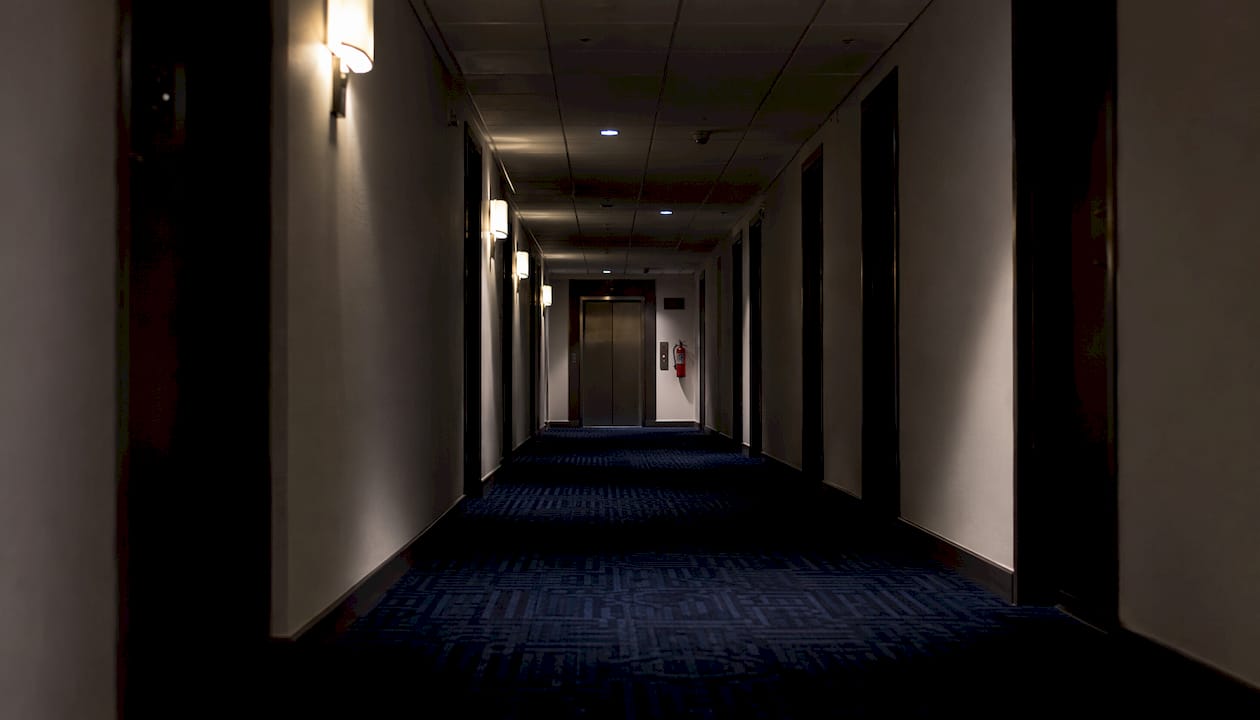
The elevator surveillance footage released by the Los Angeles Police Department showed Lam behaving in a deeply strange way: pressing multiple floor buttons, hiding in a corner, appearing to speak to someone outside the elevator who was not visible on camera, and moving her hands in slow, deliberate patterns. The footage spread across the internet within hours of its release and has been analyzed obsessively ever since. The coroner ruled her death accidental drowning, with bipolar disorder listed as a contributing factor. Many people remain unconvinced, pointing to the physical difficulty of accessing the water tank from outside.
5. Lars Mittank
Lars Mittank was a 28-year-old German tourist vacationing in Varna, Bulgaria, in July 2014 when he began behaving erratically after a bar fight left him with a ruptured eardrum. He stayed behind when his friends flew home, checked into a local clinic, and then sent his mother a text message saying he feared for his life and asking her to cancel his bank cards. Airport surveillance footage captured him the next morning: he spoke briefly to a doctor at the airport, then suddenly bolted, sprinting across the tarmac and vaulting a fence before disappearing into a wooded area. He has never been found.
No credible explanation has ever emerged for what frightened him. His luggage, passport, and money were left behind. German investigators and his family have pursued leads across Europe and beyond, but as of 2026, Lars Mittank remains one of the most baffling creepy disappearances in recent European history.
6. Cleveland Torso Murderer
Between 1934 and 1938, a killer operating in and around Cleveland, Ohio, left at least 12 dismembered victims near the Kingsbury Run ravine. Most victims were decapitated, and in several cases the heads were never recovered. The killer appeared to have surgical skill, as the dismemberments were clean and deliberate. Many victims were never identified, which complicated the investigation severely.
The legendary crime-fighter Eliot Ness, then serving as Cleveland’s Public Safety Director, led the investigation personally and never solved it. A suspect named Frank Dolezal was arrested in 1939 and confessed, but his confession was inconsistent with the evidence, and he died in custody under suspicious circumstances before trial. The murders stopped after 1938, but no one was ever convicted. The Cleveland Torso Murderer remains one of the most disturbing serial killer cases in American history.
7. Jessica Chambers
On the night of December 6, 2014, Jessica Chambers was found burning on a rural road in Courtland, Mississippi. She was 19 years old. Her car had been set on fire, and she herself had been doused in a flammable liquid and set alight. She survived long enough to be found by first responders and reportedly whispered a name, though investigators have never publicly confirmed what she said. She died at a hospital in Memphis a few hours later.
A man named Quinton Tellis was tried twice for her murder. Both trials ended in hung juries. Tellis was subsequently convicted of an unrelated murder in Louisiana and is serving a life sentence, but Jessica Chambers’ case remains officially unsolved. Her family has continued to push for a third trial.
8. Adam, Boy in the Thames
On September 21, 2001, a child’s torso was pulled from the River Thames near Tower Bridge in London. The boy was estimated to be between four and seven years old. His head, arms, and legs had been removed. He was wearing orange shorts. Investigators named him “Adam” and launched one of the most complex murder investigations in British history.
Forensic analysis of Adam’s bones and stomach contents revealed he had recently traveled from West Africa, likely Nigeria, and had consumed a meal containing a rare combination of plants and minerals consistent with a ritual preparation. Scotland Yard investigators concluded that Adam was likely a victim of a ritualistic killing, possibly connected to practices known in West African communities as “muti” killings, in which body parts are used in traditional medicine. Despite extensive international investigation, Adam has never been identified, and no one has ever been charged with his murder.
9. Dorothy Arnold
Dorothy Arnold was a 25-year-old New York socialite and aspiring writer who walked out of her family’s Upper East Side home on December 12, 1910, to go shopping on Fifth Avenue. She was never seen again. Her family, wealthy and well-connected, waited six weeks before reporting her disappearance to police, a decision that permanently damaged the investigation.
Dorothy had recently submitted a short story to a magazine and been rejected. She had also been secretly involved with a man named George Griscom Jr., whom her family disapproved of. Investigators pursued both angles without result. Her family privately believed she had died from a botched abortion, but no body was ever found. Dorothy Arnold’s disappearance remains one of the oldest unresolved missing persons cases in New York history.
10. Marvin Clark
Marvin Clark was a 73-year-old man who disappeared in October 1926 while traveling from Tigard, Oregon, to Portland to visit his daughter for Halloween. He never arrived. His case was eventually entered into the National Missing and Unidentified Persons System (NamUs) and is considered one of the oldest active missing persons cases in the United States.
In 1986, a set of skeletal remains was discovered and tentatively linked to Clark. But DNA testing in 2018 disproved that connection, leaving his fate entirely open again. His case illustrates how even apparent breakthroughs in historical missing persons investigations can unravel, adding new layers of mystery rather than resolution.
Why so many murders go unsolved in the United States
The scale of unresolved homicides in the U.S. is staggering. U.S. homicide clearance rates dropped to roughly 50% by 2020, the lowest level recorded since the FBI began tracking these statistics. That figure represents a dramatic fall from around 80% in 1965. Put simply, one in every two murders committed in America today goes unsolved.
The reasons behind this decline are layered. Investigative resources have not kept pace with caseloads in many jurisdictions. Witness cooperation has eroded, particularly in communities where trust in law enforcement is low. The cycle of mistrust between police and communities creates what criminologists describe as a “doom loop”: fewer witnesses come forward, fewer cases get solved, and communities grow even less willing to cooperate with investigators.
Racial disparities compound the problem. In 2020, murders of White victims were 30% more likely to be solved than murders of Hispanic victims, and 50% more likely to be solved than murders of Black victims. These gaps reflect systemic inequities in investigative attention and resource allocation.
| Year | Approximate homicide clearance rate |
|---|---|
| 1965 | ~80% |
| 2020 | ~50% |
Clearance rates also mislead in a specific way. The FBI’s Uniform Crime Reporting program allows agencies to close cases through “exceptional means” when a suspect is identified but cannot be arrested, such as when a suspect dies before charges are filed. These closures count as clearances in official statistics, even though no one was ever prosecuted. That practice inflates the apparent success rate and obscures how many cases are truly unresolved.
The National Institute of Justice estimates that the U.S. has accumulated a quarter of a million unresolved homicides, and that up to 15% of homicides may be the work of serial killers. One estimate puts the number of serial killers in the U.S. who have never been prosecuted as high as 2,000.
How Crimesolverscentral helps bring cold cases back to life
Cold cases do not have to stay cold. Crimesolverscentral operates one of the largest national databases of unresolved cases in the country, with over 264,913 cases cataloged by state and circumstance. That kind of organized, searchable data is exactly what families, journalists, and investigators need when they are trying to connect dots across jurisdictions.
The platform’s cold case database by state covers both missing persons and unsolved homicides, giving users a direct path to cases that might otherwise be buried in local records. Families who have used the platform report that simply having their loved one’s case listed in a national, accessible format brought new tips and renewed media attention.
Community involvement is built into the platform’s structure. Readers can:
- Search the database by state, case type, or victim profile
- Join as a member to receive updates on active cases and contribute to investigations
- Participate in fundraising that supports families and cold case advocacy organizations
- Share cases through social media to generate new leads and public awareness
Pro Tip: If you are researching a specific cold case, use Crimesolverscentral’s state-based search to find related cases in the same geographic area. Serial offenders often operate within defined territories, and a cluster of similar cases in one region can be a critical investigative signal.
The platform’s approach aligns with what the National Institute of Justice has documented: solving cold cases often means solving multiple cases at once, since many unresolved homicides share a common perpetrator. One detective’s effort to identify remaining victims of John Wayne Gacy resolved 11 other missing persons cases in the process.
Historical unsolved crimes that have defied resolution for generations
Some cold cases are not measured in years but in decades, even centuries. These are the cases that outlasted the investigators who worked them, the witnesses who saw something, and in some instances, the families who waited for answers.
Jack the Ripper remains the most famous example. Between August and November 1888, at least five women were murdered in the Whitechapel district of London. The FBI’s own Jack the Ripper files reflect the enduring American fascination with the case. Dozens of suspects have been proposed over 130 years, from a Polish immigrant named Aaron Kosminski to members of the British royal family. None has been proven.
Dorothy Arnold’s 1910 disappearance and Marvin Clark’s 1926 vanishing, both covered in the case list above, represent the American equivalent: cases so old that the original investigators, witnesses, and even most physical evidence are long gone. What remains are records, photographs, and the stubborn fact that no one knows what happened.
The Forest of Horror cases in Germany, a series of murders and disappearances in the Harz Mountains region that were never fully resolved, demonstrate that historical cold cases are not uniquely American. Across Europe, Latin America, and Asia, communities carry the weight of murders that were never explained, killers who were never named.
What connects all of these historical cases is the compounding effect of time on evidence. Witnesses die. Memories fade. Physical evidence degrades or is lost. DNA technology, which has revolutionized cold case work since the 1990s, cannot help when there is no biological material left to test. The policy gaps in unsolved homicides that allowed these cases to go cold in the first place often reflect the investigative standards of their era, when forensic science was primitive and record-keeping was inconsistent.
How victims and evidence left behind the strangest clues
Some of the most unsettling aspects of these spooky unsolved mysteries are not the crimes themselves but the physical evidence left behind, or conspicuously absent.
The Salish Sea feet. Since 2007, detached human feet in running shoes have been washing ashore along the coasts of British Columbia and Washington State. As of recent years, more than 20 feet have been recovered. Most have been identified through DNA as belonging to people who likely died by suicide or accident, but the pattern itself, feet separated from bodies by ocean currents and marine scavengers, created years of public speculation about serial killers and organized crime. The cases illustrate how physical evidence, stripped of context, can generate its own mythology.
The Black Dahlia’s surgical precision. Elizabeth Short’s body showed no signs of a struggle at the scene where she was found. The bisection was clean, the body had been washed, and the positioning appeared deliberate. Investigators concluded the murder took place elsewhere and the body was transported, but no primary crime scene was ever identified.
Adam’s stomach contents. The forensic analysis of the Thames torso case produced one of the most unusual pieces of evidence in British criminal history: Adam’s last meal contained a mixture of bone fragments, clay pellets, and plant material consistent with a ritual preparation. That evidence pointed investigators toward West Africa and ultimately toward the theory of a muti killing, but it was not enough to identify a suspect.
Elisa Lam’s elevator footage. The surveillance video from the Cecil Hotel showed Lam pressing buttons for multiple floors, appearing to hide, and moving her hands in ways that observers have described as either a game of hide-and-seek, a manic episode, or communication with someone off-camera. The footage’s ambiguity is precisely what made it so disturbing. It shows something clearly wrong, but not what.
The Zodiac’s ciphers. The killer sent four coded messages to Bay Area newspapers. Two were solved relatively quickly by a schoolteacher and his wife in 1969. The Z340 cipher took 51 years to crack. A fourth cipher, the 13-character “Z13,” has never been decoded. Each cipher contained the promise of the Zodiac’s identity, and none delivered it.
What these cases do to communities and popular culture
Unsolved murders do not stay contained to the families of victims. They spread outward, reshaping how communities understand safety, trust, and justice. The neighborhoods where these crimes occurred often carry the weight of them for generations.
The Zodiac killings transformed how Bay Area residents thought about public spaces. Couples parked at lovers’ lanes, a staple of 1960s American life, became targets. The killer’s letters to newspapers created a direct line between the murderer and the public, bypassing law enforcement entirely. That dynamic, a killer performing for an audience, became a template that criminologists now recognize as a distinct behavioral pattern.
JonBenét Ramsey’s case reshaped American media coverage of child victims. The saturation coverage of her death, and the tabloid focus on her participation in child beauty pageants, sparked a national debate about the exploitation of children in competitive performance culture. It also established a template for how cable news would cover missing white girls for the next two decades, a pattern that critics have called the “missing white woman syndrome,” noting how it contrasts with the relative lack of coverage for missing women of color.
True crime as a genre owes much of its current dominance to these unresolved cases. Podcasts, Netflix documentaries, and Reddit communities dedicated to cases like Elisa Lam and the Zodiac Killer attract millions of listeners and viewers. The Netflix documentary Crime Scene: The Vanishing at the Cecil Hotel (2021) brought Elisa Lam’s case to a new generation and generated a wave of amateur investigation that, in some instances, led to harassment of innocent people who had been misidentified online.
That tension, between public fascination and the real harm that amateur sleuthing can cause, is one of the defining ethical questions of the true crime era. The academic study of cold cases increasingly addresses this question, examining how media coverage affects both public perception and actual investigative outcomes.
How forensic science has changed the odds on cold cases
The gap between what investigators could do in 1947 and what they can do in 2026 is almost incomprehensible. Elizabeth Short’s killer left behind a crime scene that would today yield DNA, trace evidence, and digital forensic data. In 1947, investigators had fingerprints, witness testimony, and physical observation.
DNA profiling, introduced in criminal investigations in the late 1980s, changed everything. The technique that cracked the Golden State Killer case in 2018, forensic genetic genealogy, works by uploading crime scene DNA to public genealogy databases and tracing family trees until a suspect emerges. Joseph James DeAngelo was identified this way after decades of failed investigation. He was connected to 12 homicides and more than 50 sexual assaults through DNA database connections.
The National Institute of Justice’s Prosecuting Cold Cases using DNA and Other Forensic Technologies program, launched in 2019, has helped agencies across the country reopen and resolve cases that had been dormant for years. The program also supports NamUs, the National Missing and Unidentified Persons System, which as of February 2019 had published more than 14,000 cases where foul play was suspected.
Facial reconstruction technology has improved dramatically. Forensic artists can now generate accurate three-dimensional facial models from skeletal remains, and those models can be run against databases of missing persons photographs. Adam, the Boy in the Thames, was the subject of one of the most sophisticated facial reconstruction efforts in British history, though it has not yet produced an identification.
Digital forensics adds another dimension entirely. Surveillance footage, cell phone records, and social media activity now form the backbone of many cold case reinvestigations. Lars Mittank’s airport footage, Elisa Lam’s elevator video, and Jessica Chambers’ phone records were all central to their respective investigations. The challenge is that older cases predate this evidence entirely, while newer cases generate so much digital data that investigators can struggle to process it all.
Pro Tip: Cold case audits, in which investigators review old case files with fresh eyes and modern tools, consistently produce new leads. Cold case audits have reopened cases that were considered permanently closed, simply because a new investigator noticed something the original team missed.
Why the public never stops talking about these cases
High-profile cold cases become mythologized over time. That is not a metaphor. The process is documented and predictable: as a case ages without resolution, the number of theories multiplies, each one generating its own community of believers. Unreliable informants surface. Confessions emerge and collapse. The actual facts of the case get buried under layers of speculation.
Jimmy Hoffa’s 1975 disappearance is a textbook example. The former Teamsters president vanished from a suburban Detroit restaurant parking lot and was never found. Theories about his fate have ranged from burial under Giants Stadium in New Jersey to disposal in a Florida swamp to incineration in a mob-connected facility. Investigators have pursued leads for decades without result, partly because the mythology surrounding the case has made it nearly impossible to separate credible information from wishful speculation.
The true crime podcast and documentary boom has accelerated this dynamic. Serial, the 2014 podcast that examined the conviction of Adnan Syed for the murder of Hae Min Lee, generated millions of listeners and ultimately contributed to a legal process that led to Syed’s conviction being vacated, though he was later retried. The case illustrated both the power and the limits of public engagement with criminal investigations.
Media coverage also creates what researchers call a “hierarchy of victims,” in which some cases receive wall-to-wall attention while others are ignored entirely. The underserved victims in cold cases who receive the least coverage tend to be people of color, LGBTQ+ individuals, sex workers, and homeless people, the same populations that the National Institute of Justice identifies as most likely to be targeted by serial killers precisely because their disappearances go unnoticed.
NPR’s reporting on unsolved killings has documented how this disparity plays out in real investigative outcomes: communities where victims receive less media attention also tend to have lower clearance rates, fewer investigative resources, and less political pressure on law enforcement to prioritize the cases.
What is being done right now to solve these cases
Cold case work in 2026 is more organized and better resourced than at any previous point in American history, though the backlog remains enormous. The National Institute of Justice estimates a quarter of a million unresolved homicides have accumulated in the U.S. since 1980. That number grows every year that clearance rates stay near 50%.
Dedicated cold case units now operate in many major metropolitan police departments. These units focus exclusively on older cases, applying modern forensic tools to evidence that was collected before those tools existed. The history and impact of cold case units shows that specialized focus produces results: investigators who work only cold cases develop expertise that generalist detectives cannot match.
Forensic genetic genealogy has become one of the most powerful tools in the cold case investigator’s kit. Since the Golden State Killer identification in 2018, the technique has been used to solve dozens of previously intractable cases. The FBI’s ViCAP (Violent Criminal Apprehension Program) database links crime patterns across jurisdictions, helping investigators recognize when seemingly unrelated cases may share a perpetrator.
Community-based efforts have also proven effective. Tip lines, reward funds, and public awareness campaigns generate leads that official investigations miss. The role of national databases in this process is direct: a case that is searchable and publicly accessible attracts attention from people who might have relevant information but did not know where to report it.
For the cases covered in this article, the picture in 2026 is mixed. JonBenét Ramsey’s DNA profile sits in CODIS, waiting for a match. The Zodiac Killer’s DNA from envelope lickings has been profiled but not matched. Jessica Chambers’ case could theoretically be retried. Adam, the Boy in the Thames, remains unidentified. Dorothy Arnold and Marvin Clark remain missing. The Cleveland Torso Murderer’s identity is as unknown today as it was in 1938.
What has changed is the infrastructure around these cases. Better databases, better forensic tools, and better-organized public engagement mean that any one of these mysteries could break open tomorrow, if the right piece of evidence surfaces or the right person decides to talk.
Key Takeaways
The U.S. homicide clearance rate fell to roughly 50% by 2020, meaning one in every two murders goes unsolved, and the backlog of unresolved cases has reached an estimated quarter of a million.
| Point | Details |
|---|---|
| Clearance rates at historic lows | U.S. homicide clearance dropped from ~80% in 1965 to ~50% in 2020, leaving an estimated quarter of a million cases unresolved. |
| Racial disparities in case resolution | In 2020, murders of White victims were 50% more likely to be solved than murders of Black victims. |
| Exceptional clearances distort statistics | Cases closed without arrest or prosecution still count as “cleared,” masking the true scale of unresolved homicides. |
| DNA and genealogy are reshaping cold cases | Forensic genetic genealogy connected the Golden State Killer to 12 homicides and more than 50 sexual assaults after decades of failure. |
| Public databases accelerate resolution | Crimesolverscentral catalogs over 264,913 cases, making them searchable and accessible to families, journalists, and investigators. |
FAQ
What are the scariest unsolved cases in U.S. history?
The JonBenét Ramsey murder, the Zodiac Killer killings, and the Cleveland Torso Murderer cases are widely considered the most disturbing unsolved crimes in American history, combining brutal circumstances with decades of failed investigation and no identified perpetrator.
What is the most famous unsolved mystery in the world?
Jack the Ripper, who killed at least five women in London’s Whitechapel district in 1888, is generally considered the most famous unsolved criminal case in the world, with over 130 years of investigation producing no confirmed identification.
Is it true that about half of murders go unsolved in the U.S.?
Yes. U.S. homicide clearance rates dropped to roughly 50% by 2020, the lowest level since the FBI began tracking these statistics, meaning approximately one in every two murders committed in America goes unsolved.
What is the longest unsolved missing persons case in the U.S.?
Marvin Clark, who disappeared in october 1926 while traveling from Tigard, Oregon, to Portland, is considered one of the oldest active missing persons cases in the United States. DNA testing in 2018 disproved a prior identification, leaving his fate entirely unresolved after nearly a century.
How can the public help solve cold cases?
Platforms like Crimesolverscentral allow readers to search a national database of over 264,913 cases, submit tips, and share cases publicly to generate new leads. The National Institute of Justice has documented that community engagement and public awareness directly contribute to cold case resolutions.