

Citizen Detective for Beginners: How to Help Safely

A citizen detective is an unpaid community investigator who uses open-source research, crowdsourcing, and digital tools to develop leads on cold or unsolved cases. The role has no license, badge, or formal training requirement, which is exactly why it demands more self-discipline, not less.
Here is the three-line version. First, the useful work is almost always research and organization: gathering public records, building timelines, archiving disappearing web pages, and running reverse-image searches. Second, the risk is real and legal: misidentifying a suspect, mishandling evidence, or publishing someone’s home address can trigger civil liability or derail a prosecution. Third, the safest path is to document everything you find and route it through an official channel, whether that’s a police tip line, the FBI’s viCAP program, a FOIA request, or a structured platform like Crime Solvers Central built specifically to intake public tips on cold cases.
Key Takeaways
Responsible citizen-detective work means documenting everything, preserving originals, and routing findings through official channels rather than public speculation.
| Point | Details |
|---|---|
| Definition matters | A citizen detective researches and organizes public information; forensic proof and prosecution remain the job of law enforcement. |
| Risk is legal, not abstract | Doxxing, evidence contamination, and unauthorized data access carry real civil and criminal exposure. |
| Documentation builds credibility | Save timestamps, original URLs, and your method so others can verify your work and you avoid confirmation bias. |
| Coordination beats solo speculation | Research consistently shows crowdsourcing helps most when tips route through police or vetted platforms, not public posts. |
| Start with a structured platform | Crime Solvers Central offers a categorized national database and formal tip intake for safer, more productive involvement. |
Table of Contents
- What Does a Citizen Detective Actually Do?
- How Much Can a Citizen Detective Really Accomplish?
- What Legal Risks Should You Know Before You Start?
- How Do You Start Investigating Responsibly?
- Which Communities and Tools Do Citizen Detectives Actually Use?
- What’s the Safe Participation Checklist?
- Can Amateur Investigation Actually Hurt a Case?
- What Does the Research Say About Crowdsourced Investigation?
- How Do You Submit a Tip That Police Will Actually Use?
- Where Does Ethical Public Involvement Fit In?
- How Do You Get Involved With Crime Solvers Central?
- Sources
- FAQ
What Does a Citizen Detective Actually Do?
The work splits into a handful of recognizable styles, and each one carries a different risk profile. Some citizen detectives work quietly behind a keyboard cataloging court records. Others organize public search parties. A few cross lines and get sued or arrested.
Knowing which type you’re stepping into, before you start posting theories online, changes how carefully you need to move.
- Websleuths: Amateur researchers who dig through public records, news archives, and social media to build timelines on missing-persons or unsolved-homicide cases, usually from home.
- Crowdsolvers: Groups that pool small pieces of evidence (a blurry photo, a partial license plate) across forums or subreddits until a pattern emerges that a single person would never spot alone.
- Digital vigilantes (OCAGs): Online child-exploitation groups and similar “predator hunter” networks that actively bait or confront suspects. This category carries the highest legal exposure of any citizen-detective activity.
- Forensic-genealogy contributors: Volunteers who use public DNA databases like GEDmatch to help build family trees connecting unidentified remains or unknown suspects to living relatives.
- Volunteer search coordinators: Organizers who run ground searches, canvass neighborhoods, or manage flyer campaigns for missing-persons cases, often working alongside families directly.
The tradeoff runs in a straight line: the closer you get to direct confrontation or physical evidence, the higher the legal and ethical stakes climb. Websleuthing from a laptop is low-risk. Confronting a suspect on camera is not.
How Much Can a Citizen Detective Really Accomplish?
The honest answer is: a lot on research, very little on proof. Citizen detectives are most useful gathering open-source intelligence (OSINT), building timelines, archiving material before it disappears, and surfacing tips that overwhelmed departments haven’t had time to chase. Agencies themselves say as much. FBI guidance on cold cases describes the public as most valuable when acting as an extra set of eyes processing large datasets or spotting a detail investigators missed.
The wins are real. After the Boston Marathon bombing, Reddit threads pulled together crowd photos and video into a searchable archive that gave investigators material they wouldn’t have collected on their own, according to a British Journal of Criminology study of Reddit cyber-sleuths. But that same event produced one of the field’s most-cited failures: online sleuths misidentified an innocent missing student as a bombing suspect, spreading unverified information across social media before police had released official images. His family endured harassment for a mistake made by strangers with good intentions and no verification process.
That contrast matters more than any single case study. Public tips generate leads. They rarely generate proof. A timeline built from Facebook posts can point police toward a person of interest, but chain-of-custody evidence, forensic testing, and sworn testimony are what actually hold up in court. Confusing the two is where citizen detectives get themselves, and sometimes innocent bystanders, into trouble.
- Useful contributions: archiving deleted pages, cross-referencing timelines, flagging inconsistencies in public statements, aggregating tips from multiple sources.
- Not achievable by citizens: forensic DNA matching, chain-of-custody evidence handling, formal witness identification procedures, search warrants.
What Legal Risks Should You Know Before You Start?
These aren’t hypothetical concerns. Doxxing, evidence contamination, contempt of court, and unauthorized data access are enforceable legal violations, and citizen detectives have been sued, arrested, or held in contempt for exactly these actions.
- Privacy invasion (doxxing): Publishing someone’s home address, workplace, or phone number based on a hunch can expose you to civil liability even if your suspicion turns out correct.
- Obstructing an active investigation: Sharing theories or suspect names publicly during an open case can compromise a defendant’s right to a fair trial, and law enforcement is often required to run down every resulting tip, which can divert scarce investigative resources.
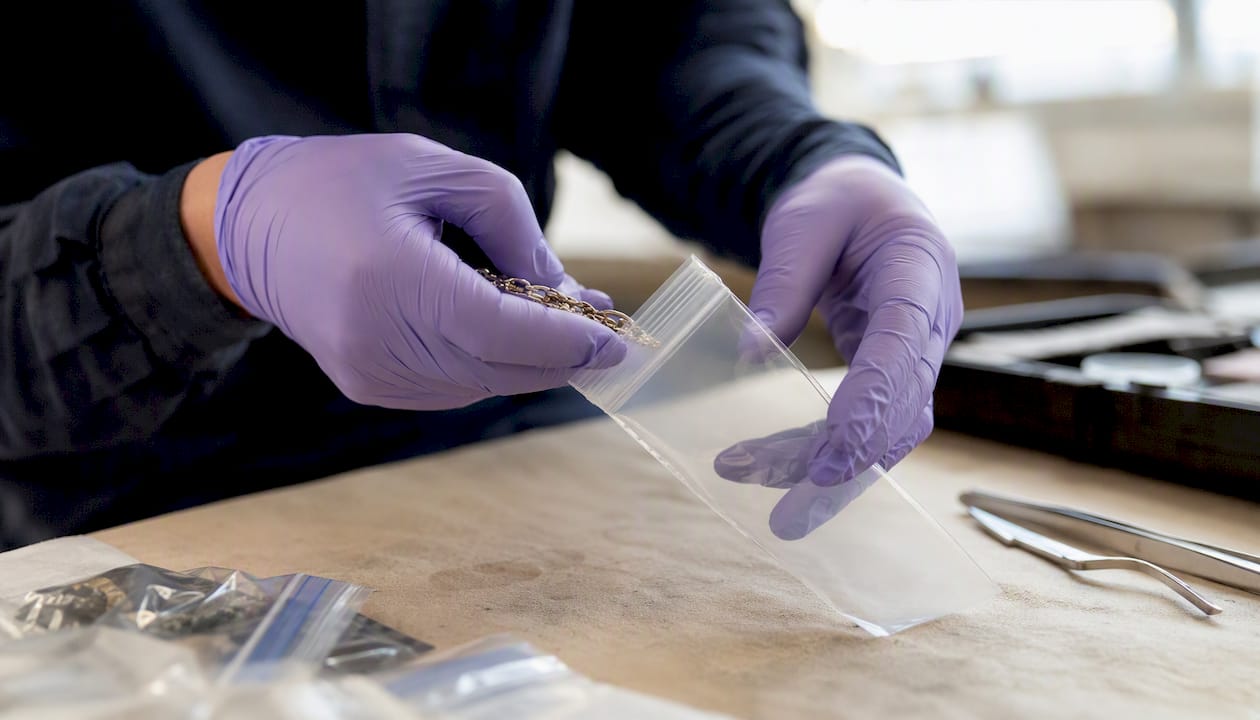
- Evidence tampering or contamination: Photographing, moving, or even excessively discussing physical evidence at a scene can compromise it for forensic testing later.
- Illegal data access: Using stolen credentials, social engineering, or hacking tools to pull private information violates the Computer Fraud and Abuse Act, regardless of your intent.
Two documented incidents illustrate the pattern. The Boston Marathon misidentification case above cost an innocent family real harm and cost police time they didn’t have to spare. Separately, courts have held jurors in contempt for conducting their own internet research on a case mid-trial, a reminder that “just looking something up” carries legal weight the moment you’re connected to a proceeding. Scholarly work on citizen-led policing also warns that private investigators, unlike police, aren’t bound by the same constitutional safeguards on searches and privacy, which means the burden of restraint falls entirely on you.
How Do You Start Investigating Responsibly?
Follow this order, and don’t skip steps because a case feels urgent. Every rushed citizen detective story that ends badly starts with someone skipping the boring parts.
- Pick one case and stay narrow. Choose a cold case or missing-persons file with public records available. Resist the pull toward multiple active investigations at once.
- Learn basic OSINT methods first. Spend a week practicing reverse-image searches, public records lookups, and social-media archiving on low-stakes practice searches before touching a real case.
- Join a vetted community, not a random Facebook group, to understand the role of NGOs in ESS and benefit from nonprofit coordination and training opportunities. Look for groups with moderators, posted rules, and a track record of coordinating with law enforcement rather than freelancing theories.
- Read a beginner’s guide to collaborating with online communities before posting anything. Understanding group norms prevents you from becoming the person who gets banned in week one.
- Build a documented timeline as you go, noting every source URL and the date you accessed it.
- Report findings through an official channel rather than posting theories publicly first.
Pro Tip: Save a timestamped screenshot and the original URL every time you find something relevant, even if it seems minor. Pages get deleted, accounts go private, and a screenshot with no date attached is worthless if someone later asks you to prove when you found it.
Which Communities and Tools Do Citizen Detectives Actually Use?
The pattern that produces results is consistent: vetted communities with clear norms, paired with a small set of simple tools, beat scattered individual effort every time.
- Bellingcat: An investigative nonprofit known for open-source verification techniques, widely cited as the gold standard for methodology transparency in digital investigations.
- Reddit investigative subcommunities: Large crowdsourcing forums where members pool tips, photos, and timeline fragments on specific cases, moderated with varying degrees of rigor.
- Uncovered: A citizen-detective platform structured around collaborative case pages, letting contributors organize evidence and theories in one place rather than scattered across threads.
- Crime Solvers Central: A national cold-case database with over 264,913 cases categorized by state and situation, offering structured tip intake instead of open public forums.
For the actual toolkit, a handful of free resources cover most beginner needs: reverse-image search tools for verifying photos, metadata viewers for checking when and where a file was created, the Wayback Machine for archiving pages before they vanish, and FOIA portals for requesting public records. Newspaper archive services also matter more than people expect for cold cases; a roundup of archival research alternatives covers several options worth bookmarking.
| Community Type | What It Offers | Risk Profile |
|---|---|---|
| Investigative nonprofit | Rigorous, published methodology and training resources | Low, given strong editorial oversight |
| Open forum crowd | High volume of tips and eyes on a case | Moderate to high, since moderation and verification vary widely |
| Moderated platform with structured intake | Organized case pages and a clear path to submit findings | Low, when tips route to official or vetted channels |
What’s the Safe Participation Checklist?
Run through this list every time before you research further or post publicly. Skipping it is how well-meaning people become the subject of their own cautionary tale.
Do:
- Preserve original files, screenshots, and URLs before anything gets deleted or edited.
- Show your work: document the steps that led you to a conclusion so others can check it, a practice ethical-investigation guides consistently recommend.
- Actively look for evidence that contradicts your theory, not just evidence that confirms it, since confirmation bias is the most common failure mode among amateur investigators.
- Route findings to law enforcement or a vetted intake platform rather than sharing them widely.
Don’t:
- Publish anyone’s home address, workplace, phone number, or family details.
- Name a suspect publicly based on circumstantial resemblance alone.
- Share unsecured personal information you gathered, even from public sources, without a clear reason tied to the investigation.
- Post crime-scene photos or details that could compromise a future prosecution.
Step back entirely if you feel personally certain of someone’s guilt without hard evidence, if a case involves an active trial, or if you’re being asked (by anyone) to confront a person directly. Those are the moments amateur enthusiasm becomes legal liability. A rundown of common mistakes in missing-persons searches covers several near-misses worth reading before your first case.
Can Amateur Investigation Actually Hurt a Case?
Yes, in specific and well-documented ways. Certain behaviors don’t just fail to help, they actively derail prosecutions and retraumatize the families they’re meant to support.
Sharing crime-scene photos publicly can contaminate a jury pool or compromise forensic chain-of-custody. A juror who researches a defendant online, even out of curiosity, can trigger a mistrial or contempt charge. And misidentification, as the Boston Marathon case showed, doesn’t just embarrass the sleuth who got it wrong; it can send a swarm of public attention at an innocent person and their family for days before the mistake is corrected.
Research on witness identification adds a subtler wrinkle: exposure to social-media images between witnessing a crime and a formal police lineup doesn’t always reduce accuracy, but it does introduce uncertainty that needs to be documented and disclosed rather than ignored. A well-meaning citizen who shows a witness a photo lineup found online, before police run their own procedure, can hand a defense attorney grounds to challenge the identification entirely. The downstream effect touches everyone: prosecutors lose leverage, appeals get filed on procedural grounds, and families who were finally close to an answer watch the case stall again.
What Does the Research Say About Crowdsourced Investigation?
Academic research draws a consistent line: crowdsourcing adds real investigative capacity, but only when it’s coordinated, and it creates measurable harm when it isn’t. Extra eyes on a large dataset genuinely help. Untrained enthusiasm running ahead of evidence genuinely hurts.
Legal scholarship on crowdsourcing documents both sides clearly. Public appeals and crowdsourcing apps have produced real arrests, but the same mechanisms produce false positives and information cascades that spread faster than corrections can catch up. Separate scholarship on citizen-led policing raises a related concern sometimes called “responsibilization,” where the state quietly shifts investigative burden onto private citizens who lack the training, oversight, and legal protections that come with a badge.
| Study or Claim | Key Finding | Source |
|---|---|---|
| Reddit cyber-sleuthing during Boston Marathon bombing | Public contributions helped as an added security network node but produced mixed, sometimes harmful, outcomes without police coordination | British Journal of Criminology |
| Crowdsourcing and crime control | Crowdsourcing enables real arrests but risks false positives and information cascades | Texas Law Review |
| Citizen-led policing and privacy | Private citizen investigation can bypass legal safeguards that constrain state actors | White Rose eprints |
| Confirmation bias in investigation | Structured, documented methodology reduces false accusations from tunnel vision | PubMed Central |
There’s a psychological dimension too, one that rarely makes the headlines. People who spend months staring at crime-scene photos, missing-persons flyers, and violent case files report real emotional strain, and ethical-investigator guides now treat mental-health planning as a required part of the work, not an afterthought. Setting time limits on case research, talking to someone outside the community about what you’re seeing, and stepping away when a case starts following you into your sleep aren’t signs of weakness. They’re standard practice for anyone doing this work long-term. A closer look at why amateur investigators genuinely help law enforcement when properly coordinated rounds out the picture with more specific examples.

How Do You Submit a Tip That Police Will Actually Use?
The tips that get acted on share three traits: they’re concise, they’re documented, and they go through an official channel instead of a public post. A rambling theory dropped into a comment section usually goes nowhere. A tip with dates, sources, and a clear ask gets read.
- Gather your original sources, not screenshots of screenshots. Keep the actual file, photo, or document where possible.
- Record timestamps and URLs for everything, including the date and time you found it.
- Write a short summary of your method: what you searched, what led you to the finding, and why you think it’s relevant.
- Identify the right recipient. For an active case, contact the investigating agency directly. For older or cold cases, check whether the agency has a dedicated tip portal, or submit through a structured intake system like Crime Solvers Central’s database, which routes public submissions by case and location.
- Include supporting files as attachments rather than links that might expire.
A minimal tip should answer five questions clearly: what did you find, when did you find it, where did it come from, how did you find it, and what files or links support it. Missing-person cases in particular benefit from this structure since families and volunteers often submit fragments of information that only become useful once organized against a timeline.
Where Does Ethical Public Involvement Fit In?
Community involvement in cold cases works when it follows two non-negotiable rules: evidence gets preserved, not disturbed, and findings get reported, not broadcast. Crime Solvers Central was built around that stance rather than around open speculation.
The platform’s national database catalogs cases by state and situation, giving families and volunteers a structured way to review details instead of piecing together fragments from scattered social-media posts. Membership includes access to full case files, forums moderated for productive discussion, and a formal intake path for submitting tips rather than posting them publicly first. That structure exists because the research above is consistent: coordinated public involvement helps, unstructured public involvement often doesn’t. Readers who want to keep building their skills responsibly can start with the ethical cold-case playbook covering community norms in more depth.
How Do You Get Involved With Crime Solvers Central?
Crime Solvers Central gives beginner citizen detectives something most forums don’t: a structured path instead of an open feed of speculation. Instead of scrolling through unmoderated threads hoping to stumble on something useful, you get a national database of over 264,913 cases organized by state and situation, with case profiles that separate documented fact from public theory.
Membership unlocks full case details, sources, digital evidence boards, and a forum built for coordinated research rather than pile-on speculation. The flyer builder and AI image tools help volunteers contribute concrete work, campaign materials, age progressions, without needing design experience. And when you do find something worth reporting, the platform’s tip intake gives you a documented, trackable path instead of a comment box that disappears into the void. If you’re ready to see what responsible involvement actually looks like, browse the cold case database and start with a case in your own state.
Sources
- Preservation of evidence — AMU / APUS criminal justice resources
- Citizen-Led Policing in the Digital Age and the Right to Respect for Private Life (White Rose eprints)
- Confirmation bias and investigative practice — PubMed Central
This article is general information, not a substitute for advice from a qualified lawyer. Consult a qualified legal professional about your own circumstances before acting on anything here.
FAQ
What is a citizen detective?
A citizen detective is an unpaid volunteer who uses public records, digital tools, and crowdsourcing to research cold or unsolved cases, typically working alongside, not instead of, law enforcement.
Is it legal to be a citizen detective?
Researching public records and open-source information is generally legal, but publishing private details, accessing data illegally, or interfering with an active investigation can carry civil or criminal liability.
How do I become a citizen detective safely?
Start with one case, learn basic OSINT methods, join a moderated community with clear rules, document your sources with timestamps, and report findings through an official channel or a structured platform like Crime Solvers Central.
What’s the biggest mistake beginner citizen detectives make?
Publicly naming a suspect based on incomplete information, a pattern that caused real harm during the Boston Marathon bombing investigation when online sleuths misidentified an innocent person.
Where should I send a tip I find?
Send it to the investigating agency’s official tip line for active cases, or submit it through a structured intake system, such as Crime Solvers Central’s case database, for cold cases categorized by state.