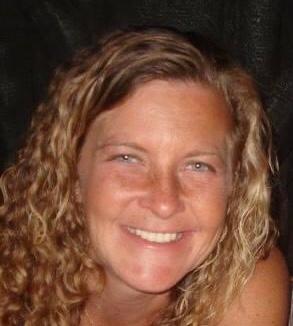
In the quiet community of Mullica Township, New Jersey, the life of 57-year-old Lynn DeRosa came to a violent and tragic end on May 26, 2014. On that day, a 911 call was made from her home, reporting that she had been shot. When police arrived, they found Lynn deceased on her living room couch from a shotgun wound to the head. Her husband, Sergio DeRosa, was at the scene and was visibly distraught.
Initially, Sergio DeRosa claimed that the shooting was a terrible accident. He told investigators that he was cleaning a 12-gauge semiautomatic shotgun and believed he had loaded a 'snap cap,' a type of inert dummy round used for training, into the chamber. He maintained that he was shocked when the gun discharged a live round, fatally striking his wife. In the immediate aftermath, he was taken for a psychiatric evaluation.
However, as the investigation progressed, a different narrative began to emerge.
Over a year after Lynn's death, in September 2015, her husband Sergio DeRosa, then 57, was arrested and charged with manslaughter. The charge was later upgraded to murder in September 2016. The prosecution built a case suggesting the shooting was intentional. During the six-day trial, a casino dealer who knew Sergio testified that just a month before Lynn's death, he had told her, 'I'm going to kill my wife.' Another witness, the couple's daughter-in-law, testified that they had been arguing about money and that Sergio had admitted to taking a large sum of money from a safety deposit box.
Despite his continued insistence that the shooting was an accident, the jury did not believe Sergio DeRosa's account of the events. In July 2017, he was found guilty of murder. The man who had once co-owned the Old Bay Restaurant & Bar in Egg Harbor City with his wife was sentenced to 30 years to life in New Jersey state prison, with the stipulation that he must serve a minimum of 30 years before becoming eligible for parole. The conviction brought a close to a case that had stretched on for over three years, leaving a lasting scar on the community and the family involved.