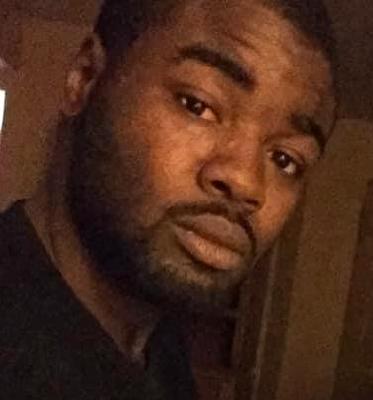
On a late-September day in 2008, 18-year-old African-American male Pierre Young was found fatally wounded in a narrow alley in Chicago's Chatham neighborhood, his body marked by gunfire that left him beyond saving. News reports described a teenager discovered “fatally shot in alley” and a “bullet-riddled body found in alley,” underscoring how sudden and violent his final moments were as officers and paramedics converged on the scene.
The location—an otherwise ordinary service lane behind rows of South Side homes—became the setting for a homicide investigation, with yellow tape and squad cars standing in for the routines of a Tuesday in early fall.
The alley where Young was killed sits in Chatham, a community area long known as a stronghold of Black middle-class life in Chicago, where residents fought hard over decades to build and protect stable blocks, tidy bungalows, and neighborhood institutions. Even as it developed a reputation for well-kept streets and active community organizations, Chatham was increasingly forced to contend with outside pressures and street violence that pushed it at times onto lists of Chicago's more dangerous neighborhoods. It was in this tension between proud, rooted community and encroaching violence that Young's death occurred, another crime scene etched into a neighborhood that had long prided itself on watching over its own.
Citywide, 2008 was a punishing year. Chicago crossed the threshold of 500 homicides that year, ultimately ending with around 512 killings, a grim marker that drew national attention and underscored how heavily gun violence was falling on predominantly Black neighborhoods on the South and West Sides. Crime Solvers Central, which compiles data on unsolved homicides, notes that Young's killing took place against this backdrop of elevated violence, one of many cases in which a young life was taken in a city struggling to rein in lethal crime. In databases and reports, his name appears as one entry among hundreds, but the circumstances—an ambush in an alley in a community already under strain—hint at how personal and frightening that violence felt at street level.
In the days after the shooting, local coverage focused on the bare facts: a teenager found shot multiple times in a South Side alley, an investigation underway, no immediate arrests. Over time, memorial projects and advocacy sites took over where breaking news left off. Never Forget Chicago, a digital memorial to the city's victims, records that Young was 18 when he was “fatally injured” and that the killing occurred in a Chatham alley, inviting visitors to leave virtual flowers, balloons, and messages in his memory. Crime Solvers Central keeps a dedicated case page for him, listing his race, city, date of death, and, most tellingly, marking the case as “solved: No,” with updates continuing into 2025—quiet evidence that, despite the passage of years, the file remains open and without closure.
Publicly available records and memorials do not show that anyone has been charged in connection with Young's death, nor do they reveal a detailed description of a suspect or motive; the case is cataloged simply as a homicide by force, unsolved. What endures instead are fragments: a teenager's name on lists of Chicago's homicide victims, a brief summary on a memorial site noting an alley in Chatham, and forum headlines from people who say they still think about his case and struggle with the lack of answers. In a city that saw hundreds of killings that year alone, Pierre Young's story is preserved in these short entries and links—a life cut short, a crime scene in a South Side alley, and an investigation that, at least in the public record, has yet to deliver justice.