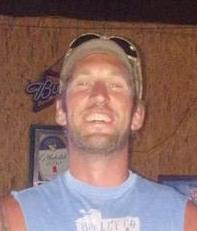
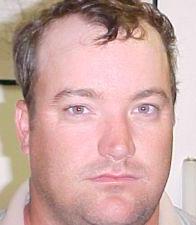
On Easter Sunday, April 21, 2019, Norman Eugene “Gene” Burden, a 67-year-old white male from Sayre, Oklahoma, was found dead inside his modest home, his death quickly recognized as part of a violent double homicide that stunned two neighboring towns. Born in December 1951 to Norman Van Burden and Mary Edith Ward, he had grown up in the rural communities of Stafford and Foss, graduating from Canute High School in 1970 before spending his early years doing farm labor.
In 1980 he struck out on his own and built a livelihood around the highways that crisscross western Oklahoma, operating Gene Burden Trucking out of nearby Elk City, the sort of small business that tied him closely to local farmers, oilfield hands, and long-haul drivers who knew him simply as “Gene.” By 2019 he was settled in Sayre, living with his dog and sharing his life with girlfriend Monique Smith, rooted in the familiar rhythms of a small town where Easter Sunday should have been quiet and ordinary.
The violence that ended his life began miles away before dawn. In Elk City, police were called to a parking area near an apartment complex and construction site along North State Avenue, where Monique Smith was discovered shot to death beside her vehicle’s empty parking space. Investigators noted that her car was missing, and the Oklahoma State Bureau of Investigation and local officers immediately treated the scene as a homicide, gathering shell casings, canvassing nearby residents, and trying to reconstruct her final movements in the hours leading up to the shooting. News reports later described the early-morning discovery as the first half of what would become known locally as the Beckham County Easter murders, a phrase that captured how shocking it felt to have such brutality intrude on a holiday morning that usually meant church services, family meals, and quiet streets.
All day, investigators searched for Monique’s missing vehicle, following tips and checking traffic cameras across western Oklahoma. Late that afternoon, around 6:30 p.m., officers in Sayre spotted the car parked outside a house on North Sadler, the address where Gene Burden lived. When they entered the home, they found Burden inside, dead. OSBI agents later described a scene that suggested he had been killed there, not transported, and that whoever had brought Monique’s car to his address had also taken his own truck. His pit bull had been shot as well, but survived, discovered lying close to his body, a detail that haunted local coverage and underscored the violence and intimacy of the attack. Outside, the quiet residential street filled with patrol cars and crime-scene tape while neighbors watched from porches, trying to reconcile the small-town familiarity of Gene’s life with the sudden presence of state investigators and a homicide team.
The trail leading away from Sayre ran along the highways Gene had driven for decades, but now it was his stolen truck drawing attention instead of his freight. Within hours, law enforcement linked the two killings through the missing vehicles: Monique’s car, abandoned at Gene’s home, and Gene’s truck, which had vanished from Sayre and was believed to be in the hands of the person responsible. Witnesses told investigators that a man named Gregory Killough had been seen with Monique roughly an hour before she was shot, and OSBI publicly identified him as a person of interest in both homicides. That same day, Beckham County’s sheriff and OSBI agents coordinated with departments across the state, releasing his name and description and asking the public for help while they searched for Gene’s missing truck, believing that it might be the key to finding their suspect.
In the early hours of Monday, April 22, the investigation shifted nearly across the state. Tulsa police officers pulled over a truck after noticing that its license plate did not match the vehicle, a routine traffic stop that quickly took on greater weight. Behind the wheel was Gregory Killough, and the truck he was driving was identified as belonging to Gene Burden. Officers found a handgun inside and, with word already circulating statewide about the Easter homicides, took him into custody on a felon-in-possession-of-a-firearm charge while alerting Beckham County authorities that the man tied to their double homicide was now in handcuffs hundreds of miles from Sayre. OSBI assumed the lead in the case, and public statements from the sheriff’s office emphasized both relief that Killough had been located so swiftly and the continuing work of piecing together exactly what had happened in Elk City and Sayre that day.
Within days, after his arrest in Tulsa and initial booking there, Killough was extradited back west and formally arrested in connection with the Beckham County killings. KOKH in Oklahoma City reported that he was arrested on two counts of first-degree murder, two counts of larceny of an automobile, one count of animal cruelty and one count of felon in possession of a firearm, charges that reflected both the shootings and the theft of Monique’s car and Gene’s truck, as well as the wounding of Gene’s dog. He was booked into the Elk City jail as the primary suspect in the deaths of Monique Smith and Norman Eugene Burden, but coverage stressed that the investigation was ongoing and that authorities were still assembling evidence, reconstructing timelines, and following up on leads that might explain how the holiday weekend spiraled into such senseless violence. Public records and news stories available online do not clearly document the final outcome of the case, leaving later developments—such as trial proceedings or a verdict—outside the scope of what is safely verifiable.
In the months that followed, Gene’s name appeared less often in crime headlines than in obituaries and memorials that tried to fix him in the memory of those who had known him before Easter Sunday. Funeral notices describe chapel services held in late April at the Kiesau Memorial Chapel in Clinton, followed by burial in the Clinton City Cemetery, and they remember a man who had spent his life working the land and the roads of western Oklahoma, preceded in death by parents and several siblings and survived by the family who gathered to mourn him. On sites dedicated to victims of gun violence and unsolved or notorious homicides, his profile sits alongside others from Sayre and Elk City, a reminder that his death was not an isolated tragedy but part of a larger story about violence reaching into small communities that once assumed such things only happened somewhere else.