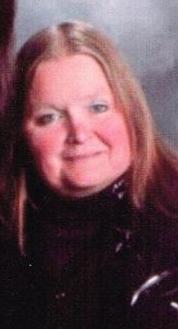
Wendy McDade was a 29-year-old White/Caucasian woman and Broadway chorus performer whose life became intertwined with former Broadway dancer and New York construction executive William Callahan during the final months of both of their lives. Callahan had left the entertainment business years earlier and become a high-ranking officer of Arc Electrical Construction Company, a family-controlled New York contracting firm. By 1980, his position at the company had collapsed after evidence surfaced that he had diverted millions of dollars from Arc. A later U.S. Tax Court proceeding found that Callahan had taken more than $6 million in cash through schemes involving fictitious invoices and outside associates, and he was forced to resign from the company in September 1980.
McDade left New York with Callahan as his financial and personal troubles were becoming increasingly serious. Accounts of the case describe the pair spending time outside the United States after Callahan's departure from Arc, and they reportedly went through a marriage ceremony on January 9, 1981, even though Callahan remained legally married to his first wife, Eleanor Rao. The two later returned to the United States and traveled to Chicago shortly before their deaths. A historical account from the Museum of the City of New York states that McDade and Callahan were last seen alive leaving Chicago's Continental Plaza Hotel on the night of March 17, 1981.
The following day, March 18, 1981, McDade and Callahan were discovered dead in a field in Pleasant Prairie in Kenosha County, Wisconsin. The Kenosha County Sheriff's Office identifies the investigation as Case No. 81-4200 and confirms that both victims had been shot multiple times. More detailed historical accounts describe the location as the Chiwaukee Prairie area near Lake Michigan and report that each victim had been shot three times in the head, giving the killings the appearance of a deliberate execution rather than a spontaneous confrontation.
The circumstances surrounding the bodies also led investigators to question robbery as the motive. One account of the investigation reported that a valuable wristwatch, estimated at approximately $5,000 at the time, remained with Callahan, along with about $1,500 in Canadian currency. Those valuables being left behind strengthened the theory that McDade and Callahan had been deliberately targeted and that whoever killed them had another reason for wanting them dead.
Much of the investigative attention naturally centered on Callahan's financial affairs. Court records later documented that he had operated an extensive embezzlement scheme at Arc Electrical Construction between 1977 and 1980. He used fictitious invoices and outside businesses to generate company checks, after which associates would keep a portion of the money and return the remainder to him in cash. After Callahan's son discovered evidence of the theft in September 1980, Callahan was forced out of Arc and quickly sold property and left New York. The Tax Court later observed that his theft of millions of dollars may have been connected to his eventual death, although the court did not identify his killer or establish a motive for the murders. Arc ultimately obtained a civil default judgment of more than $15.6 million against Callahan's estate.
Investigators explored people associated with Callahan's complicated financial dealings. A later account of the cold case states that authorities at one stage examined a New York City lawyer and a convicted con artist who had also attracted attention in connection with another murder investigation. Neither individual was charged in McDade and Callahan's deaths, and available public information does not establish that either person was responsible. No publicly identified suspect has ever been prosecuted in connection with the Pleasant Prairie killings.
McDade's murder consequently became inseparable from the mystery surrounding Callahan's business activities, missing money and abrupt departure from New York. Despite the appearance of a carefully planned killing and the numerous people investigators could examine through Callahan's financial history, the evidence never produced an arrest or prosecution. There has been no trial or conviction for McDade's death.
More than four decades later, the Kenosha County Sheriff's Office continues to list the murders of Wendy McDade and William Callahan among its unsolved cold cases. The department describes them as homicide victims found together in Pleasant Prairie on March 18, 1981, and continues to seek information that could identify whoever was responsible. No arrest, criminal charge or conviction has been publicly announced in the case.