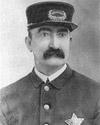
In the early hours of April 4, 1905, a palpable sense of unease settled over a quiet section of Post Street in Spokane, Washington. The night's tranquility was shattered by an act of violence that would claim the life of a dedicated public servant. Henry Stotko, a White male officer with the Spokane Police Department, was walking home after completing his shift, a routine he had likely followed countless times.
On this particular morning, however, his path intersected with that of two individuals engaged in a burglary.
Officer Stotko, in an act of unwavering duty, intervened to halt the crime in progress. His courageous action was met with lethal force as the suspects turned on him. A gunshot rang out in the pre-dawn stillness, and Officer Stotko fell, the bullet causing immediate paralysis. In a display of profound cruelty, the assailants dragged his immobilized body behind some nearby bushes. Before making their escape into the darkness, they committed a final act of desecration, removing the officer's badge from his chest and contemptuously pinning it to the seat of his pants.
Approximately an hour after the shooting, a night watchman making his rounds discovered the gravely wounded officer. Help was summoned, and Officer Stotko was rushed to Sacred Heart Hospital. Despite the efforts of the medical staff, the severity of his injuries proved to be insurmountable, and he succumbed to his wounds, leaving behind a wife and a grieving community.
The murder of a police officer spurred a determined investigation by the Spokane Police Department. Their efforts led to the successful apprehension of the two suspects responsible for Officer Stotko's death. The individuals were brought to trial and ultimately convicted for their roles in the heinous crime. The man who fired the fatal shot was found guilty of first-degree murder and sentenced to death. This sentence was later commuted to a life term in prison. In a final chapter to this tragic story, the convicted shooter was granted parole and released on December 30, 1925, two decades after he had taken the life of an officer sworn to protect the city of Spokane.