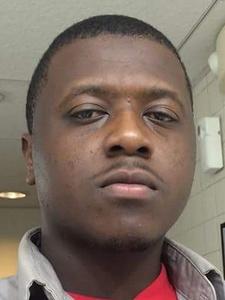
On July 4, 2013, in Chicago, 36-year-old Theodis L. Young, a Black man, crossed into the holiday afternoon with no way of knowing his name would soon be added to the city's grim roll of the dead. Independence Day on the South Side was supposed to be a time of barbecues, family gatherings, and fireworks, but for him it became a date stamped forever with the moment his life was cut short by gunfire. Newspapers and later memorial projects would reduce him to a line of data—name, age, cause of death, neighborhood—yet behind that line was a man whose last hours unfolded against a backdrop of a city already strained by violence.
Around midday, a man jumped out of an SUV and went after Young on the South Side. The chase pushed him into a house, a home described in one detailed account as being in the Park Manor neighborhood, while memorial records later fixed the scene in an apartment building tied to the Greater Grand Crossing community, neighboring enclaves on Chicago's South Side that have long lived with the realities of poverty and gunfire. Inside that residence, the pursuit ended in a burst of shots. Moments that might once have been filled with ordinary household noise were replaced by the crack of gunfire and the panic that follows it, as the shooter fled and Young collapsed, mortally wounded.
The date of his death placed him inside a particularly deadly stretch for Chicago. In the days around the Fourth of July that year, the names of those killed by violence filled columns drawn from the Cook County medical examiner, the Chicago Police Department, and local breaking-news reports. Listed among them was Young, one of multiple people slain between July 4 and July 10, his name appearing alongside others like Steve Mabins, Marlon Obanner, Shavonte Howard, Elliott Frazier, and more—a roll call of lives ended in different corners of the city within just a few days. Later compilations of July 2013 gun homicides in Chicago would repeat his name in a long sequence of those lost that month, each entry a brief note that hinted at a wider story never fully told.
In official and semi-official write-ups, his death was recorded with stark simplicity: killed by a gunshot on July 4, in or near Greater Grand Crossing. The neighborhood tags place his final moments in a part of the South Side where shootings were painfully common, but the records themselves offer almost nothing about who he was before that day—no occupation, no family notes, no personal details beyond the basic identifiers attached to his body. A memorial site dedicated to Chicago's homicide victims preserves little more than those bare facts: that he was 36 when he was fatally shot, that it happened inside an apartment on the South Side, and that his name deserves to be remembered rather than lost in statistics. A grave listing adds only the quiet confirmation of his dates of birth and death, underscoring how quickly a life can be compressed into numbers and a single line on a stone.
What happened after the sirens faded and the crime-scene tape came down appears, in the public record, to be a long silence. The shooter in the SUV is described only in the vaguest possible way—as a man who emerged, chased, and fired—without a name, a face, or a clearly recorded motive in widely accessible sources. Years later, Young's case appears on lists of Chicago “area cold cases,” and advocacy and case-summary sites frame his killing as part of the city's ongoing struggle with unsolved gun homicides, inviting the public to share any information that might exist. The continuing appeals for tips, and the absence of any publicly reported charges linked to his shooting, point to an investigation that has not ended in an arrest or conviction, leaving his death officially unsolved even as time pushes it further into the past.
Yet his name has not vanished entirely. It lives on in memorial projects devoted to Chicago's victims of violence, tucked into online pages where people can leave virtual tributes, and in community efforts that insist each person killed on the city's streets should be remembered as more than a statistic. In those spaces, Theodis Young stands as one among many whose stories were interrupted abruptly, his final chapter written not by his own choices but by a stranger stepping out of an SUV on a summer holiday afternoon.