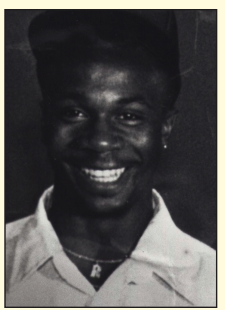
In the spring of 2018, a life was cut short in Northeast Washington, D.C., leaving a family searching for answers that would prove to be elusive. D'Quan Young, a 24-year-old Black man, was shot and killed on the evening of May 9, 2018. His death, at the hands of an off-duty police officer, sparked conflicting narratives and a prolonged struggle for transparency.
According to the U.S.
Attorney's Office, the incident began when D'Quan Young confronted the off-duty officer who was in the 2300 block of 15th Street, Northeast, reportedly looking for a gathering he was attending. An altercation ensued, during which Young allegedly pulled out a firearm and pointed it at the officer. The official account states that Young fired at the officer, who then returned fire, striking Young multiple times. Young was pronounced dead at the scene.
However, witness accounts painted a starkly different picture of the moments leading up to the fatal shooting. Some people on the scene claimed that the officer, who had been circling the area, approached Young and began shooting as he was walking away. These witnesses alleged the officer continued to fire even after Young was on the ground, with some claiming he reloaded his weapon. Bystanders, including children, were sent fleeing for their lives as bullets flew through the neighborhood. The officer involved, who had been on the police force for less than a year, did not have his body-worn camera on as he was off-duty.
In the aftermath, the Metropolitan Police Department and the U.S. Attorney's Office launched an investigation. Ultimately, the U.S. Attorney's Office concluded there was insufficient evidence to bring criminal civil rights or local charges against the officer, whose name was not initially released to the public. The investigation determined that a shell casing found at the scene was fired from the handgun found near Young, and that his DNA was on the weapon. The officer's use of force was deemed justified by the department's Use of Force Review Board.
For D'Quan Young's family, the decision not to prosecute was a devastating blow in their quest for justice. They, along with community activists, decried the lack of transparency in the investigation and continued to demand the release of the officer's name and all video evidence. His mother, Catherine Young, was left to care for his young daughter, all while grappling with the unanswered questions surrounding her son's death. Years after the incident, the family continued their fight for information, filing Freedom of Information Act requests to obtain records related to the case. While some body-camera footage from responding officers was eventually released, the family maintained that they had been stonewalled and that the full story of what happened that May evening had yet to be told.