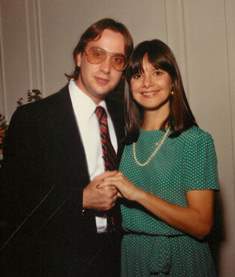
On October 8, 1977, 19-year-old Pamela Jean "Pam" Lambson disappeared after a planned meeting at Fisherman's Wharf in San Francisco. Lambson, a computer assistant and aspiring actress and singer, had arranged to meet a man who had offered to photograph her. This encounter was set up after she met the individual, later identified as a photographer, at an Oakland A's game. Her parents and co-workers reported that she intended to meet this photographer again at Fisherman's Wharf for a photo shoot.
The next day, Lambson's battered, naked body was found on a Mount Tamalpais trail in Marin County, just a few miles from where she was last seen. The discovery of her body marked the beginning of a long and complex investigation. Store clerks at the clothing store where Lambson was last seen described the suspect as "handsome" and provided a detailed description that would later be used to create a police sketch. This sketch, released across the country, bore a striking resemblance to Rodney Alcala, a convicted serial killer.
Rodney James Alcala, known for his appearance on the TV show "The Dating Game," emerged as the primary suspect in Lambson's murder. Alcala had a history of violent crimes, having been convicted of multiple murders in California and facing charges for additional murders in New York City. In 2011, Marin County investigators, aided by Huntington Beach police, reopened the case after publicly releasing hundreds of photographs of women seized from Alcala's storage locker. The police sketch from 1977 was compared to Alcala's appearance, and detectives concluded that it appeared as if Alcala had sat for the artist.
Despite the strong circumstantial evidence linking Alcala to Lambson's murder, prosecutors decided not to pursue charges due to insufficient physical evidence. The DNA samples collected from the crime scene had deteriorated over the years, making it impossible to obtain a positive match. However, Marin County officials were "absolutely certain" that Alcala was responsible for the crime, based on the similarities in his method of operation and the matching descriptions provided by witnesses.
Alcala's history of violence and his modus operandi further solidified the suspicion against him. He was convicted of the murders of several women, including Jill Barcomb, Georgia Wixted, Charlotte Lamb, and Jill Parenteau in California, as well as facing charges for the murders of Ellen Hover and Cornelia Crilley in New York City. His methods often involved posing as a photographer to lure his victims, which aligned with the circumstances of Lambson's disappearance and death.
Although Alcala was never formally charged or tried for Lambson's murder, the investigation and subsequent findings provided closure for her family. Lambson's mother expressed relief that Alcala was behind bars and would likely never be freed, despite having already found closure through her faith.
In summary, the death of Pamela Jean Lambson is attributed to the actions of convicted serial killer Rodney Alcala, although he was not formally charged due to lack of viable DNA evidence. The case, reopened in 2011, relied heavily on circumstantial evidence, witness descriptions, and the comparison of a police sketch to Alcala's appearance, all of which pointed to his involvement in her tragic death.