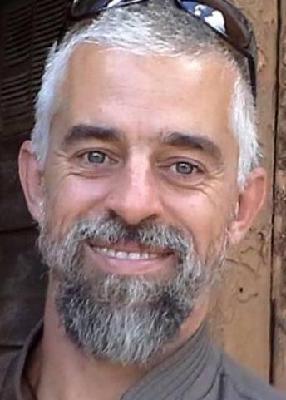
Ron Torgersen, a 51-year-old white/Caucasian male, had spent most of his life in Hunterdon County, New Jersey, before settling with his family in Wind Gap, Pennsylvania, where he built a stable, comfortable life as a devoted husband and father of three. In recent years, his heart had been captured by the wide-open spaces and rugged beauty of western Colorado.
An avid outdoorsman who loved hunting, fishing, gardening, and working with his hands, he purchased land in the mountains of Moffat County with a plan to build a log cabin where his family could gather, escape, and make new memories together. At the time of his death, he was actively preparing that Wilderness Ranch property, about 30 miles northeast of Craig, and talking about the cabin as the realization of a long-held dream.
On the evening of June 24, 2014, that dream collided with a burst of sudden violence on the isolated ridge tops of Wilderness Ranch. Ron and his neighbor, 58-year-old David Hazelip, owned adjoining properties in the subdivision, and at some point that day an encounter between them escalated into an armed confrontation. According to the Moffat County Sheriff’s Office, both men fired weapons during the incident, but only Ron was struck. Deputies were dispatched to Hazelip’s property in the unincorporated county area after reports of a shooting; when law enforcement arrived, Ron was gravely wounded from gunfire.
First responders rushed him from the remote subdivision to The Memorial Hospital in Craig, the nearest medical center, but his injuries were severe enough that he was quickly transferred by air to St. Mary’s Hospital in Grand Junction for more advanced care. Family members gathered there as doctors fought to keep him alive. After eight days in the hospital, surrounded by loved ones who had traveled from Pennsylvania and New Jersey, Ron died on Wednesday, July 2, 2014, in Grand Junction. His obituary later described a man who “lived life to the fullest,” a generous person who had once donated a kidney to his brother, and a father who took deep pride in his children and looked forward to sharing his Colorado retreat with them.
In the days following the shooting and Ron’s subsequent death, the Moffat County Sheriff’s Office treated the case as a potential self-defense incident. Investigators publicly identified Hazelip as the man who shot Ron and stated that an “affirmative claim of self-defense” might apply to the circumstances, emphasizing that both men had discharged firearms during the encounter. Detectives collected evidence, ordered an autopsy, and prepared to submit their findings to the 14th Judicial District Attorney’s Office for review. At the time of the key Craig Daily Press report after Ron’s death, authorities made clear that no arrests had been made and that the case remained under investigation.
Publicly available records and subsequent summaries of the case continue to name Hazelip as the shooter and the central figure scrutinized by investigators but do not document any later arrest or criminal charges against him in connection with Ron’s death. Case overviews that draw on the original local reporting and gun-violence databases describe Ron as having been shot to death by his neighbor in Wilderness Ranch, with the matter examined through the lens of possible self-defense and no definitive public resolution reported beyond that investigative posture.
Against that sparse official record, Ron’s family and friends are left most strongly with their memories of the man before the shooting: a generous brother who once gave an organ to save a sibling’s life, a husband who had been married since the mid-1980s, and a father who loved nothing more than time with his children. His obituary paints a picture of someone who poured his energy into his home, cooking, travel, and the outdoors, and who regarded the Colorado land where he was ultimately shot as a place where the next chapter of family life would unfold. Instead, that mountainside property became the setting for the confrontation that ended his life, and the story of his death remains publicly framed by the tension between a neighbor’s claim of self-defense and the enduring sense of loss felt by those who knew him.