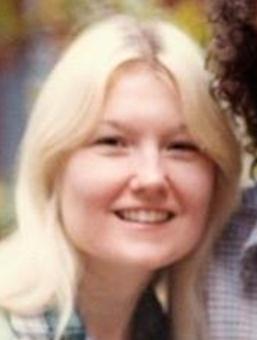
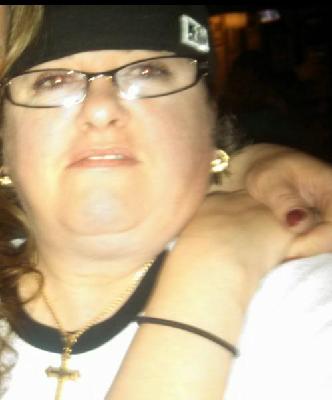
Karin Richardson was a 50-year-old White/Caucasian woman whose life ended in a mass killing at her family’s home on Sugar Grove Road just west of Morgantown, West Virginia. Contemporary police and news reports place the killings on September 5, 2011, rather than September 4. Karin was killed alongside her husband, Charles Richardson III, and her children, Kevin Hudson and Katrina Hudson. Robert Raber Jr., Katrina’s fiancé and the father of her unborn child, was also killed.
Katrina was approximately six months pregnant at the time.
The violence appears to have taken place during the afternoon. Investigators believed the five victims had been shot with a high-powered rifle. At about 6:30 that evening, West Virginia State Police were sent to the residence for a welfare check after authorities received information that something might be wrong. The secluded house sat at the end of a rough dirt drive. When troopers entered, they initially discovered three people who had been fatally shot. Officers secured the scene and called in a Special Response Team, and a more extensive search revealed two additional victims. Reports indicated that two bodies were found in the kitchen, another in the living room, and two more in a bathroom area of the home.
Police quickly focused their investigation on 22-year-old Morgantown resident Shayne Franklin Riggleman. Authorities described the people killed at the Richardson residence as acquaintances of Riggleman, although investigators did not publicly explain exactly how he knew each member of the household. Charles Richardson’s father said afterward that he did not recognize Riggleman’s name and was unaware of any problems involving his son that might have led to the attack. Investigators indicated that they believed they had some understanding of the possible motive, but State Police Capt. James Merrill said they would not disclose it while the investigation remained underway. Because Riggleman later died, authorities were never able to question him directly about why the family was targeted.
After the killings, police said Riggleman left the Sugar Grove Road residence in a Jeep Grand Cherokee belonging to one of the victims. He drove north into Pennsylvania and went to Fairchance, where he met with a woman who had previously been involved with him. According to reports, the woman became concerned after Riggleman arrived unexpectedly and attempted to persuade her to go for a ride with him. She declined and subsequently contacted authorities, helping set in motion the welfare check at the Morgantown-area residence.
Riggleman’s flight from the scene developed into a violent multistate rampage. In Pennsylvania, police said he was involved in a collision with another vehicle. When the other driver, an older woman, got out following the crash, Riggleman allegedly turned the stolen sport-utility vehicle around and deliberately struck her. The woman survived but suffered serious injuries, including multiple fractures.
Riggleman then traveled south through West Virginia on Interstate 79. At an Exxon station in Amma, in Roane County, investigators said he randomly shot attendant Don Nichols in the neck. Nichols was critically injured but was expected to survive. Reports from the investigation described this shooting as apparently unrelated to the victims at the Morgantown residence, making it another seemingly random act during Riggleman’s continued flight.
The manhunt continued into Kentucky. Late that night, authorities in Lewis County received reports of a Jeep being driven recklessly and allegedly forcing other motorists into dangerous situations. A sheriff’s deputy attempted to stop the vehicle. Riggleman initially continued driving before eventually pulling over after a brief pursuit. As law enforcement approached, Riggleman suffered a self-inflicted gunshot wound and died. Authorities recovered three firearms from the vehicle, including a high-powered rifle, another rifle and a. 22-caliber handgun. Investigators believed the high-powered rifle was the weapon used to kill Karin and the four other victims at the Sugar Grove Road home.
Riggleman also had a criminal history before the killings. Corrections officials reported that he had previously been convicted of armed robbery in Monongalia County and was sentenced to the Anthony Correctional Center for young offenders. He began serving that sentence in January 2009 and was released in March 2010 after approximately 14 months. At the time of the 2011 killings, officials said it was unclear whether he was still under probationary supervision.
There was consequently no arrest, criminal trial or homicide conviction arising from Karin Richardson’s killing. Police identified Riggleman as the suspected gunman and attributed the five deaths to him, but his suicide only hours after the murders ended any possibility of taking him into custody or prosecuting him. The evidence gathered from the house, the stolen vehicle, recovered firearms and his movements through Pennsylvania, West Virginia and Kentucky became the basis for investigators’ reconstruction of the rampage rather than evidence presented before a jury.
The killings devastated a family with strong ties to Connecticut as well as West Virginia. Karin had previously lived in Connecticut, where she and her former husband raised their children before she moved to West Virginia and married Charles Richardson. Relatives later remembered the family as people who tried not to judge others and who were willing to help people who needed assistance. Memorial services and fundraisers were held in Connecticut after the murders as relatives and friends struggled with the loss of Karin, her husband, two of her children, Robert Raber, and Katrina’s unborn daughter in a single afternoon of violence.